

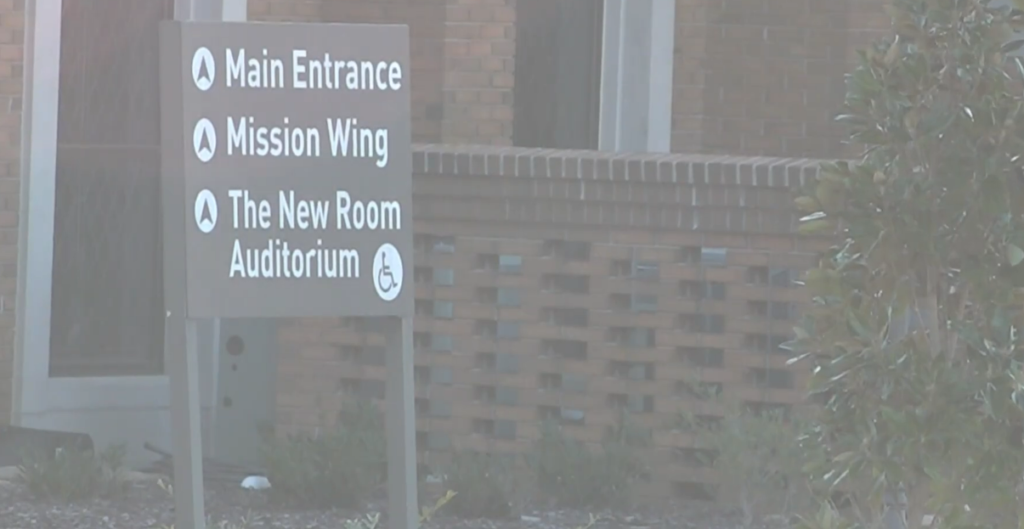
The church-run daycare, located on Airport Road in Huntsville, Alabama, is the kind of community space that parents trust because of its institutional setting. A church. A staff structure, a development center with designated directors and coordinators, and a location where families dropped off their kids with the reasonable expectation that someone was keeping an eye on them. This presumption is now at the heart of a case involving eight felony charges, three lawsuits, six children, and a judge’s order to combine them all into one.
A Madison County Circuit Court judge combined three civil lawsuits against Trinity United Methodist Church and three of its senior daycare employees, as well as against Cameron White, a 24-year-old former employee of Trinity Child Development Center, into a single action on Friday, April 10, 2026. The plaintiffs’ lawyers requested the consolidation and filed a joint motion the day before, claiming that the three independently filed cases had similar facts, overlapping witnesses, and claims that were so similar in law that they were, in some cases, word for word identical. Consolidation is not only effective when the legal arguments in three different complaints are almost exactly the same, but it also reveals something about the nature of the alleged events.
Consolidation of Horror: Judge Merges Three Lawsuits Against Huntsville Church Daycare Over Alleged Child Abuse
| Category | Details |
|---|---|
| Location | Trinity Child Development Center, Airport Road, Huntsville, Alabama |
| Parent Institution | Trinity United Methodist Church, Huntsville, Alabama |
| Accused Employee | Cameron White, age 24 — former daycare employee |
| Criminal Charges | Eight felony counts of sexual abuse of a child under the age of 12 |
| Arrest Date | January 22, 2026 |
| Current Status (Criminal) | Held at Madison County Jail on $400,000 cash bond; case referred to grand jury |
| Defense Plea | Not guilty (per defense attorney) |
| Defense Funding | $4,500 in public funds approved for private investigator |
| Civil Lawsuits Filed | Three separate suits filed January–February 2026; consolidated April 10, 2026 |
| Plaintiffs | Families of six children (identified by initials only) |
| Civil Defendants Named | Cameron White; Trinity United Methodist Church; Trinity Child Development Center; former director Sheryl Raddin; Associate Director Megan Tarin; Classroom Success Coordinator Heather Atkinson |
| Civil Claims | Negligence; wantonness; negligent hiring, retention, and supervision |
| Church’s Position | Denies wrongdoing; argues White’s conduct was not foreseeable; claims reasonable care exercised |
| Surveillance Evidence | Attorneys reviewing footage from room where some alleged abuse occurred |
| Investigation Timeline | Expanded to examine incidents potentially dating to March 2021 |
| Consolidation Order | Madison County Circuit Court — issued Friday, April 10, 2026 |
| Plaintiffs’ Attorney | Bart Siniard |
| Estimated Case Duration | 18 months to two years (per defense attorneys) |
Eight felony charges pertaining to the alleged sexual abuse of children under the age of twelve have been brought against White since his arrest on January 22, 2026. Since his arrest, he has been detained at Madison County Jail on a $400,000 cash bond; his lawyer has stated that he plans to enter a not guilty plea. To decide whether to go to trial, his criminal case has been referred to a grand jury. A different court authorized $4,500 in public funds for White to hire a private investigator for his criminal defense on the same day the civil suits were consolidated. This is a standard provision for court-appointed defendants, but it has special significance in this case.
In addition to White, the Trinity United Methodist Church, the Trinity Child Development Center, and three supervisory staff members—former director Sheryl Raddin, associate director Megan Tarin, and classroom success coordinator Heather Atkinson—are named in the civil complaints. Negligence, wantonness, and careless hiring, retention, and supervision are among the allegations. In cases of institutional abuse, the last category is typically the most important since it asks not only what happened but also who knew what, when, and what was done about it. In each of the three cases, the church has denied any wrongdoing, claiming that reasonable care was taken in White’s hiring and supervision and that his alleged behavior was not predictable. Additionally, the church has raised the possibility that pretrial publicity in Huntsville might make it more difficult to seat an unbiased jury in Madison County. This is a legal concern, but it also suggests that the church is aware of how far this story has already spread in the community.
According to Bart Siniard, the plaintiffs’ attorney, lawyers are still reviewing security footage from a daycare room where some of the alleged abuse took place. The fact that the video is still being reviewed indicates that the complete factual picture has not yet been established, and it represents the kind of specific, tangible evidence that institutional defense arguments typically struggle against when it exists. The investigation’s chronology is even more noteworthy: according to Siniard, the criminal investigation has grown to look into events that may have occurred as early as March 2021, which is almost five years prior to White’s arrest. If that window is examined closely, it raises issues that go far beyond White’s personal behavior.
When reading the case details, it’s difficult to avoid feeling a certain way. It’s not outrage as a rhetorical stance, but rather a persistent, subdued unease about the institutional aspects of the narrative. The structure of abuse cases involving specific perpetrators at reputable institutions is consistent: the harm happens, it is discovered, and then the more difficult questions arise about how long it could have continued, who might have noticed something, and what the institution’s obligations were and whether they were fulfilled. The standard legal defense put forth by Trinity United Methodist Church is that it acted reasonably and that White’s actions were unexpected. The evidence that comes to light during discovery, such as what the surveillance footage reveals and what the 2021-timeline investigation yields, will determine how adequate it is.
These kinds of cases usually take 18 months to two years to settle in civil court, according to defense lawyers. Although that timeline is typical for complicated institutional liability cases, it is a significant amount of time for the families of six children who are only identified by their initials in court records. At the very least, the consolidation means that instead of following different paths in different courtrooms, those families are now navigating the system together, with combined resources and shared legal momentum. It’s another matter entirely whether that makes the wait easier.
Whether or not the criminal case goes to trial will ultimately be decided by the grand jury. Now unified, the civil case will move toward its own resolution on its own schedule. What transpires in both cases will define accountability for a daycare on Airport Road where, if the accusations are true, very serious things happened to very young children for what could have been a very long time.
Disclaimer
Nothing published on Creative Learning Guild — including news articles, legal news, lawsuit summaries, settlement guides, legal analysis, financial commentary, expert opinion, educational content, or any other material — constitutes legal advice, financial advice, investment advice, or professional counsel of any kind. All content on this website is provided strictly for informational, educational, and news reporting purposes only. Consult your legal or financial advisor before taking any step.
