

Judges at the Los Angeles Superior Court, a vast system that handles everything from minor civil disputes to class-action settlements involving millions of people, have their desks buried under court documents that would take days to thoroughly review. Not in hours. Days. Cases are seated. Motions build up. In just one year, the caseload increased by 49%. A small number of those judges have now quietly begun using a piece of software to help them navigate it all. This software does more than just summarize the filings; it reads the judge’s prior written orders, takes in their style, and drafts a tentative ruling in their own voice before the judge has a chance to form an opinion of their own.
The tool is named Learned Hand in honor of the renowned federal judge Billings Learned Hand, whose persuasive rulings and judicial restraint served as a model for American law. It’s unclear if naming an AI judicial assistant after him was a sign of aspiration or a purposeful irony. It is evident that as of February 2026, six civil court judges in Los Angeles County were using it, and the majority of those who appear before them are unaware of it.
The court and the business have a contract that expires in early 2027 and costs slightly more than $300,000. Learned Hand was founded in 2024 by its CEO and founder, Shlomo Klapper, a former federal law clerk and lawyer. According to him, the software functions as a “judicial sous chef” in the kitchen, handling preparation tasks but not making decisions about what is served. Using writing samples from the judge’s previous orders, the tool reads the filings, summarizes the legal arguments, and generates a draft tentative ruling. According to Klapper, an integrated verification procedure known as “Deep Verify” examines each sentence of the produced output to ensure that each factual assertion corresponds to an actual citation that is hyperlinked for the judge to directly review. He makes it clear that this is not Skynet. He likes to think of Jarvis as Iron Man’s competent, helpful AI assistant who follows orders rather than taking initiative.
Since the pilot’s premiere, critics have pointed out the flaw in that analogy: Jarvis doesn’t write Tony Stark’s speeches before Tony Stark has made up his mind. District Attorney Nathan Hochman specifically voiced this concern in public: an AI-generated tentative ruling provides a judge with a point of reference before they have completed the task of developing their own opinion. The initial draft influences the decision’s cognitive landscape, even if the judge ultimately disagrees with the technology’s output and makes significant revisions. Hochman took a strong stance against using AI to produce the actual decision, even though he acknowledged the efficiency argument and agreed that AI could assist with repetitive summary judgment motions that repeatedly cite the same precedents. “Even when a judicial assistant or a law clerk comes up with a tentative on which position the judge should take, before the judge has taken their own position, that greatly influences what the judge’s position should be,” he stated.
Key Information: L.A. County Courts AI Pilot Program
| Field | Details |
|---|---|
| Court System | Superior Court of Los Angeles County — one of the largest court systems in the United States |
| Program Launch | February 2026 |
| AI Tool | Learned Hand — developed by legal start-up of the same name |
| Company Founder/CEO | Shlomo Klapper — former attorney and federal law clerk; founded Learned Hand in 2024 |
| Pilot Scope | Half a dozen (approximately 6) civil court judges |
| Contract Duration | Through early 2027 |
| Contract Cost | Just over $300,000 |
| Court Spokesman | Rob Oftring Jr. |
| Court CEO | David Slayton |
| Functionality | Reads and summarizes legal motions; generates draft tentative rulings using samples of each judge’s writing style |
| Verification System | “Deep Verify” — fact-checks every sentence against cited case law, with hyperlinks for independent review |
| Current Deployment | Already in use in 10 states; Michigan Supreme Court using it since summer 2025 |
| Case Types | Civil motions only — summary judgments, class-action settlement approvals; not used in criminal courts |
| Disclosure Requirement | No mandatory disclosure rule requiring judges to inform parties that AI was used |
| Key Critic | L.A. County District Attorney Nathan Hochman — described AI-generated tentative rulings as “problematic” |
| Case Backlog Context | 49% increase in cases over the past year cited as key driver |
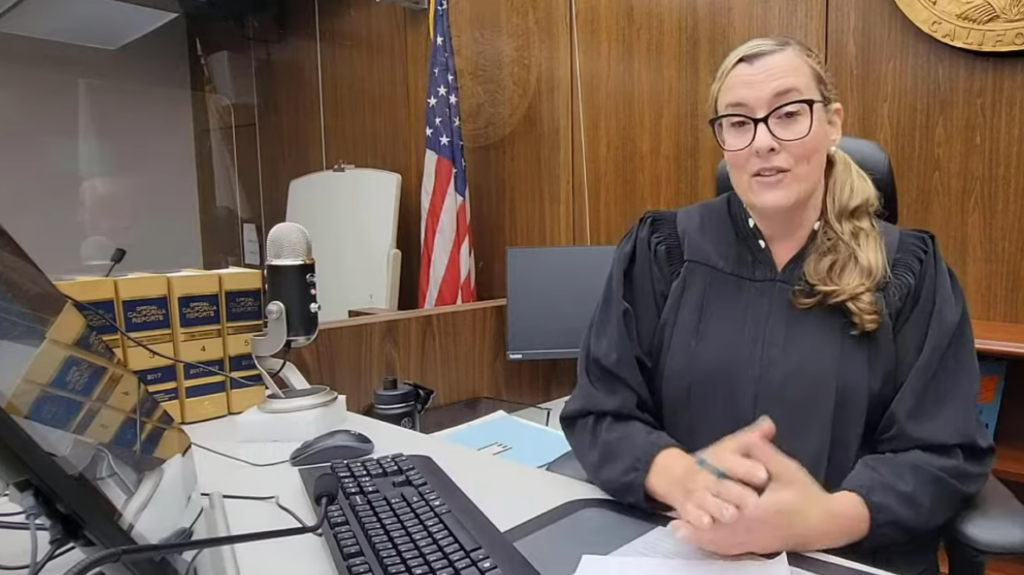
“Even if you don’t necessarily adopt the AI’s tentative decision, psychologically that has become your reference point and any decision-making engaged in thereafter could be predicated on it,” said an anonymous L.A. County judge who isn’t taking part in the pilot. That’s a subtle but important observation about how reasoning functions under cognitive load, which is exactly what overworked judges are experiencing. Advocates of the tool claim that before any AI-generated preliminary decision is released, human review is necessary. The review may not be as comprehensive as the word “required” suggests, according to critics, given that the judge is already dealing with hundreds of other cases.
This pilot’s institutional roots are what really set it apart from the wave of AI disputes that have swept through courts over the last two years. The cases gaining attention involved people using general-purpose consumer AI tools and submitting the results unchecked, such as the North Carolina federal prosecutor who resigned after submitting an almost entirely AI-written filing and the lawyer fined for citing hallucinated ChatGPT cases. A major court system is implementing Learned Hand, a specialized, legally designed system with safeguards, verification, and the express support of court leadership, as an official program. That is a completely different proposition, and it is more significant because there is currently no mandatory disclosure rule requiring judges to inform parties that AI was used in the ruling.
Regarding the scope of the issue causing the demand, Klapper is correct. The court system in Los Angeles County deals with a huge amount of civil litigation, and it is a serious and consequential injustice when cases remain unresolved for a year due to judges’ lack of five hours to review lengthy motions. Budgets that have been declining in relation to caseloads for years limit the solution of investing more human resources in research attorneys and law clerks. According to a Reuters survey, over 70% of legal professionals think AI can significantly lessen the burden of document review without sacrificing results, demonstrating the validity of the efficiency case for tools like Learned Hand.
It’s still unclear whether judges with sufficient experience to draft complex rulings will also be able to maintain independent judgment in the face of an AI suggestion, or whether the cognitive bias issue Hochman and the anonymous judge described will actually prove to be a problem in practice. The pilot program, which runs through early 2027, might actually help answer that empirical question. It won’t address how frequently the AI’s initial framing influenced the final decision in ways that neither the judge nor the parties were aware of, since no one is currently requiring the data to be gathered. Observing this from the outside, it seems like the most important question to ask.
Disclaimer
Nothing published on Creative Learning Guild — including news articles, legal news, lawsuit summaries, settlement guides, legal analysis, financial commentary, expert opinion, educational content, or any other material — constitutes legal advice, financial advice, investment advice, or professional counsel of any kind. All content on this website is provided strictly for informational, educational, and news reporting purposes only. Consult your legal or financial advisor before taking any step.
