

Standing in a contemporary city and considering its origins can cause a specific type of cognitive dissonance. The hospital walls, the parking structures, the bridges, the towers, and the highway underpasses. It’s all concrete. All of it originated from a manufacturing process that, if it were a nation, would be among the biggest carbon emitters in the world, ranking between China and the United States in terms of annual greenhouse gas output. Approximately 8% of the world’s CO2 emissions come from the production of cement alone. Most people don’t know. Only the most basic things are able to conceal the material’s environmental cost because it is so ubiquitous and deeply ingrained in everyday life’s infrastructure.
That invisibility is starting to break. Although it’s not quite a revolution yet, what’s taking place in cement labs, pilot plants, and building sites from Rotterdam to Austin to rural Norway is more than just gradual advancement. It involves reconsidering whether a substance that has historically contributed significantly to atmospheric carbon could, with the correct chemistry, become something that extracts carbon.
The kiln is where the issue with traditional Portland cement begins. When limestone is heated to a temperature of about 1,450 degrees Celsius, which necessitates the use of massive amounts of fossil fuels, it releases carbon dioxide that was trapped inside its chemical structure. Even if you change the fuel source to a cleaner one, the process emission will still occur. It’s not just a combustion issue. The basic reaction that gives the material its functionality is a chemistry problem. Because of this, decarbonizing cement has proven to be extremely difficult to accomplish using solutions that are effective in other contexts. In a kiln, switching from coal to natural gas is beneficial. It doesn’t resolve the issue.
IMPORTANT INFORMATION TABLE — CARBON-NEGATIVE CEMENT
| Category | Details |
|---|---|
| Industry Emission Share | Cement production responsible for ~7–8% of global CO2 emissions; cement industry is world’s 4th-largest carbon emitter |
| Why Cement Emits So Much | Calcination of limestone releases CO2; clinker formation requires ~1,450°C kiln temperatures using fossil fuels |
| Core Innovation | Carbon-negative cement absorbs more CO2 over its lifetime than it emits during production |
| Key Technology 1 | CO2 Curing/Mineralization — companies like CarbonCure inject CO2 into fresh concrete during mixing; gas permanently binds as calcium carbonate |
| Key Technology 2 | Accelerated Mineralization — Paebbl (Rotterdam) combines captured CO2 with olivine rock; reduces concrete carbon footprint by up to 70% within an hour |
| Key Technology 3 | Electrochemical/Low-Temperature — startups Sublime Systems and Brimstone produce cement without high-temperature fossil fuel kilns |
| Key Technology 4 | Seawater Electrolysis — Northwestern University + Cemex: seawater, electricity, and CO2 grow carbon-storing minerals; material can hold over 50% of its weight in CO2 |
| Key Technology 5 | Alternative Raw Materials — steel slag, fly ash, magnesium silicates (olivine) replace carbon-intensive limestone |
| Notable Players | CarbonCure Technologies, Carbonaide, Heidelberg Materials, Cemex, Lafarge Canada + CarbiCrete, Paebbl, CarbonBuilt |
| Norway Achievement | Heidelberg Materials plant removes 1.2 tons of CO2 per ton of cement produced using olivine-based concrete |
| Canada Achievement | CarbiCrete/Lafarge partnership: cement-free concrete blocks reducing 150 kg CO2 per ton |
| CarbonCure Impact | Estimated 450,000 metric tons of CO2 saved to date; used at Amazon HQ2 construction |
| Norway Government Policy | Pledged to use carbon-negative concrete in all government projects from 2025 |
| Market Growth | CAGR of 5.6% projected 2025–2031 for carbon-negative cement market |
| Main Barriers | Scalability from pilot to global production; conservative building codes; higher upfront costs |
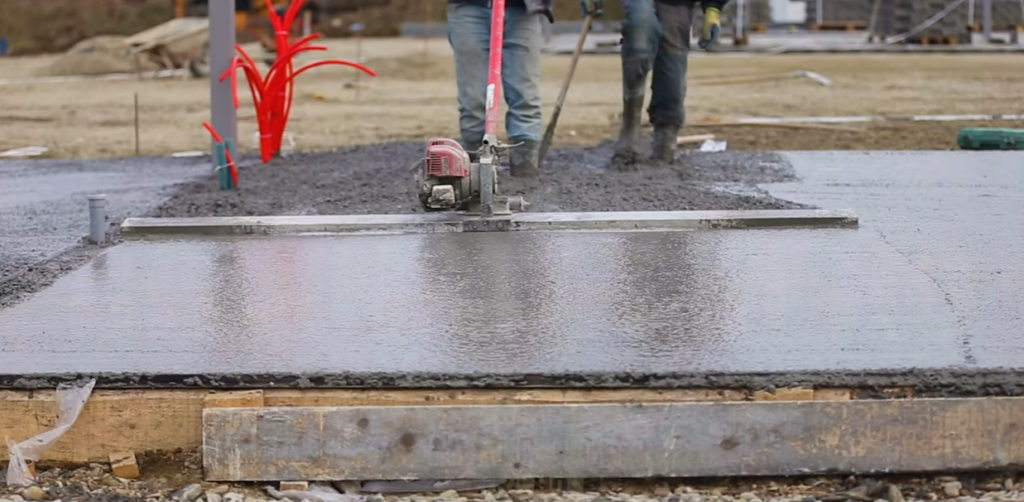
CarbonCure Technologies took a different approach to the issue. Instead of attempting to keep CO2 out of the process, they inject captured CO2 straight into freshly mixed concrete, where it mineralizes and reacts with calcium ions to form solid calcium carbonate that is permanently embedded in the concrete. There is no escape of CO2. It integrates into the framework. The procedure lowers the carbon footprint of concrete by about 3 to 5 percent per pour, which is modest by goal but noteworthy at scale. According to CarbonCure, it has so far sequestered about 450,000 metric tons of CO2. Parts of Amazon’s HQ2 construction in Virginia made use of it, which is the kind of customer adoption that indicates a technology is transitioning from a niche to a mainstream one.
A more aggressive approach is being taken by a company named Paebbl in Rotterdam. To make a powder or slurry that can partially replace the carbon-intensive clinker in concrete, they take captured CO2 and mix it with ground olivine rock, a magnesium silicate mineral that is abundant in some parts of Norway. According to Paebbl, the process, known as accelerated mineralization, can cut concrete’s overall carbon footprint by up to 70% by condensing what would take centuries in nature into less than an hour. Currently, 200–300 kilograms of product are produced daily at their pilot plant in Rotterdam. Their goal is to have three commercial plants operating in North America and Europe by 2030. Timeline slips are possible, but the underlying chemistry is undeniable. In materials science, pilot-to-commercial transitions nearly always take longer than the optimistic version.
The research team at Northwestern University has gone even farther in collaboration with Cemex. In their process, minerals that can replace the sand and gravel in concrete mix—which make up 60 to 70 percent of concrete by volume—are grown using seawater, electricity, and CO2. Every ton of the resultant material becomes a long-lasting carbon sink because it can retain more than half of its weight in CO2. The study’s principal investigator, Alessandro Rotta Loria, characterized it as essentially the process by which coral forms its shells, modified to produce industrial materials using electrical energy rather than metabolic energy. The fact that it uses seawater, which is not a limited resource, and generates hydrogen gas as a byproduct makes it appealing. It’s still unclear if this can be produced globally without upsetting coastal ecosystems, but the idea tackles a crucial issue: the sand supply chain is under stress, and a carbon-negative alternative to it simultaneously resolves two issues.
Working through the landscape of these technologies gives one the impression that the industry is in a truly transitional period; it hasn’t changed yet, but it’s no longer just defending the status quo. Heidelberg Materials in Norway has constructed a facility that uses olivine-based concrete to remove 1.2 tons of CO2 per ton of cement produced. Beginning in 2025, Norway has committed to using carbon-negative concrete in all government construction. Together, Lafarge Canada and CarbiCrete are producing cement-free concrete blocks that use 150 kg less CO2 per ton of concrete. These are not announcements about far-off goals. They are running projects with quantifiable results.
The remaining obstacles are real and should not be downplayed. The majority of nations’ building codes were created with Portland cement in mind, so substitutes with different curing profiles, compressive strength curves, or long-term behavior under load are difficult to incorporate. Either regulatory requirements or strong economic arguments—ideally both—are needed to persuade engineers and contractors to specify unfamiliar materials. More than two billion dollars have been allocated to the purchase of lower-carbon building materials for federal projects through the U.S. Federal Buy Clean Initiative, which generates precisely the kind of government demand signal that can push technologies past the commercialization threshold. Whether that momentum will endure the current political climate or keep growing is still up in the air.
In a way, the cement industry has been here before; supplementary cementitious materials like fly ash and slag were once thought of as experimental additives, but they now make up a sizable portion of concrete produced worldwide. In construction, change occurs gradually at first, then more quickly than anyone anticipated. These days, carbon-capturing concrete is being poured into buildings that look just like any other. I think that’s the point.
Disclaimer
Nothing published on Creative Learning Guild — including news articles, legal news, lawsuit summaries, settlement guides, legal analysis, financial commentary, expert opinion, educational content, or any other material — constitutes legal advice, financial advice, investment advice, or professional counsel of any kind. All content on this website is provided strictly for informational, educational, and news reporting purposes only. Consult your legal or financial advisor before taking any step.
