

When Kehlani took the stage at Margaret T. Hance Park on Saturday night, the crowd was much larger than the park could accommodate. In an attempt to see over the heads of the thousands of people who had arrived earlier and positioned themselves closer to the front, people were standing on whatever elevated surface they could find, such as fence railings, low stone walls, or the tops of trash cans. On a warm April night, this free performance took place in downtown Phoenix, and it felt exactly like what the city had been waiting for.
Over the years, the Super Saturday Concert—hosted by AT&T as part of the 2026 NCAA Women’s Final Four weekend festivities—has grown to be a significant event on the women’s basketball calendar. Latto in 2024, GloRilla in 2025. This year, selecting Kehlani felt more meaningful than a standard reservation. She is a 30-year-old Oakland native who has spent the better part of a decade establishing a reputation for emotional directness in her music. She has been outspoken about her conviction that it is crucial to support women’s sports in tangible ways, not just as sentiment but also as presence. Before the Golden State Valkyries’ first season, she narrated their name announcement. She gave a performance at the halftime show for the WNBA All-Star team. For years, she has attended college and professional games courtside as a true fan rather than as a celebrity. It didn’t sound like promotional material when she said in a pre-show statement that she hoped her presence was “a little part of” changing the conversation around women’s sports. It sounded like something she had previously said to someone who had inquired.
| Full Name | Kehlani Ashley Parrish |
|---|---|
| Date of Birth | April 24, 1995 (age 30) |
| Birthplace | Oakland, California, USA |
| Genre | R&B, Alternative R&B, Neo-Soul |
| Career Start | 2014 (commercial debut) |
| Grammy Wins | 2 — Best R&B Song and Best R&B Performance (“Folded”) — 68th Grammy Awards, 2026 |
| Studio Albums | 8 (including SweetSexySavage, It Was Good Until It Wasn’t, Blue Water Road) |
| Notable Singles | “Gangsta,” “Good Life,” “Nights Like This” (ft. Ty Dolla Sign, 3x Platinum), “Folded,” “Water,” “Everything” |
| Event (April 2026) | NCAA Women’s Final Four Super Saturday Concert — headliner |
| Concert Location | Margaret T. Hance Park, 67 W. Culver St., Phoenix, Arizona |
| Concert Date | April 4, 2026 |
| Presenting Sponsor | AT&T |
| Admission | Free to the public |
| Connection to Women’s Sports | WNBA All-Star halftime performer (2023); Golden State Valkyries name reveal narrator; courtside at multiple college and pro games |
| Reference Links | USA Today — Kehlani Headlines Women’s Final Four Concert / Kehlani Official Website — Tour Dates |
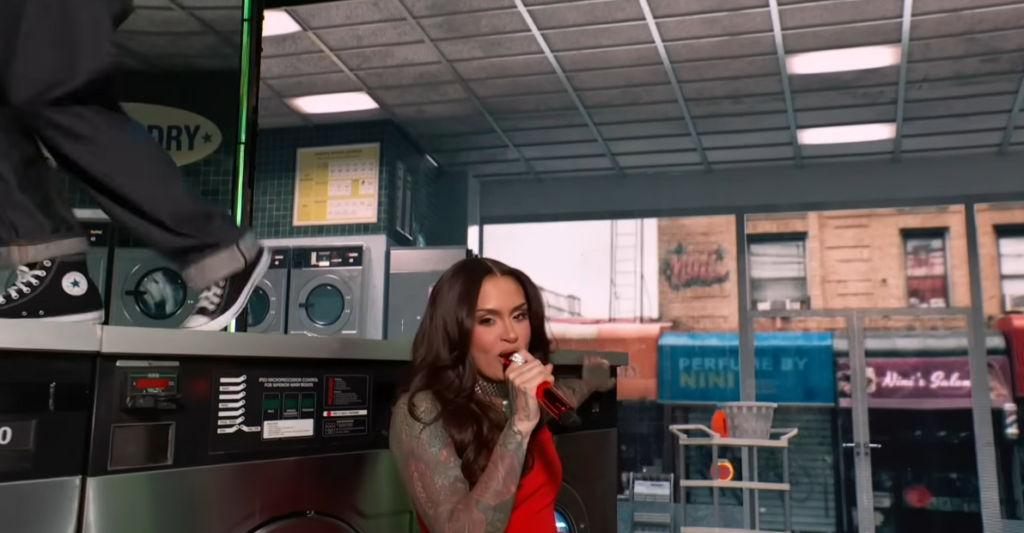
The set featured songs from her entire discography, including “Everything,” “Water,” and “Folded,” the Grammy-winning album that topped the R&B and rap charts the previous year. She achieved the kind of chart success that had previously seemed improbable for someone whose career started on a reality competition show. When Kehlani was a teenager, she performed with Poplyfe, a teen pop group that placed fourth on America’s Got Talent. This is not a particularly noteworthy outcome when attempting to forecast future Grammy victories, but here she is. A career arc that makes that earlier chapter feel more like the prologue than the entire narrative is genuinely satisfying.
When her debut album, SweetSexySavage, came out in 2017, it revealed a voice that didn’t quite fit into any one category: it was too melodic for the harsh edges of hip-hop and too raw for the polished mainstream of R&B at the time. In the years that followed, as the genre itself softened and grew, that in-between quality turned into a strength rather than a liability. By the time Blue Water Road was released, she had amassed an incredibly devoted fan base, something that only occurs when people believe that an artist is genuinely speaking to something about their experience rather than performing an approximation of it.
It was difficult not to feel that this was the kind of live moment that doesn’t need a review to be validated when observing the crowd at Hance Park: the people singing along word for word, the groups of friends who had obviously been listening to these songs together in cars and apartments for years, and the sheer density of a crowd that had walked or taken the light rail downtown specifically for this. On its own terms, it was obvious. On a Saturday night, a free performance in a public park was packed, and people were scaling buildings to get a better view. It’s not marketing. People genuinely want to be close to that performer.
The conflicting demands of the Final Four semifinals, the Arizona Diamondbacks’ home games at nearby Chase Field, and the overall foot traffic of a busy sports weekend were already taxing downtown Phoenix. The park itself was functioning as both a concert venue and a gathering place for thousands of fans who had driven or flown in for the basketball game, light rail cars were packed heading into the city center, and street closures stretched in all directions. In addition to adding another level of complexity to crowd control, the Kehlani concert gave the weekend something it needed: a moment that was solely focused on the music rather than the box scores and brackets.
It seems like Kehlani is about to embark on a phase of her career where everything is coming together in a way that hasn’t quite happened before. A chart-topping single, two Grammys, and now a headline spot at one of the most prominent free concerts in women’s sports. It remains to be seen if that results in the kind of enduring mainstream presence that her talent has always seemed capable of producing. However, none of that seemed like an urgent question on this specific Saturday night in Phoenix under a warm, purple desert sky. It turned out that you could hear the music from the fence, which was the crucial question.
Disclaimer
Nothing published on Creative Learning Guild — including news articles, legal news, lawsuit summaries, settlement guides, legal analysis, financial commentary, expert opinion, educational content, or any other material — constitutes legal advice, financial advice, investment advice, or professional counsel of any kind. All content on this website is provided strictly for informational, educational, and news reporting purposes only. Consult your legal or financial advisor before taking any step.
