

Every morning, a bet on the price of corn in three months is being made somewhere, whether it’s in a server farm in suburban New Jersey or a glass-walled trading office with a view of Lake Michigan. The particular field in central Illinois where that corn is growing is not on the trader’s mind. She is considering the latest USDA crop progress report, the La Niña pattern forming over the Pacific, a drought index that is hot throughout the Brazilian soybean belt, and the implications for futures prices on the Chicago Mercantile Exchange. It’s highly unlikely that the farmer whose crop is being priced is in the same conversation as the one who got up at five in the morning and drove a tractor across that field in Illinois.
This tension is not brand-new. The relationship between those who grow food and those who trade it has always been tense in agricultural commodity markets. The scope and sophistication of climate-driven speculation entering these markets, as well as the growing disparity between the value of that information to a hedge fund and what it means to a corn farmer who hasn’t yet locked in a price, have all changed significantly over the last 20 years. Only 15% of Illinois grain farms, according to research, actively use futures or options markets, which are the main instruments available to protect against price fluctuations.
The remaining 85% are left to absorb price volatility because they lack a way to predict or counteract it.
Even though there is still little public discussion about it, the process by which climate chaos enters futures pricing is now fairly well documented. In important producing regions, crop yields are lowered by temperature anomalies, drought, and extreme weather, which tightens the supply. Prices fluctuate when supply contracts while demand remains stable, which is the case because food demand is less elastic than oil demand. Early detection of these signals, frequently weeks or months prior to harvest, allows futures markets to price in the likelihood of different climate outcomes. Large-scale institutional investors, such as commodity index funds, exchange-traded funds connected to agricultural baskets, and hedge funds running climate scenario models, have flooded these markets since the deregulation of commodity markets accelerated in the early 2000s, amplifying the price movements caused by fundamental supply shifts. Speculators are not merely responding to signals related to the climate. It’s pretty obvious from research that they’re also driving the price trends those signals start.
The best example of this in modern times is the food crisis that occurred between 2008 and 2012. Australia experienced drought from 2007 to 2009, followed by Russia and Ukraine in 2010 and North America in 2012. Every incident reduced the amount of grain available worldwide. Large numbers of financial speculators flocked into commodity futures markets in response to the signals related to climate change and the obvious price trend. As a result, food prices increased dramatically and far more than they would have due to the underlying supply disruptions alone. The effects were immediate and physical for the world’s poorest people, who usually spend about 60% of their income on food. The world’s hunger rate rose. Not gradually. Right away. Dinner tables in Sub-Saharan Africa and South Asia were the final destination of the price signal that began with a drought in Australia’s Murray-Darling Basin.
Agricultural Commodity Futures & Climate Risk: Key Facts
| Field | Details |
|---|---|
| Topic | Climate risk pricing in agricultural commodity futures markets and farmer awareness gap |
| Key Commodities Affected | Wheat, maize (corn), soybean, rice, barley |
| Term for Climate-Driven Food Inflation | “Climateflation” |
| Primary Market | Chicago Mercantile Exchange (CME) and global futures markets |
| Farmer Hedging Adoption Rate | ~15% of grain farms in Illinois actively use futures or options |
| Key Climate Risk Channels | Supply reduction, inventory depletion, trade distortions, demand inelasticity |
| Speculative Investment Trigger | Deregulation since 1980s; accelerated post-2000 with commodity index funds and ETFs |
| 2008–2012 Food Crisis Context | Droughts in Australia (2007–09), Russia/Ukraine (2010), North America (2012) |
| Food Price Vulnerability | Poorest populations spend ~60% of income on food |
| Wheat’s Role in Risk Transmission | Acts as the leading transmitter of risk spillovers across agricultural markets |
| Rice’s Position | Exhibits relative isolation within the risk connectedness network |
| Biofuel Effect | Corn-based ethanol demand in North America drove additional upward grain price pressure |
| Research Methodology (Yang et al.) | TVP-VAR extended joint connectedness framework; Cross-quantilogram analysis (2000–2025) |
| Key Concern | Speculative capital amplifying climate-driven price movements beyond fundamental shifts |
| Policy Challenge | Most small farmers lack access to hedging tools, capital for futures markets, or training |
| Key Reference — ScienceDirect | Agricultural Commodity Market Overview — ScienceDirect Topics |
| Key Reference — RePec | Risk Management and Reality: Farmers’ Use of Futures Markets — RePec |
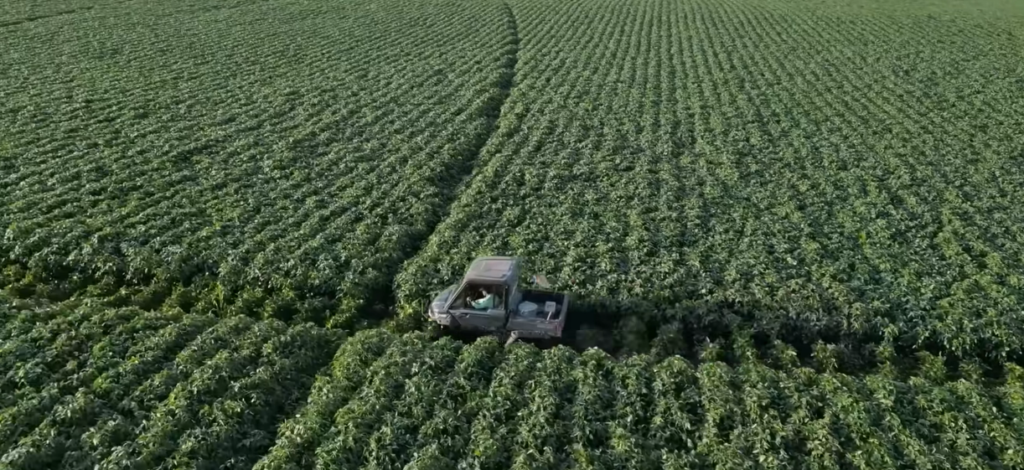
The fact that this dynamic is structurally invisible to those who are most exposed to it may be the most unsettling aspect of it. Soil moisture, temperature, pest pressure, rainfall timing, and other biological and meteorological realities are directly related to the climate signals being modeled on trading floors, whether a wheat farmer in Kansas, a soybean producer in Mato Grosso, or a barley grower in western Australia. However, capital, access to broker relationships, knowledge of derivatives contracts, and a time horizon for locking in prices—all of which many smaller producers just cannot afford to hold—are necessary for converting that exposure into a financial hedge. Small farms are unable to participate in futures markets due to capital constraints, which also force them to bear the entire negative impact of volatility that they did not cause.
Wheat is the primary transmitter of risk spillovers across agricultural markets, while barley is most susceptible to receiving them, according to research published in 2025 that examined the price vulnerability of wheat, maize, soybean, rice, and barley to climate physical risks between 2000 and 2025. Although even this insulation isn’t guaranteed as climate shocks worsen, rice’s relative isolation from the risk network may provide some cold comfort to the billions of people for whom rice is a staple food. The study demonstrates how intricately linked these markets are and how climate-related disruptions in one crop or area spread throughout the system in ways that are difficult to identify or forecast.
Observing how the biofuel component of this adds yet another level of complexity gives the impression that the producer seated farthest from the trading screen was essentially ignored in the system’s design. Policies in North America that promoted corn-based ethanol increased demand for grain as a means of mitigating climate change, driving up prices for the same crops that farmers were attempting to sell and for the same staples that people experiencing food insecurity were attempting to purchase. The risk to food security and the strategy for climate adaptation arrived in the same price signal.
The extent to which policy or education, as opposed to consolidation, can bridge the structural gap between futures market sophistication and farm-level risk management is still unknown. In order to safeguard their profit margins, large agricultural operations with specialized risk management personnel can engage in hedging markets. Due to their narrow profit margins and restricted access to credit, small farms can’t. For years, researchers have been documenting the climate future that the agricultural commodity market is pricing in. It hasn’t figured out how to fairly distribute that price signal to the people whose labor and land the entire system depends on.
Disclaimer
Nothing published on Creative Learning Guild — including news articles, legal news, lawsuit summaries, settlement guides, legal analysis, financial commentary, expert opinion, educational content, or any other material — constitutes legal advice, financial advice, investment advice, or professional counsel of any kind. All content on this website is provided strictly for informational, educational, and news reporting purposes only. Consult your legal or financial advisor before taking any step.
