

One scene sticks in your memory: a group of Dutch elementary school kids carefully measuring water levels with homemade gauges while ankle-deep in a man-made canal next to their classroom. Not at a science fair. Not as a project for extra credit. Like any other Tuesday afternoon. This is what water education looks like in the Netherlands, and most people outside the country are unaware of how serious, complex, and subtly urgent it is.
Looking at neat Dutch cities with their bike lanes and café terraces, it’s easy to forget that about half of the country is below sea level. Without centuries of human labor, the three biggest cities—Amsterdam, Rotterdam, and The Hague—would all be on the ocean floor. There isn’t a striking mountain range to provide shelter. No handy natural ridge exists. The only things that have been handed down through the generations like a family heirloom are engineering, alertness, and a knowledge of water.
Where that understanding starts has changed over the past few decades. In the past, government water boards, engineers, and dike builders controlled it. These days, it begins in classrooms, sometimes even in floating ones.
| Key Information | Details |
|---|---|
| Country | The Netherlands (Holland) |
| Capital | Amsterdam |
| Geography | More than half the country sits at or below sea level |
| Major Cities at Risk | Amsterdam, Rotterdam, The Hague |
| Water Management History | Over 1,000 years of flood control engineering |
| Landmark Event | 1953 North Sea flood — 1,836 deaths, triggered national overhaul |
| Key Infrastructure | Maeslantkering barrier, Delta Works, 3,000+ polders |
| Educational Approach | Integrated water literacy into national curriculum |
| Global Role | Advises New York, Bangladesh, Vietnam, and other flood-prone nations |
| Reference Links | The Guardian — The Dutch solution to floods: live with water, don’t fight it / AVEVA — How the Netherlands learned to live with the water |
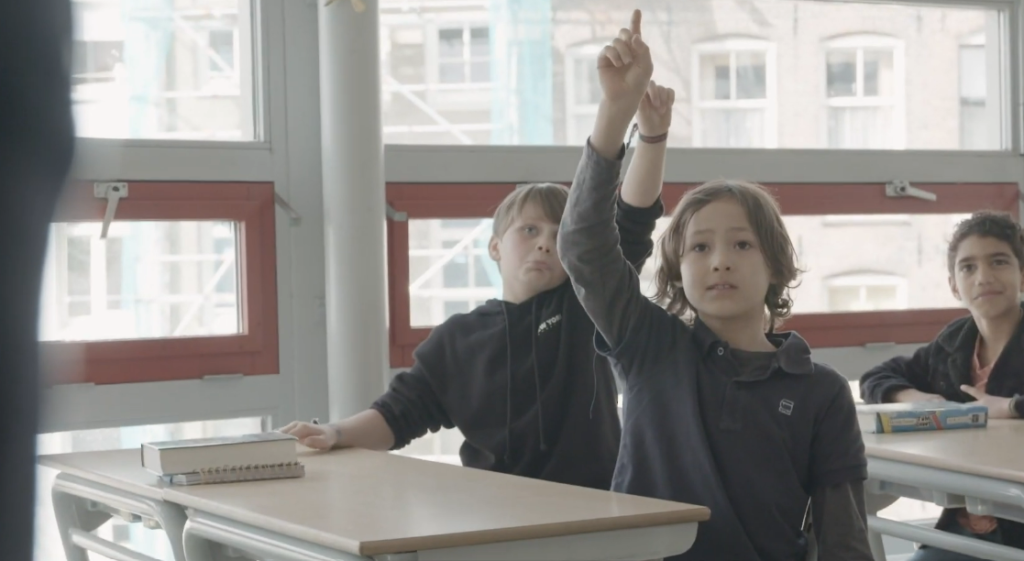
In a way that feels more like cultural inheritance than curriculum, Dutch schools have progressively incorporated water awareness into daily instruction. Kids are brought to pumping stations and polders. They research the reclaiming of their own neighborhoods from the sea and rivers. Some schools take part in initiatives where students design small-scale water retention systems, putting their hands to the kind of civic problem-solving that this nation’s adults have been doing for a millennium. It’s possible that no other country in the world requires its students to comprehend the environment they live on, or more accurately, in.
A series of solar-powered floating school buildings intended for areas vulnerable to flooding were recently finished by a Dutch architectural firm. Because each building has classrooms, sanitary facilities, and rainwater collection units, learning can continue even when the water level rises. Yes, it is an architectural statement. However, it’s also a philosophical one. We are not leaving, the building itself declares. We’re not holding out for the water to subside. We’re constructing around it.
All of this is rooted in a philosophical shift that dates back to a difficult past. The devastating North Sea flood of 1953 destroyed entire villages and claimed 1,836 lives. It compelled a national reckoning on attitude as well as infrastructure. Fortification was the response for decades afterward. Build stronger, higher, and force the water back. The enormous dike system that turned an entire inland sea into a freshwater lake, the Delta Works, and the Maeslantkering barrier in Rotterdam were all examples of how engineering could triumph over nature.
Then, in January 1995, as the Rhine, Meuse, and Waal rivers began to overflow, over 250,000 people were evacuated. The dikes barely held. Additionally, there was a change in the way the country thought. “We thought we were more or less okay,” a flood risk specialist at the Dutch water institute Deltares subsequently said. “But then we had two big flood events from the rivers.” In response, a program known as Room for the River was implemented, which included wider floodplains, strategic retreats, and channels that were cut to allow the water to breathe rather than taller walls. It was an acknowledgement. Nature won’t always be defeated.
With amazing honesty, that admission has permeated education. Water management is not being presented as a solved issue by Dutch educators operating within an integrated social studies framework. They are portraying it as a continuous negotiation. Instead of learning about climate change and sea level projections in an abstract way, students learn about these topics in relation to their local streets. Children in Rotterdam, where 90% of the city is below sea level, learn early on that the city square’s basketball court is a flood basin by design. Summertime outdoor theater takes place in the sunken plaza, which resembles a massive bowl ready to gather water during a storm. They are not unaware of this. It is described, highlighted, and demonstrated.
The willingness of an educational system to tell a ten-year-old, “Your city is built on borrowed land, and here is how we manage that,” is quietly impressive. Not a hysteria. No refutation. Just the kind of pragmatic honesty that results from residing in an area where there is no theoretical relationship with water.
It’s difficult to ignore the difference in how this is handled in other flood-prone countries. All too frequently, the discussion takes place after the catastrophe—after the cameras show up, after the evacuations, after the damage assessments. Before all of that, kids in the Netherlands are conversing while sitting cross-legged in a classroom next to a model dike, learning to read the water instead of be afraid of it. It is genuinely unclear if that knowledge will be sufficient as storm systems become heavier and sea levels continue to rise. However, the majority of the world hasn’t even thought about starting.
Disclaimer
Nothing published on Creative Learning Guild — including news articles, legal news, lawsuit summaries, settlement guides, legal analysis, financial commentary, expert opinion, educational content, or any other material — constitutes legal advice, financial advice, investment advice, or professional counsel of any kind. All content on this website is provided strictly for informational, educational, and news reporting purposes only. Consult your legal or financial advisor before taking any step.
