

Meta laid off 700 workers on the same Wednesday that it offered a new stock compensation package worth up to $921 million to its six most senior executives. Even by Silicon Valley standards, where this kind of thing has become almost routine, the timing was not coincidental—it rarely is in corporate restructuring—but the optics were so stark that it landed poorly. At Meta’s Menlo Park campus, seven hundred employees were clearing out their desks while the company’s finance chief, CTO, CPO, and three other executives were informed that if the company meets specific growth targets, they could each become worth close to $1 billion. Two announcements made within a twenty-four-hour period are quite far apart.
Anyone who has been keeping a close eye on Meta is already aware that Reality Labs was the company most affected by the layoffs. The Quest VR headsets, the virtual social network Horizon Worlds, and Mark Zuckerberg’s long-held concept of the metaverse—which completely changed Meta’s identity when the company rebranded from Facebook in 2021—are all housed in Reality Labs. At the time, that rebrand seemed to be the action of a business that was certain of its course. The name was changed. internal documents regarding the metaverse roadmap that were leaked. the massive investments made in spatial computing and virtual worlds. Looking back, it was the pinnacle of a concept that never quite persuaded people to attend. In the most recent round, about 10% of Reality Labs’ hardware division was eliminated. Sanzaru Games, which produced virtual reality games for Meta, has closed. Twisted Pixel has vanished. The Armature Studio has vanished. The internal technical infrastructure supporting VR content, known as Oculus Studios Central Technology, has been disbanded. The Supernatural fitness app, which was purchased for about $400 million only a few years ago, is being maintained by a small staff and will not be receiving any new content updates. Restructuring is not what this is. This retreat is managed.
Key Facts: Meta Layoffs — March 2026
| Company | Meta Platforms, Inc. |
| CEO | Mark Zuckerberg |
| Layoffs (March 2026) | ~700 employees across Reality Labs, Facebook, recruiting, and sales |
| Total Workforce | ~79,000 employees (as of December 31, 2025) |
| Divisions Affected | Reality Labs, Facebook, global operations, recruiting, sales |
| Reality Labs Impact | ~10% of hardware division affected; VR game studios shut down |
| Studios Closed | Sanzaru Games, Twisted Pixel, Armature Studio, Oculus Studios Central Technology |
| Executive Pay Program | New stock options for 6 top executives; potential value up to $921M each |
| AI Capital Expenditure | Forecast: $115B–$135B in 2026, primarily for AI infrastructure |
| $9 Trillion Target | Threshold required for maximum executive stock option payout by 2031 |
| Current Market Cap | ~$1.5 trillion |
| Additional Context | Same day: LA jury found Meta liable for harming young Instagram user |
| Reference Links | Meta Layoffs – CNBC · Meta Lays Off 700 – The New York Times |
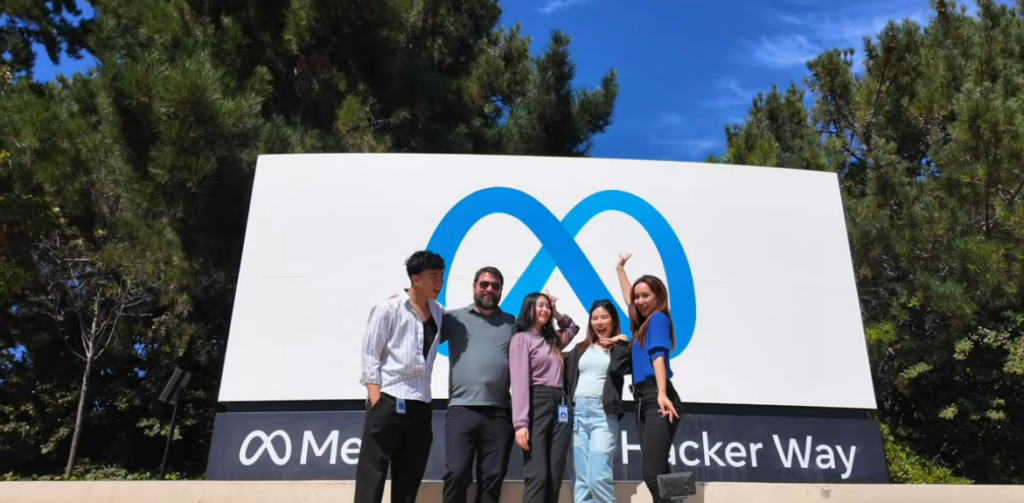
Depending on your point of view, what’s taking the place of the metaverse inside Meta is either the most exciting or the most concerning development in the tech sector at the moment. Zuckerberg has made it clear that he wants to create “superintelligence”—an AI that can act, reason, and help in ways that are far beyond the capabilities of existing large language models—and that can serve as a universal personal companion. Data centers and AI infrastructure will account for a large portion of Meta’s projected capital expenditures of between $115 billion and $135 billion in 2026 alone. Alexandr Wang, the founder of Scale AI, joined to spearhead Meta’s AI initiatives, bringing dozens of researchers with him. The company has been actively seeking AI talent from across the industry. AI-driven positions are being given to executives who worked on virtual worlds for years. The leadership’s message is not nuanced.
It’s important to fully comprehend the executive compensation plan that was revealed the day before the layoffs because it shows how Meta is articulating its own goals. Six executives received stock options linked to ambitious growth goals: CTO Andrew Bosworth, Chief Product Officer Chris Cox, CFO Susan Li, COO Javier Olivan, and two others. According to Equilar, Meta would need to grow into a $9 trillion business by 2031 in order to receive the maximum payout. It currently has a market value of about $1.5 trillion. It would take a rate of growth to go from $1.5 trillion to $9 trillion in five years, making Meta the most valuable company in history by a wide margin. Meta described this as a “big bet,” pointing out that the options have no value unless the business experiences “massive future success.” It is a generous way of characterizing what is essentially a compensation structure based on an extremely optimistic scenario, according to most analysts.
The discrepancy between what the company promises its executives and what it is providing to the approximately 700 individuals who are currently updating their LinkedIn profiles is difficult to ignore. In internal communications and investor calls, Meta has made it clear that AI will enable fewer workers to accomplish more. In January, Zuckerberg stated that “projects that used to require big teams can now be accomplished by a single very talented person.” A CEO who is simultaneously developing AI coding tools for his engineering teams, laying off employees from non-AI-focused departments, and developing stock incentives to reward executives who make the transition is making a significant statement. There isn’t much of a hidden subtext.
Additionally, a Los Angeles jury found Meta liable on Wednesday for injuring a young user through Instagram’s addictive design elements. This case is a precursor to a major wave of lawsuits against social media companies regarding their impact on the mental health of young people. Meta has been battling these cases for years, claiming that it is hard to prove causation and that its platforms are responsibly designed. At least in this case, the jury didn’t agree. The muted response of the company’s stock may indicate that investors believe legal risk has been factored into the AI spending commitments. It appears that Wall Street has largely chosen to ignore the legal and regulatory upheaval in favor of concentrating on whether the AI wager will be profitable.
It’s really unclear if it will. Both the size of the investment and the level of competition are remarkable. The same capabilities are being sought after by OpenAI, Google, Anthropic, and a dozen well-funded startups. Because billions of people use Facebook, Instagram, and WhatsApp, Meta has an advantage in distribution. An AI assistant integrated into those platforms might be able to reach a scale that standalone AI products just cannot. However, before the $135 billion yearly capital expenditure begins to weigh more heavily on the balance sheet than the market is currently willing to overlook, the technology must deliver and the returns must materialize.
Disclaimer
Nothing published on Creative Learning Guild — including news articles, legal news, lawsuit summaries, settlement guides, legal analysis, financial commentary, expert opinion, educational content, or any other material — constitutes legal advice, financial advice, investment advice, or professional counsel of any kind. All content on this website is provided strictly for informational, educational, and news reporting purposes only. Consult your legal or financial advisor before taking any step.
