

The way New York appears in Daredevil: Born Again Season 2 is a little unnerving. Although it doesn’t feel safer, the streets are quieter. Sirens reverberate between structures, reflecting off glass towers that appear to be observing rather than defending. And somewhere in that tension, Matt Murdock is once again hiding, though the word “hiding” may not be appropriate.
He’s here. Simply less noticeable.
The city has changed in tone rather than structure at the beginning of the new season, which is available on Disney+ every week. Wilson Fisk is now mayor in addition to being a crime lord. On paper, that change sounds almost bureaucratic, but when you watch it unfold—press conferences, policy announcements, subtle threats cloaked in political rhetoric—it seems riskier than anything he did in secret. Once legitimized, power might be more difficult to oppose. And this is the main source of tension.
As though the show itself is getting used to this new reality, the first episode proceeds slowly, almost cautiously. Matt isn’t jumping over rooftops just yet. He’s paying attention. Gathering pieces of a city that has lost faith in its own heroes, he strolled through dimly lit apartments and touched worn wooden tables and chipped paint. In the first scene, which lasts for just two minutes, he is motionless in a hallway while he can hear muffled arguments and distant footsteps through the walls. It’s difficult to ignore how much of this season is based on that kind of subdued observation. Then the violence shows up. Sharp, but not explosive. under control.
| Category | Details |
|---|---|
| Series Title | Daredevil: Born Again – Season 2 |
| Platform | Disney+ |
| Release Date | March 24, 2026 |
| Episodes | 8 (Weekly release) |
| Main Character | Matt Murdock / Daredevil |
| Lead Actor | Charlie Cox |
| Main Antagonist | Wilson Fisk / Kingpin |
| Showrunner | Dario Scardapane |
| Setting | New York City (Hell’s Kitchen) |
| Reference Links | Marvel Official Page • IMDb Episode Guide |
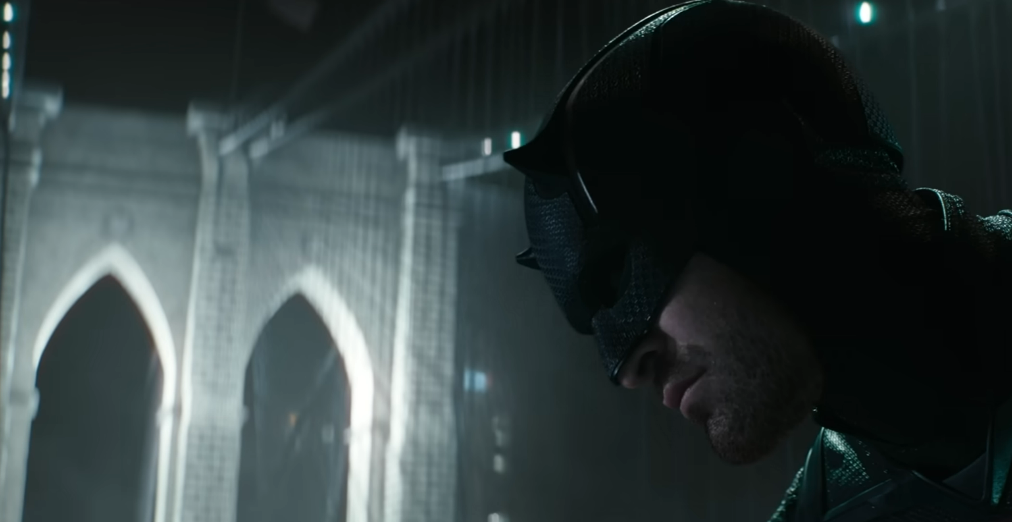
Marvel seems to be attempting to reclaim what it lost. Over time, most MCU projects softened the grounded brutality of Daredevil’s earlier Netflix version. Born Again’s second season seems to be a partial, if not total, correction. It treads carefully, sometimes retreating when things start to become too uncomfortable. As it develops, the question of how far the studio is willing to go this time remains.
The answer to that question is found in Fisk’s Anti-Vigilante Task Force. They move through the city like a system rather than a gang; they are uniformed, authorized, and unsettlingly effective. It’s order, but the wrong kind; it’s not chaos. The camera lingers on shipping containers stacked like silent witnesses during a raid on a warehouse close to Red Hook. Not a single song. It was just boots on concrete. It feels more like a political thriller than a superhero show.
Nevertheless, the program hasn’t given up on its history.
It keeps regressing in a way that seems deliberate due to minute details. Conversations casually mention former allies like Claire Temple and Jessica Jones. The room appears to pause for a half-second when a name is mentioned over a crackling phone line. It lands, but it’s subtle. The show seems to be reconstructing its world piece by piece, hinting at reunions rather than rushing to them.
Although it’s still unclear if those characters will make a full comeback, their absence already seems to be present.
At least in the initial responses, the pacing has caused controversy. The first few episodes move purposefully, emphasizing atmosphere over action. Some viewers appear agitated, anticipating instant rewards. However, the restraint makes sense. The show lets the stakes settle by slowing down. Fisk is a system to destroy, not just a villain to vanquish. That is more difficult. less cinematic and messier.
Perhaps even more fascinating.
The meaning of Daredevil in this iteration of the MCU is another issue. Marvel has long relied on spectacle—cosmic threats, chaos in multiple universes, and ever-larger battles. By focusing on a single city, a small number of characters, and conflicts that seem uncomfortably close to reality, this show takes the opposite approach. Although it’s unclear if viewers will completely accept it, it’s possible that this smaller scale is precisely what the franchise needs right now.
The timing seems intentional outside the screen. Superhero fatigue is now a topic of discussion, whispered in business circles and sometimes reflected in box office receipts. This kind of show reads almost like a reaction because it is quieter, darker, and more reflective. A recalibration rather than a rejection of the genre. Even so, not everything functions.
The dialogue occasionally relies too much on exposition, with characters explaining rather than revealing. A few scenes don’t feel like stand-alone scenes; instead, they set up future payoffs. It serves as a reminder that even a show that makes an effort to feel grounded is still a part of a much bigger machine. However, there are times when that isn’t the case.
Sitting by himself on a rooftop while the city hums beneath him, Matt is bruised and breathing heavily. Something darker flickers just beneath the surface as Fisk, framed behind a polished desk, speaks softly. Karen Page, cautiously navigating discussions that seem like they could go either way. These are the scenes that stick with you.
As this plays out, it seems like Daredevil is less motivated to prevail this time. more concerned with surviving. Changing. Perhaps even redefining what success looks like.
Disclaimer
Nothing published on Creative Learning Guild — including news articles, legal news, lawsuit summaries, settlement guides, legal analysis, financial commentary, expert opinion, educational content, or any other material — constitutes legal advice, financial advice, investment advice, or professional counsel of any kind. All content on this website is provided strictly for informational, educational, and news reporting purposes only. Consult your legal or financial advisor before taking any step.
