

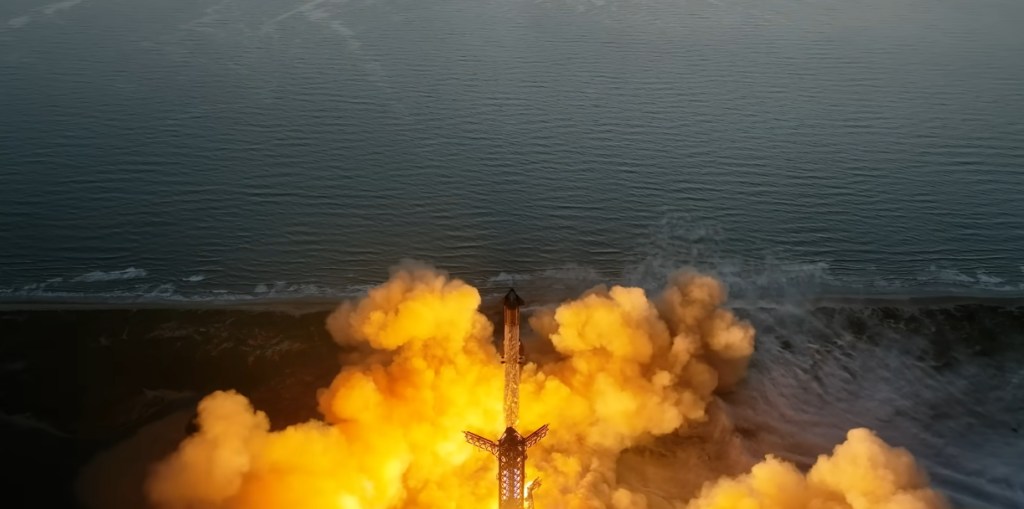
For a company that launches rockets loud enough to shake windows miles away, SpaceX seems strangely quiet. When a test launch occurs close to Boca Chica, the ground trembles first, followed by a late, loud, and unmistakable sound. As you watch it, it’s difficult to avoid thinking that investors are attempting to buy into this, even though they are still unable to do so in theory.
SpaceX maintains its privacy, which gives it a certain mystique that most publicly traded companies soon lose. There is no minute-by-minute panic or daily ticker flashing on screens. However, a shadow market is emerging around it, with secondary shares trading in silence and rumors of valuations surpassing $1 trillion. Even though access is still restricted, investors appear to think they are seeing the beginning of something huge.
Rumored to be scheduled for 2026, the anticipated IPO looms large over everything. It might turn out to be the biggest IPO ever. Every aspect of finance has taken notice of that alone. However, it’s still unclear if the excitement will be justified by the numbers. Generally speaking, a company with $15 billion in revenue is not valued at nearly $1.5 trillion. A lot of heavy lifting is being done by that gap.
Starlink is at the center of the narrative. Internet connections are now powered by satellites that move silently overhead, barely visible on clear nights, in remote locations where none previously existed. It’s a legitimate company that is expanding rapidly and launching thousands of units into orbit. There’s a sense of something fragile and industrial going on at the same time as you watch technicians set up equipment, adjust panels, and inspect cables. However, turning that into a trillion-dollar defense? That’s where the story ends.
Additionally, there is the rocket industry itself, with Falcon 9 launches occurring in a routine that still seems surreal. Crews approaching them as if nothing had happened, engines cooling in the open, rockets landing upright on ocean platforms. It wasn’t ten years ago. That advancement is genuine. However, even when successful, space launch is expensive and unpredictable. It doesn’t act in the same way as software margins.
The wider expansion comes next. The distinctions between SpaceX and businesses involved in social media infrastructure and artificial intelligence are becoming increasingly hazy. The story seems to be expanding more quickly than the foundations. Without a doubt, it is ambitious. However, ambition can be costly.
| Category | Details |
|---|---|
| Company Name | Space Exploration Technologies Corp. (SpaceX) |
| Founded | 2002 |
| Founder & CEO | Elon Musk |
| Headquarters | Hawthorne, California, USA |
| Industry | Aerospace, Satellite Internet, AI |
| Status | Private Company |
| Estimated Valuation | ~$1.5 Trillion (rumored IPO target) |
| Core Businesses | Rocket Launches, Starlink, AI Integration |
| Revenue (Est.) | ~$15 Billion |
| IPO Timeline | Expected 2026 (unconfirmed) |
| Official Website | SpaceX Official Site |
| Company Overview | SpaceX – NASA Commercial Crew |
Companies like EchoStar, which own stakes in SpaceX deals, are examples of indirect routes that some investors have taken in search of early exposure. It’s almost like purchasing a reflection rather than the actual item. To a certain extent, it works. However, it also adds layers of risk that are not immediately apparent.
The tone of online conversations about SpaceX stock seems familiar. It is reminiscent of the early days of Tesla, when skepticism was swiftly dismissed and belief was on the verge of certainty. That contains energy. However, there is also danger. Certainty has a tendency to be punished by markets, particularly when it comes too soon.
It’s interesting to note how little conventional valuation appears to be important at the moment. Long timelines, capital expenditures, and price-to-sales ratios are recognized and then put aside. Investors appear to be wagering on something more difficult to quantify: execution over time and the presumption that SpaceX will continue to defy expectations as it has done thus far.
Even so, it’s difficult to ignore the growing tension. There would be very little opportunity for disappointment with a trillion-dollar IPO. Launch delays, regulatory obstacles, and slower-than-anticipated Starlink growth are examples of minor setbacks that could quickly change public opinion. Additionally, SpaceX wouldn’t have the luxury of silence once it went public.
A cultural component is also involved. SpaceX is more than just a business; it is associated with a broader concept of exploration and pushing boundaries. That has emotional significance. Investors are purchasing a narrative about the future rather than merely cash flows. It remains to be seen if that results in long-term profits.
Disclaimer
Nothing published on Creative Learning Guild — including news articles, legal news, lawsuit summaries, settlement guides, legal analysis, financial commentary, expert opinion, educational content, or any other material — constitutes legal advice, financial advice, investment advice, or professional counsel of any kind. All content on this website is provided strictly for informational, educational, and news reporting purposes only. Consult your legal or financial advisor before taking any step.
