

These days, a large investment bank’s trading floor hardly ever appears dramatic. Wall Street’s once-dominant shouting has largely subsided. Instead, screens glow softly. Analysts in rows gaze at dashboards, charts, and seemingly endless streams of data. It’s hard to ignore a peculiar change that has subtly changed finance when you watch this scene. Money is no longer the most valuable item in the room. It’s information.
Twenty years ago, data accumulated after transactions were finished and was handled by financial institutions like paperwork. Reports were produced, records were archived, and everything was kept in expansive databases by compliance departments. Definitely useful. but seldom regarded as a strategic asset. That assumption started to fall apart somewhere along the line.
| Category | Details |
|---|---|
| Core Topic | Data as a strategic financial asset |
| Industry Focus | Banking, fintech, capital markets |
| Key Technologies | Artificial intelligence, machine learning, predictive analytics |
| Primary Value | Risk prediction, fraud detection, customer personalization |
| Economic Impact | Data increasingly contributes a large portion of corporate valuation |
| Strategic Role | Supports real-time decision making and automated trading |
| Key Challenge | Data governance, security, and regulatory compliance |
| Global Trend | Financial firms building dedicated “data cultures” and analytics teams |
| Major Users | Banks, hedge funds, fintech companies, payment networks |
| Reference Sources | PwC – Data: The Game-Changing Asset |
| Forbes – Data Is the Biggest Asset on Your Balance Sheet |
Banks now gather vast amounts of behavioral signals. Every loan application, credit card swipe, late payment, and mobile banking login. It’s a never-ending stream of digital traces that show how people invest, borrow, spend, and sometimes panic. The amazing thing is that these traces never truly go away. They build up and covertly grow into what many executives now consider to be their most valuable asset.
Finance seems to have found this value by accident. Analysts started feeding those old records into algorithms as machine learning tools advanced over the last ten years. Patterns emerged out of nowhere. Subtle transactional similarities exposed fraud rings. Predicting credit risk became simpler months before it was possible with traditional models. Even consumer behavior, or what products consumers might want next, began to appear remarkably predictable.
A few hedge funds became aware of this sooner than others. Years ago, analysts started experimenting with unusual data sources in a quiet Manhattan office tower. Traffic in retail parking lots is measured by satellite photos. Logs of shipments. weather logs. even sentiment on social media. It sounded strange at first. However, traders came to the important realization that the person who comprehends the data first is frequently the one who comprehends the market first.
It is simple to underestimate the extent of this change. These days, financial institutions produce data in petabytes rather than gigabytes. Another layer is added every hour. It feels almost geological to watch the growth, as if sediment has been building for decades. Additionally, this resource does not diminish with use, in contrast to capital or oil. Data can be repeatedly copied, reassembled, and analyzed, frequently yielding insights that weren’t immediately apparent.
It appears that investors think this alters the way businesses should be valued. Financial technology companies’ market capitalization frequently shows the breadth of their data ecosystems in addition to revenue. For example, payment platforms do more than just handle transactions. They gather behavioral maps of the economic movements of millions of consumers. In the end, that map might be worth more than the money.
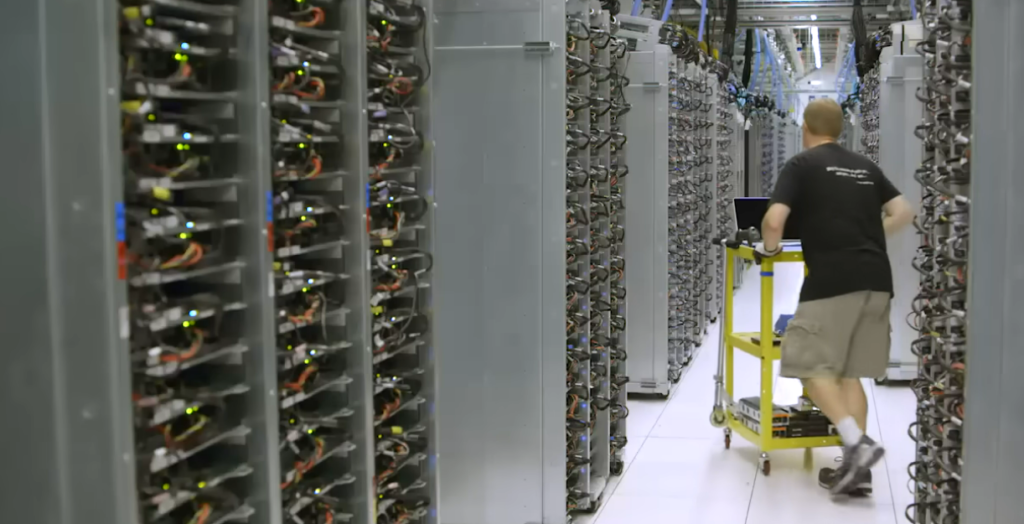
However, the notion that financial institutions are covertly creating enormous behavioral archives is a little unnerving. The scale becomes apparent as one passes a row of servers inside a contemporary data center, with long hallways humming with blinking lights and cooling fans. These devices store pieces of people’s financial lives, including investment decisions, travel expenses, and mortgages. It poses a query that authorities are increasingly posing. Who is the true owner of all this data?
Concerns about security have increased in tandem with the data’s actual value. Millions of financial records could be exposed overnight by a single breach. These days, banks spend a lot of money safeguarding these digital vaults by setting up encryption systems and keeping an eye on networks that are more akin to military hardware than conventional accounting systems. Data is now comparable to a bank’s gold reserves in certain respects.
Fascinatingly, though, a lot of organizations still have trouble making use of the data they already possess. Large banks frequently have data stuck in disparate systems, with customer records in one database, transaction logs in another, and compliance documents in yet another. Although the term “data silos” sounds almost too polite, engineers occasionally refer to these systems as such. They act more like locked rooms in reality.
In the finance industry, breaking down those walls has become a strategic obsession. Chief data officers, analytics leaders, and algorithm specialists are among the new executive positions that have emerged, all of which are responsible for converting disorganized records into insightful knowledge. The work may be disorganized. Seldom does data arrive in an orderly fashion. It is frequently duplicated, incomplete, or kept in formats created decades ago.
However, businesses continue to advance due to the potential. Predictive models are getting better. The speed at which fraud is detected is increasing. Recommendations from customers are becoming increasingly accurate. Financial institutions that succeed in this process might differ significantly from those that don’t.
From a distance, the industry seems to have undergone a fundamental change. Capital was the focal point of finance for centuries. It moved, who had it, and who needed it. Another layer is now subtly forming. Information, patterns, and behavioral signals form an unseen infrastructure.
Disclaimer
Nothing published on Creative Learning Guild — including news articles, legal news, lawsuit summaries, settlement guides, legal analysis, financial commentary, expert opinion, educational content, or any other material — constitutes legal advice, financial advice, investment advice, or professional counsel of any kind. All content on this website is provided strictly for informational, educational, and news reporting purposes only. Consult your legal or financial advisor before taking any step.
