

The Swiss Alps can appear almost theatrical on some winter mornings. Ski lifts start to hum above sleepy villages as the sun slowly rises over jagged ridges, illuminating once-permanent glaciers. This rhythm characterized Switzerland’s winters for generations. Early snowfall, skiers packed the slopes by December, and glaciers shimmered like frozen sentinels over the valleys.
However, the scene has begun to feel a little different lately. The Alps are still stunning, so there isn’t a noticeable difference at first, but something has changed subtly. Later, the snow comes. The white blanket has less thickness. It vanishes weeks before people remember in some valleys.
It is getting harder to ignore the numbers that support that feeling.
Switzerland experienced exceptionally little snowfall in the winter of 2024–2025. Later, meteorologists verified that the October–March season was one of the warmest on record. Glaciers carried roughly 13% less snow by the end of April than they had on average over the previous ten years.
The speed at which that snow disappeared startled even seasoned researchers.
Many glaciers were exposed to bare ice much earlier than usual by early July, as a large portion of the winter snowpack had already melted away. It wasn’t helped by the heat. Even at higher elevations, melting accelerated in June, which became the second-warmest month on record. The Alps briefly seemed to have a completely different climate when heatwaves in August raised the freezing point above 5,000 meters.
| Category | Details |
|---|---|
| Location | Swiss Alps, Switzerland |
| Climate Trend | Switzerland warming roughly twice as fast as the global average |
| Glacier Count | Nearly 1,400 glaciers (most in Europe) |
| Glacier Loss | Around 25% of glacier volume lost since 2015 |
| Recent Ice Loss | About 3% glacier volume lost in 2025 alone |
| Snowpack Decline | Roughly 13% less snow cover compared to the 2010–2020 average |
| Major Monitoring Group | Swiss Glacier Monitoring Network (GLAMOS) |
| Environmental Risks | Rock-ice avalanches, unstable mountains, water shortages |
| Economic Impact | Ski tourism, hydropower, farming, and water supply |
| Reference | https://www.glamos.ch |
| Reference | https://scitechdaily.com |
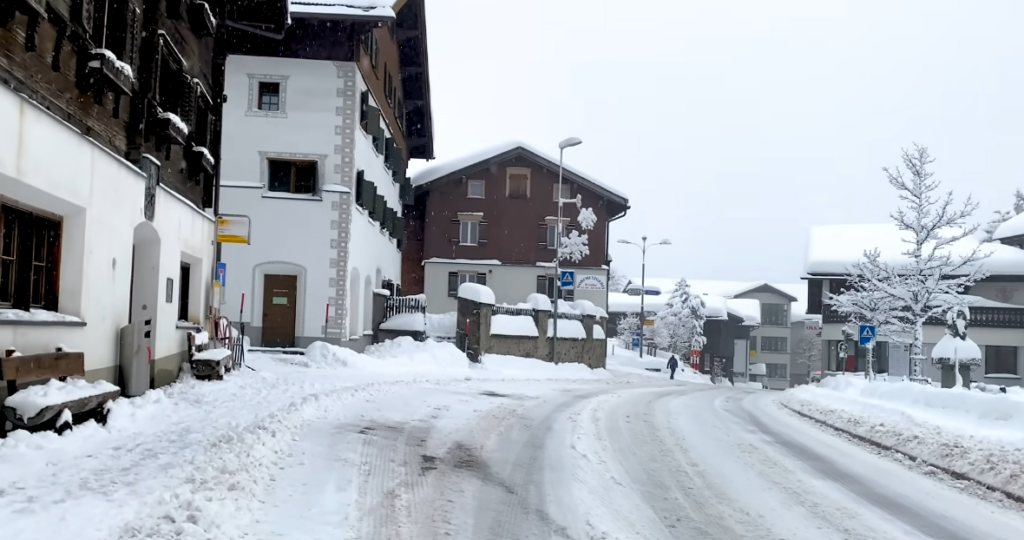
The repercussions, according to glaciologists researching the mountains, have been severe. In 2025 alone, Switzerland’s glaciers lost about 3% of their total volume, which is the fourth-largest annual loss since records have been kept. Approximately 25% of the nation’s glacier ice has vanished in the past ten years.
That trend is significant for a location known as Europe’s water tower.
Switzerland has more glaciers than any other nation on the continent—nearly 1,400. Rivers that traverse a large portion of Europe are subtly nourished by these ice masses. They release stored meltwater during hot summers, sustaining farms, drinking supplies, and hydropower facilities downstream. That stable reservoir starts to diminish as glaciers recede.
In Valais, strolling by the Rhone Glacier provides a window into the transformation. An enormous tongue of ice pushing against the rocks is depicted in older, early 20th-century photos of the glacier spilling deep into the valley. Now that the glacier is much further back, the ice has given way to a growing turquoise lake.
It’s difficult to ignore the distinction.
For decades, locals have observed the retreat’s gradual development. There is loose gravel where summer hiking trails once crossed solid ice, as some people recall. Ski instructors discuss routes that are just obsolete. Although the change may seem gradual from year to year, the pace is remarkable when compared to historical records.
Just the last two years have been especially harsh. According to scientists, Switzerland lost about 10% of its glacier volume in that brief time, which is equivalent to what used to take several decades.
The topography of Switzerland contributes to the explanation. Elevation-dependent warming is the term used to describe the tendency of mountain regions to warm more quickly than the global average. In comparison to the late nineteenth century, Switzerland’s temperature has already increased by nearly three degrees Celsius.
Winter is altered by this additional warmth in ways that go beyond snowfall totals.
Particularly in lower valleys, more winter precipitation now falls as rain rather than snow. In order to survive the chilly nights of early winter, resorts that formerly relied on natural snow are increasingly using artificial snow machines. Even so, some seasons start off with slopes that appear surprisingly uneven.
Officials in charge of tourism are keeping a close eye on things. For many years, skiing has been essential to the Swiss winter economy, sustaining lodging facilities, dining establishments, and regional transportation networks. Smaller ski areas below roughly 1,500 meters face increasing uncertainty, while resorts at higher elevations continue to be comparatively dependable.
With increased investments in hiking trails, mountain bike routes, and year-round tourism, some villages have begun to subtly reevaluate their future.
Not all of the changes are economic. The mountains themselves are also altered by melting glaciers. Steep slopes may become unstable when ice retreats because the rock below is no longer supported. Many Swiss citizens were shocked when a rock-ice avalanche in the Lötschental valley in 2025 buried a large portion of the tiny village of Blatten.
Scientists think that as glaciers continue to thin, these risks might increase.
However, the Alps’ future isn’t totally set in stone. According to climate models, decisions about global emissions in the ensuing decades may have an impact on the amount of glacier ice that remains at the end of the century. Certain glaciers may survive or completely disappear depending on even slight variations in temperature trajectories.
Even now, when you stand in the Alps, the mountains still appear strong and timeless. In winter, snow still falls. The slopes are still climbed by ski lifts. However, there is a growing perception that the traditional Alpine winter rhythms are gradually changing.
Disclaimer
Nothing published on Creative Learning Guild — including news articles, legal news, lawsuit summaries, settlement guides, legal analysis, financial commentary, expert opinion, educational content, or any other material — constitutes legal advice, financial advice, investment advice, or professional counsel of any kind. All content on this website is provided strictly for informational, educational, and news reporting purposes only. Consult your legal or financial advisor before taking any step.
