

A lunar eclipse happens without much fanfare. In city squares, there are no countdown clocks or sirens. It just happens silently as the Earth moves between the Sun and the Moon, reducing the familiar glow that most nights we hardly notice. However, people pause when the moon turns red. They leave the house. They cock their heads backward.
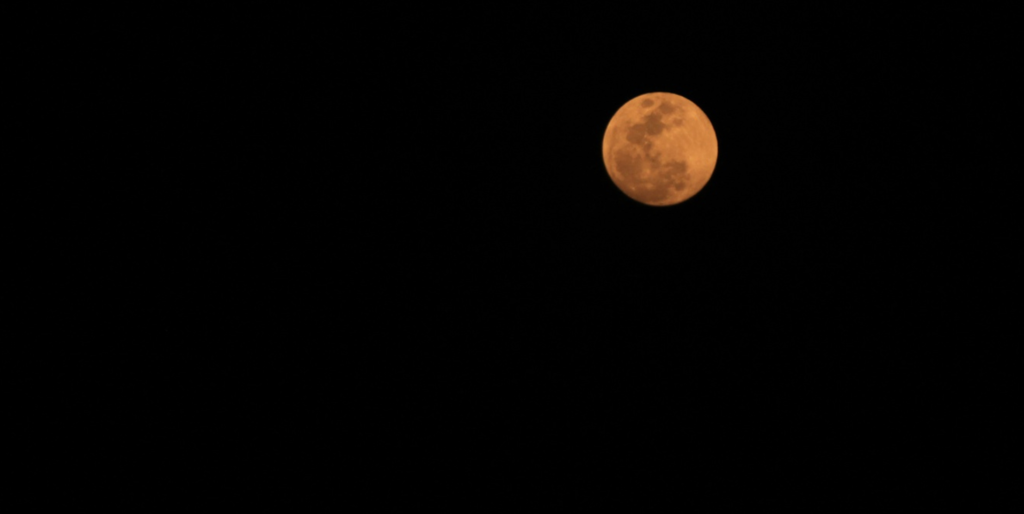
The total lunar eclipse this week, which peaks at less than an hour, will accomplish just that. The Moon will transition into the darkest shadow of Earth, known as the umbra, and acquire the coppery color that people insist on referring to as a “blood moon.” The phrase seems dramatic, perhaps needlessly so, but it’s difficult to resist the urge when you’re standing beneath a deep red moon. It’s a disconcerting color. Gorgeous, but a little scary.
Many observers in Pakistan will be unable to witness the eclipse because a large portion of it will take place during the day. Penumbral phase, partial phase, and totality timings were laid out by the Pakistan Meteorological Department in a manner similar to a train schedule. Schedules, however, do not ensure visibility. Interference from clouds. Time of moonrise matters. In some cities, it’s possible that only the fading stages will be visible, so fans will have to squint at a darkening sky in the hopes of catching a glimpse.
| Region / Continent | Eclipse Type Visible | Totality (Red Moon) Timing | General Notes |
|---|---|---|---|
| North America | Total & Partial | Early morning: ~3:44–9:22 a.m. EST (totality ~6:04–7:02 a.m.) | Moon still above horizon at night and dawn; totality seen before sunrise. (Time and Date) |
| South America | Partial to Total (west) | Similar to North America early morning | Far western parts can see total; more eastern zones partial as Moon sets. (Time and Date) |
| Asia (East & Southeast) | Total | Evening/night March 3 local times | Moon rises already in eclipse for many areas; totality at night. (NASA Science) |
| Australia & Oceania | Total | Night March 3–4 local times | Fully visible in evening/night; ideal Pacific viewing. (NASA Science) |
| Europe | Not Visible | – | Moon below horizon during the eclipse phases. (Vaonis) |
| Africa | Not Visible | – | Likewise below horizon; no sighting (Moon not above horizon). (Vaonis) |
| Pacific Islands (Oceania) | Total | Late night to early morning depending on location | Excellent central view across ocean regions. (NASA Science) |
| Central Asia | Partial | Moonrise may occur during partial phase | Only portions of eclipse visible; totality may be below horizon. (NASA Science) |
Key Universal Timing (UTC):
- Penumbral Begins: ~08:44 UTC
- Partial Begins: ~09:50 UTC
- Totality Begins: ~11:04 UTC
- Greatest Eclipse (peak): ~11:33 UTC
- Totality Ends: ~12:02 UTC
- Partial Ends: ~13:17 UTC
- Penumbral Ends: ~14:22 UTC
Important Points
- A total lunar eclipse is visible wherever the Moon is above the horizon during the event. For this eclipse, the geometry means most of the night side of Earth between Asia/Australia and the Americas will catch it.
- Europe and Africa miss it entirely because the Moon will be below the horizon (it’s daytime there during the eclipse phases).
- Totality lasts about 58 minutes at peak, but the entire eclipse (including penumbral and partial phases) stretches over ~5 hours and 39 minutes as Earth’s full shadow sweeps across the Moon’s face.
Early risers in some regions of North America will brave the cold dawn air to witness totality. One amateur astronomer in Oregon joked online that the view might be ruined by persistent rain. It is difficult not to feel sympathy. The most anticipated events frequently occur under cloudy skies, which is a strange cruelty of astronomy.
It’s a beautiful, straightforward science. Red light is bent toward the Moon and shorter blue wavelengths are scattered by sunlight as it passes through Earth’s atmosphere during a total lunar eclipse. Sunsets are illuminated by the same phenomenon. The color red is painted by the Earth, not created by the Moon.
Observing neighbors huddled with blankets and thermoses on a rooftop during a previous eclipse, I noticed a noticeable change in atmosphere as totality drew near. The tone of the conversations cooled. Kids indicated. Not even the din of traffic seemed to bother them. It seems as though everyone is sharing the same sky when the Moon darkens, making the world appear momentarily smaller.
Because of the eclipse’s umbral magnitude of roughly 1.15, the Moon will go far into Earth’s shadow. This frequently results in a deeper shade of red, occasionally approaching rust or burnt orange. However, it’s still unclear how dark this one will look. The shade can be slightly changed by atmospheric factors such as pollution, volcanic dust, or even smoke from wildfires. A sort of planetary mood ring is created by the color of the moon.
There is no need for safety glasses, unlike a solar eclipse. You just have to look up. That accessibility is important. It makes the event more accessible. no specialized tools. No passes. Just a clear sky and timing.
However, there’s something about lunar eclipses that seems to be filtered through screens more and more. Already, livestreams, countdown graphics, and time zone breakdowns are all over social media. Influencers are providing rituals for viewing. Chanting is recommended by some. Journaling about gratitude during totality is something else suggests. There is a propensity to assign significance to a celestial alignment that, according to science, is simply orbital mechanics operating according to plan.
However, ignoring the emotional attraction would be a mistake. For millennia, people have responded to eclipses. Ancient societies perceived cosmic resets, omens, and divine warnings. We refer to it as astrophysics today. There’s still awe.
Additionally, there is the silent economic ripple. Retailers of telescopes see an increase in sales. News outlets promote live blogs. Planetariums plan unique programming. Sometimes even airlines promote eclipse routes. It is subtle but noticeable, serving as a reminder that commercial energy can be sparked by even predictable celestial events.
There is more to the March sky than this eclipse. A few days later, there will be a Venus-Saturn conjunction and the vernal equinox. Every March feels like a change from the darkness of winter to something lighter. Early spring lunar eclipse viewing offers a glimpse of that seasonal shift: darkness rising before days getting longer.
Even though deep total eclipses happen somewhere on Earth fairly frequently, it’s difficult to ignore how uncommon they feel. Midway through 2029 will mark the next total lunar eclipse that will be broadly visible in the contiguous United States. That gap makes it heavier. This is not a once-in-a-lifetime experience, but it is also not a monthly one.
In locations where the skies cooperate, the Moon will progressively dim on the morning of totality. It will let the shadow move across its face. After that, the well-known gray disk will glow red against black space for 58 minutes. Automobiles will slow down on peaceful roads. On balconies, people will stand in their pajamas. The cameras will click.
Then it will be over.
The Moon will shine once more, regaining its typical pale assurance. Talk will veer back toward the norm. Eclipse warnings will give way to weather forecasts. However, billions of people will have noticed something strange when they looked up at the same object for a brief period of time.
A lunar eclipse seems almost inconspicuous in a time when digital spectacle is the norm. It demands patience. Silence is rewarded. There is no need for interpretation or belief. It just happens.
It’s hard to put a number on the sense that the universe is both predictable and mysterious at the same time when you watch that shadow move. We are familiar with the mechanics. The seconds are calculable. But even experienced astronomers pause when the Moon turns red.
Disclaimer
Nothing published on Creative Learning Guild — including news articles, legal news, lawsuit summaries, settlement guides, legal analysis, financial commentary, expert opinion, educational content, or any other material — constitutes legal advice, financial advice, investment advice, or professional counsel of any kind. All content on this website is provided strictly for informational, educational, and news reporting purposes only. Consult your legal or financial advisor before taking any step.
