

In the morning, the escalators in Exchange Square hum softly as they transport traders and bankers to offices where billions of dollars are transferred almost imperceptibly. Outside in the Central district, the air is heavy with humidity and anticipation as electronic boards display numbers linked to the Hong Kong Stock Exchange, each of which represents a sliver of confidence or uncertainty.
After a few erratic sessions, the Hang Seng Index recently increased slightly to about 26,705 points. It’s possible that the increase wasn’t significant enough to draw in onlookers, but even modest increases draw notice in brokerage offices. Although they are hesitant, investors appear to think that momentum may still favor Hong Kong.
| Category | Details |
|---|---|
| Exchange Name | Stock Exchange of Hong Kong |
| Main Index | Hang Seng Index (HSI) |
| Latest Level | 26,705.94 points |
| Market Capitalization | HK$34 trillion |
| Number of Listed Companies | 2,600+ |
| Founded | 1891 |
| Owner | Hong Kong Exchanges and Clearing Limited |
| Global Ranking | Among Top 10 largest stock exchanges worldwide |
| Financial District | Central, Hong Kong |
| Official Website | https://www.hkex.com.hk |
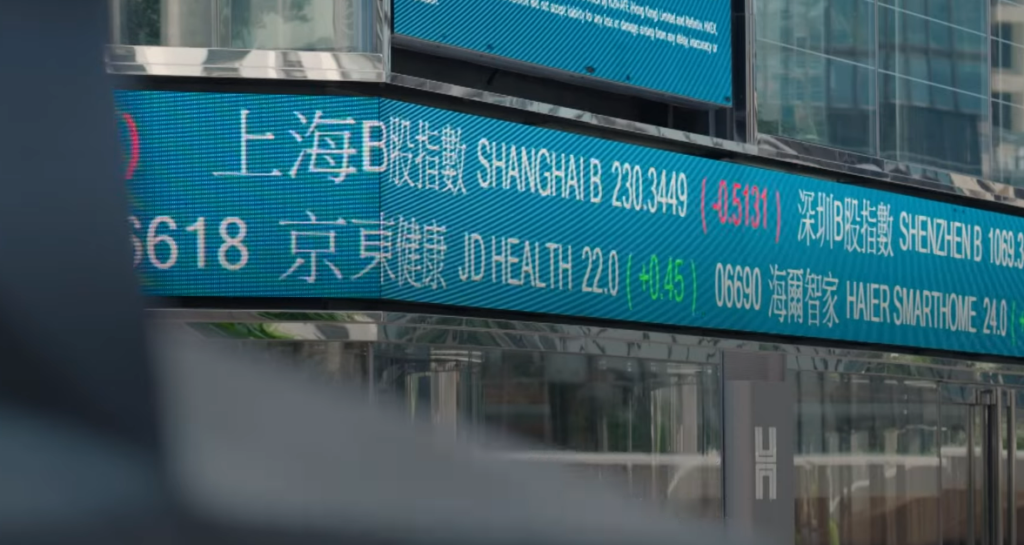
This market, which has been influenced by geography and history, has an emotional quality. Hong Kong absorbs pressure from both sides because it is positioned between China and the international financial system. One frequently gets the impression that traders are reacting to more than just earnings reports when they watch the index move. They are responding to rumors about China’s economy, policy cues, and politics.
Office workers stop by cafés as they pass the glass buildings in Central, looking at stock apps before placing their coffee order. Some seem at ease. Others don’t. After years of erratic fluctuations, investors have learned patience—and possibly caution—from Hong Kong’s market.
Technology firms continue to be the focus of attention. Recent share increases by industry titans like Tencent and Baidu improved sentiment generally. The market seems more contemporary as tech stocks rise, suggesting that Hong Kong is attempting to reinvent itself beyond its historical banking foundations. It’s still unclear if technology by itself can generate long-term benefits.
Ahead of the Lunar New Year festivities, trading volume was lower, which produced an oddly serene atmosphere. Decision-making is often slowed down during the holidays, and some investors choose to lock in profits rather than take on new risks. What appears to be stability could just be hesitation.
It seems like mainland Chinese investors are still affecting Hong Kong’s course. Hong Kong’s position as a gateway has been strengthened by the money moving south from Shanghai and Shenzhen, which has supported prices. However, reliance on sentiment from the mainland also makes one vulnerable. Hong Kong frequently senses a decline in confidence in China very quickly.
Over the past 12 months, the Hang Seng Index has increased by over 16 percent. Performance like that indicates resiliency, particularly following challenging times earlier in the decade. It seems as though the market is attempting to prove something, both to investors and to itself, as we watch this recovery.
However, skepticism still exists. In private, some traders wonder if Hong Kong can completely restore its former dominance. Political shifts have altered perceptions, and competition from mainland exchanges has increased. As one strolls through Central, one is conscious of the changing realities while also taking pride in the skyline.
Standing outside a brokerage office, an elderly investor kept refreshing his phone while maintaining a neutral expression. Maybe he had witnessed too many cycles to feel anything. The market in Hong Kong both rewards and challenges patience.
It is difficult to overlook the close relationship between the exchange and China’s economic well-being. Hong Kong rises when the outlook for China improves. Hong Kong rarely stays unaffected when uncertainty returns. Both opportunity and risk come with that connection.
Even worldwide trends have an impact. Like everywhere else, rising interest rates, concerns about inflation, and technological disruptions have an impact on the Hong Kong market. It is evident how interconnected everything has become as traders keep an eye on local stocks while absorbing news from around the world.
However, the exchange continues to operate with quiet resolve in spite of obstacles. The screens move. Orders are carried out. Things change.
Disclaimer
Nothing published on Creative Learning Guild — including news articles, legal news, lawsuit summaries, settlement guides, legal analysis, financial commentary, expert opinion, educational content, or any other material — constitutes legal advice, financial advice, investment advice, or professional counsel of any kind. All content on this website is provided strictly for informational, educational, and news reporting purposes only. Consult your legal or financial advisor before taking any step.
