

A teen stood bent over a display phone in a well-lit Xiaomi store inside Dubai’s Mall of the Emirates, swiping up and down with an unusual amount of force. The camera was out of his line of sight. He wasn’t doing game testing. He was observing the icons’ movements. He silently nodded to himself when the screen responded immediately, without the slight lag that older Xiaomi phones occasionally displayed. That brief, nearly indiscernible moment seemed to be the true test that Xiaomi HyperOS had been anticipating.
Compared to a standard software update, HyperOS comes with more baggage. It subtly puts an end to an era by replacing MIUI, a system that characterized Xiaomi for over ten years. One gets the impression that Xiaomi didn’t give up on MIUI easily. That software served as the foundation for its early success, enabling it to ship millions of reasonably priced phones into markets where performance trade-offs were accepted.
but severely compromises age.
| Key Information | Details |
|---|---|
| Software Name | Xiaomi HyperOS |
| Developer | Xiaomi Inc. |
| Initial Release | October 26, 2023 |
| Platform | Smartphones, Tablets, IoT Devices, Automobiles |
| Based On | Android with Xiaomi’s proprietary system integration |
| Previous System | MIUI |
| Official Website | Xiaomi HyperOS Official Page |
| Technical Overview | Wikipedia – Xiaomi HyperOS |
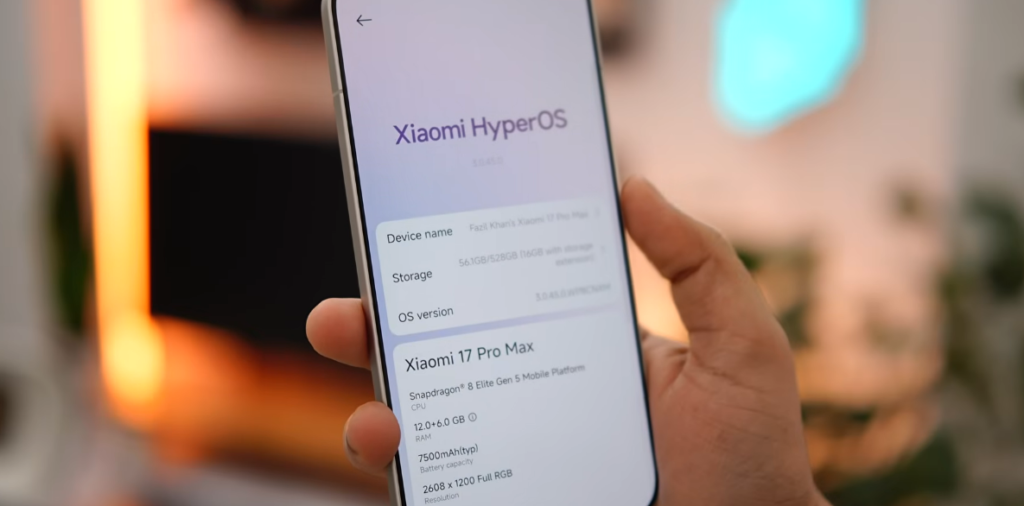
HyperOS seems quicker. Menus appear without hesitation, and animations flow more naturally, creating the appearance of effortlessness. Although deeper architectural changes may account for a large portion of this speed, users are unlikely to care about the cause. The emotion is what counts. It also feels different.
One gets the impression that Xiaomi studied its rivals very carefully, if not compulsively, as you watch the notifications spread out smoothly across the screen. Years ago, Apple perfected fluidity. Samsung improved dependability. Xiaomi has always pursued features. According to HyperOS, the business is now pursuing trust, which is more difficult to quantify.
In software, trust is brittle.
Under the surface, Xiaomi is attempting to accomplish something even more ambitious. The purpose of HyperOS is not limited to phones. Tablets, watches, TVs, smart home appliances, and even automobiles are all intended to be connected with it. Subtle indications of this goal include the way settings are synchronized across devices and the way controls show up in familiar locations on screens of all sizes.
Users’ comprehension of this change is still lacking.
According to reports, engineers at Xiaomi’s Beijing headquarters spent years getting ready for this change, rebuilding essential frameworks and continuing to publicly release MIUI updates. Xiaomi’s two-pronged strategy implies that it realized it couldn’t afford to make a mistake. More people remember software errors than hardware ones.
Additionally, warning signs have already appeared.
Early HyperOS upgrades reportedly caused issues for some devices, particularly those running unofficial software versions. The phones froze. Boot loops showed up. Late into the night, owners looked for solutions on forums. Although these incidents weren’t common, they do reveal something significant. Although powerful, HyperOS is less forgiving.
Rigidity is often associated with power.
Xiaomi’s thinking is evident in features like fingerprint shortcuts. Quick-access tools are now accessible through a circular menu when a finger is placed on the sensor, saving seconds during daily tasks. It sounds insignificant. It isn’t. Over the course of months and years, these minor conveniences add up and influence people’s attitudes toward technology. It’s difficult to overlook the fact that HyperOS appears to be built more for behavior than for specifications.
A change in philosophy is also taking place. Xiaomi used to be a fierce price competitor. It now seems to be vying for experience. That’s another battleground. Price benefits can vanish. The benefits of experience often endure. Even if they don’t express it, customers sense it.
When describing Xiaomi phones, salespeople inside electronics markets are emphasizing HyperOS more and more. They discuss more than just processors and megapixels. They discuss smoothness. incorporation. simplicity. Words that resemble Apple’s ten-year-old jargon suspiciously. Once, it would have seemed impossible to make that comparison. Uncertainty still looms over everything.
HyperOS is a recent development. The maturation of ecosystems takes years. It took time for Apple to become successful. Samsung’s didn’t either. Xiaomi is making an effort to speed up that evolution, which typically happens gradually.
It is still unclear if users will follow.
