

South Korea has a history of rapid technological advancement. From developing the first internet infrastructure to advancing blockchain IDs, this nation is frequently cited as a model for digital innovation. However, that momentum is now up against a very delicate test: what happens if a government knows your face before you even state your name?
The National Human Rights Commission of Korea, the nation’s leading human rights body, has made a clear recommendation: facial recognition technology in public areas should be prohibited by default and only allowed in extraordinary, well-founded circumstances. Their argument is based on freedom rather than fear, the kind that may subtly crumble in the face of algorithmic certainty.
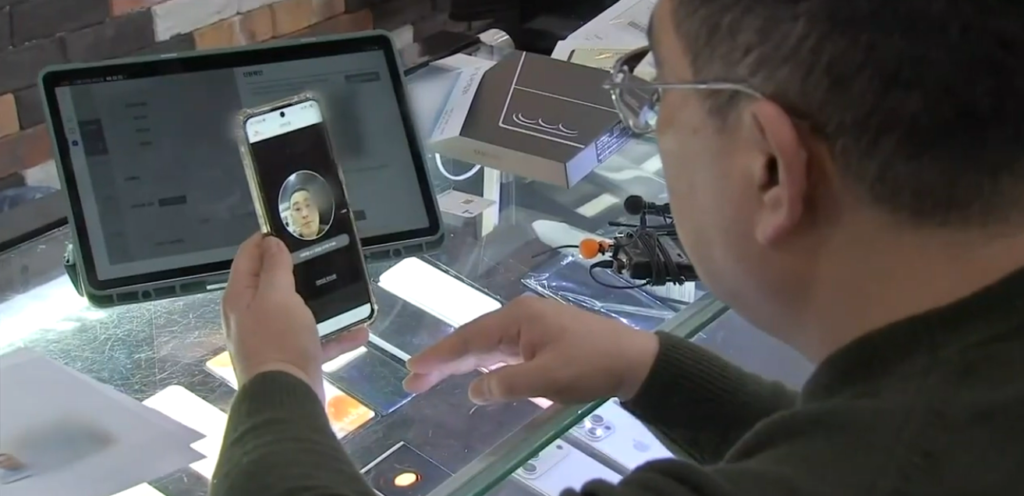
Despite the lack of a nationwide prohibition as of yet, the NHRCK’s position is affecting public discourse. South Korea is already aggressively extending facial recognition in commonplace contexts, ranging from high-rise apartments and immigration inspections to gym doors and store counters. It will become essential for SIM card registration in March, establishing a clear connection between identity ownership and biometric verification in day-to-day activities.
This implementation is being presented as a security enhancement, particularly in light of the rise in identity theft and digital crime. Real-time biometric checks, according to government officials, will provide extremely effective safeguards. However, detractors claim that this ease comes at a very high price: a new form of surveillance in which every person’s face is tracked, recorded, and potentially used as a weapon.
| Key Detail | Information |
|---|---|
| Country | South Korea |
| Policy Focus | Real-time facial recognition in public spaces |
| Watchdog Involved | National Human Rights Commission of Korea (NHRCK) |
| Recommendation | Ban facial recognition in public except in rare, exceptional circumstances |
| Current Use | Apartment buildings, gyms, SIM card registration, crime centers |
| Legal Status (as of Jan 2026) | No nationwide ban; legislative review underway |
| Proposed Regulation | “Video Information Processing Device Act” under development |
| Civic Backlash | Lawsuits, protests, human rights advocacy |
| Official Source | https://www.humanrights.go.kr |
Real-time systems can track a person’s location as well as their patterns, such as how frequently they pass a government building, what protest they attended, and who they frequently meet, by utilizing sophisticated analytics. Privacy experts caution that this allows for previously unthinkable levels of profiling.
The introduction of these technologies without full public understanding or consent is a common feature in cases around the world. This also applies to South Korea. Access control systems that compare ID cards to face data have been installed in several government facilities. Most of the time, the rollout came before a formal human rights assessment. There is a systematic flaw there, not just an oversight.
Protests and legal action have been launched by civic organizations in response, claiming that gathering facial photographs without express agreement is against both national and international privacy standards. Their worry is not speculative. There is room for misuse since there is a lack of openness regarding where this data goes, who can access it, and how long it is kept on file—especially if law is slow to evolve.
The “Video Information Processing Device Act” is a piece of legislation being worked on by the Personal Information Protection Commission that could potentially establish limits on the usage of biometrics in public settings. Until then, however, deployment surpasses governance, providing citizens with minimal assurances.
A list of Korean cities experimenting with AI spying made me uneasy, not because of the technology per se, but because of how undetectable it has become.
South Korea is not the only country that faces this conflict between individual freedom and public safety. By creating regulations under the AI Act, the European Union is establishing limited exceptions for biometric surveillance. California is among the states in the US that have already outlawed the use of face recognition technology by law enforcement. Human rights experts have also demanded a worldwide ban on real-time facial tracking in public areas at the United Nations.
The significance of South Korea’s situation lies in its function as a bellwether for technology. Such a technologically advanced society could send a very clear message to other countries facing comparable issues if it decides to curtail or drastically restrict biometric surveillance.
The human rights argument is based on risk mitigation rather than just philosophy. Unlike passwords, facial data cannot be altered in the event of theft. This makes breaches very harmful. The impact is also difficult to measure but painfully obvious once people start controlling their public conduct, such as avoiding rallies, skipping speeches, or hesitating at particular locations.
The goal of South Korea’s AI Framework Act, which went into force this year, was to establish the foundation for ethical innovation. However, by not specifically addressing biometric surveillance, it created a regulatory gap that the NHRCK is currently attempting to close with its proposals.
In their comprehensive statement, the Commission stressed that human rights impact evaluations, carried out by impartial experts rather than business insiders, must come before any future system. Additionally, they demanded legislative precision: facial recognition should never be applied broadly or proactively, and it should only be linked to certain public purposes.
In the quickly automated culture of today, that degree of precision feels especially novel. By creating regulations that are proactive rather than reactive, South Korea may set an example for a future in which technology, rights, and trust all develop together.
Many people became accustomed to being less visible in public during the pandemic—masks, distance, and remote jobs. Paradoxically, throughout the same time span, the number of invisible monitoring devices that today monitor us more closely than ever before increased. How many other nations redefine the lines between identification and intrusion will depend on what South Korea decides to do next.
Since introducing mobile identity systems based on blockchain technology, the country has demonstrated its ability to create safe and effective digital platforms. It is currently unclear if it can create anything equally good, such as a culture of restraint based on the idea that things should be preserved rather than on fear of abuse.
Because technology doesn’t simply change. It encodes values. Furthermore, the discussion over facial recognition in South Korea is more about the kind of society such technologies are permitted to create than it is about how sophisticated its systems can get.
