

Something revolutionary is taking place in contemporary classrooms as teachers subtly rewrite what success means to a whole generation of students. Letter grades and exam percentages are no longer used to define success; instead, personal development, growth, and belonging are now used. This new paradigm views inclusion as a mindset rather than a set of rules. It changes how educators instruct, how learners acquire knowledge, and how society views success.
One of the foremost experts on inclusive pedagogy, Dr. Lani Florian, frequently states that inclusion starts the instant teachers cease seeing difference as a challenge. Rather, it turns into a design principle that honors uniqueness. Her strategy has been incredibly successful in changing the emphasis from standardized standards to varied learning paths. Success, in her opinion, ought to be viewed as dynamic, changing, and intensely personal.
The success stories in inclusive classrooms are different. A dyslexic child completing an essay with text-to-speech software. Through art, a student on the autism spectrum gains self-confidence. A multilingual student incorporating tales from their culture into assignments. Every moment reflects a larger reality: connections, not comparisons, define success.
Table – Profile Overview: Inclusive Education Advocate
| Category | Details |
|---|---|
| Name | Dr. Lani Florian |
| Profession | Educational Researcher and Advocate for Inclusive Pedagogy |
| Institution | University of Edinburgh, Centre for Inclusive Education |
| Expertise | Inclusive teaching methods, equity in education, universal design for learning |
| Publications | Inclusive Pedagogy: From Learning to Action, Preparing Teachers for Inclusive Education |
| Recognition | Influencer in global education reform and equity studies |
| Focus | Empowering teachers to embrace diversity as an asset in learning |
| Philosophy | “True inclusion changes classrooms by changing hearts, not just policies.” |
| Reference | www.unicef.org/education/inclusive-education |
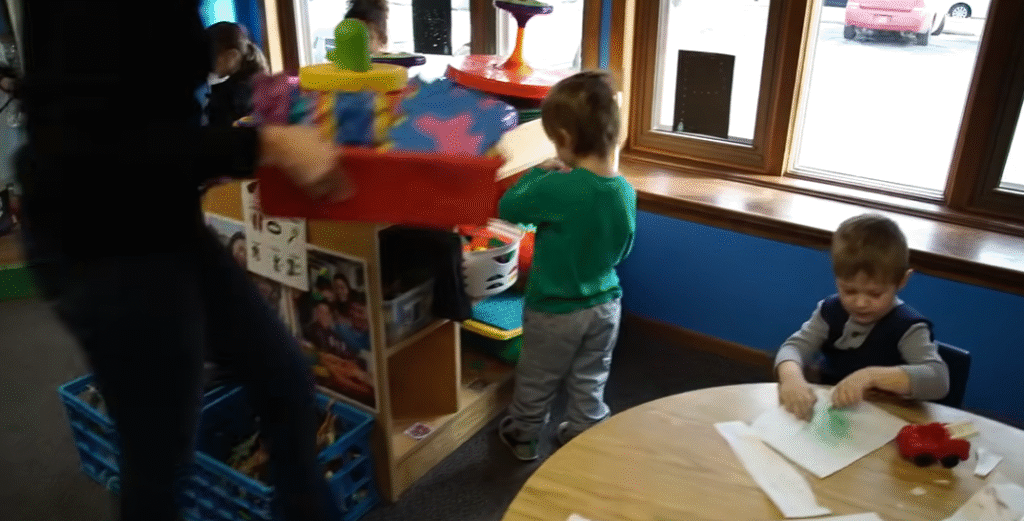
Across continents, the inclusive education model has significantly increased student engagement in the classroom. Inclusive classrooms lower dropout rates and improve emotional intelligence, according to studies published in The International Journal of Integrated Education. These results show that all students, regardless of ability, gain empathy, flexibility, and teamwork skills that prepare them for life after school when inclusion is valued.
Inclusive classrooms are especially creative in tackling one of education’s most enduring problems—the limited definition of intelligence—by fusing emotional learning with academic instruction. This movement is well-aligned with Howard Gardner’s theory of multiple intelligences, which demonstrates that emotional sensitivity, kinesthetic ability, and creativity are just as valuable as analytical reasoning.
Lessons are adapted to different learning styles by educators who use Universal Design for Learning (UDL). While some incorporate sound, texture, or movement, others employ visual storytelling. Because it enables each child to access information in ways that speak to them, this flexibility is incredibly effective. Learning can be made more enjoyable and deeper when a mathematical concept is presented through storytelling, art, or rhythm.
This change affects all students and is not limited to special education. General educators and specialists work together in co-taught classrooms to promote everyone’s development. According to research from Understood.org, this kind of cooperation greatly lowers behavioral issues and raises students’ self-esteem. Youngsters grow more understanding, accepting, and helpful of classmates who have different learning styles.
The Unessa Foundation in India serves as an example of the significant influence that inclusion has. Through parent involvement and assistive technology, its rural education programs have increased the literacy of children with disabilities by 15%. One noteworthy example is the use of voice-assisted tools to write poetry by a student named Priya, who previously had cerebral palsy and found it difficult to hold a pencil. Her progress is described by her inclusive pedagogy-trained teacher as “a triumph of possibility.”
These classrooms seem to have a different emotional atmosphere. You can feel it in the pride when a student reads aloud to another or in the laughter that permeates group discussions. Teachers say that because inclusion makes classrooms into miniature communities, it gives their work a new purpose. Learning becomes more about collective discovery and less about instruction.
Technology makes this change even more pronounced. Students can learn without restrictions thanks to adaptive technologies like interactive whiteboards, speech recognition software, and reading software. These resources improve accessibility and balance in classrooms when used carefully. They ensure that no one feels excluded from the conversation, which is especially helpful for students who have visual or auditory impairments.
But technology alone isn’t enough to achieve inclusion; empathy is essential. A principal’s choice to change policies, a peer’s small deed of kindness, or a teacher’s readiness to adjust all play crucial roles. In this sense, inclusion serves as a moral compass that directs a more equitable society as well as an educational strategy.
Organizations such as UNICEF and UNESCO have acknowledged inclusive education as a fundamental right on a global scale. According to their reports, inclusive education lessens social biases and fosters community cohesion. Children who attend diverse schools become more tolerant, imaginative, and socially conscious adults. They develop into leaders who value diversity, which is a lesson society needs more than ever.
Many educators have been motivated by this change to reconsider what success means for their pupils. Teachers now celebrate perseverance, empathy, and creativity as important milestones rather than just the top performer. Every student’s voice counts in the classroom, which turns into a stage.
“Teaching empathy through curriculum design” is how one Finnish educator defined inclusion. She claimed that her students gained confidence as a group and started assisting one another without any formal training. Because of this sense of unity, inclusive education’s goal is very clear: it teaches kids to live together rather than compete.
Not only are inclusive classrooms altering the way students learn, but they are also changing the way society views excellence. They demonstrate that self-awareness is more important for success than surpassing others. The development of emotional intelligence in these kinds of classrooms is far more durable than test scores; it serves as the cornerstone for compassion, leadership, and lifelong learning.
Disclaimer
Nothing published on Creative Learning Guild — including news articles, legal news, lawsuit summaries, settlement guides, legal analysis, financial commentary, expert opinion, educational content, or any other material — constitutes legal advice, financial advice, investment advice, or professional counsel of any kind. All content on this website is provided strictly for informational, educational, and news reporting purposes only. Consult your legal or financial advisor before taking any step.
