

Inside a dim imaging suite at Yale, a scan lit up with a surprising clarity. Not just a brain, but a pattern—dense in some regions, diffuse in others—revealing something previously locked behind theory and tissue slides: the synaptic fingerprint of a living mind. For decades, neuroscientists have speculated about how synaptic variation shapes cognition and disease. Now, they’re beginning to see it.
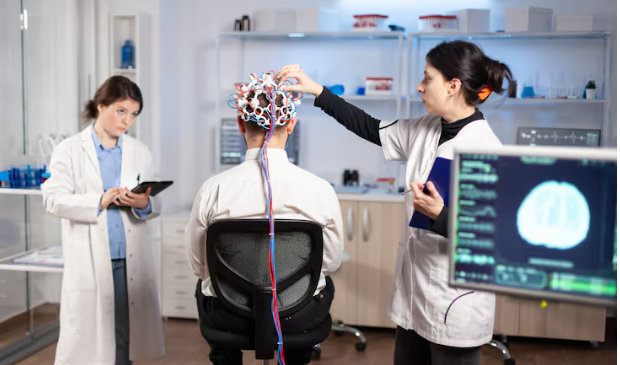
The breakthrough came through PET imaging, guided by a specialized tracer known as [¹¹C]UCB-J. This compound binds precisely to SV2A, a protein found in nearly every synapse, offering a reliable metric for mapping live synaptic density. Researchers at Yale, combining live scans with postmortem brain data, constructed what they call the first high-resolution map of synaptic variation in the human brain. Not just a snapshot, but a layered, measurable atlas.
Yale Synaptic Density Mapping Project (Key Information)
| Category | Detail |
|---|---|
| Institution | Yale School of Medicine |
| Lead Researchers | Rong Fan, Castelo-Branco, Yale PET Center |
| Imaging Technique | PET neuroimaging using radiotracer [¹¹C]UCB-J |
| Protein Targeted | Synaptic Vesicle glycoprotein 2A (SV2A) |
| Data Calibration | Postmortem human brain autoradiography |
| Core Discovery | Regional variations in synaptic density across cortex and subcortex |
| Correlation Observed | Higher IQ linked with increased SV2A density in higher-order regions |
| Medical Applications | Tracking synaptic loss in Alzheimer’s, autism, epilepsy, schizophrenia |
| Broader Significance | Live mapping of synapses bridges microscopic studies and imaging |
| Source |
By targeting SV2A, the researchers captured not only overall patterns but subtle gradients—higher densities in prefrontal regions associated with abstract reasoning, lower concentrations in primary sensory zones. It wasn’t random. It aligned, strikingly so, with known functional topographies. From sensory processing to executive function, the architecture mirrored the workload.
But what caused more stir was a quiet line in the study’s findings: a positive correlation between SV2A density and higher IQ scores, particularly in high-order cortical areas. The correlation was cautious and statistically clean, the kind that invites further study rather than brash declarations. Still, it offers a rare glimpse into the neural correlates of intelligence, supported not by psychology alone, but by living biology.
In recent years, tracking synapse loss has become increasingly urgent. Alzheimer’s disease, epilepsy, schizophrenia—each leaves a trail of disappearing connections long before visible brain shrinkage occurs. Until recently, we lacked a practical way to observe this synaptic erosion in living patients. But with this imaging approach, doctors could, quite literally, watch those losses unfold over time.
This is particularly beneficial when tailoring early intervention. Medications might slow degeneration, but without a live measurement tool, their impact was notoriously difficult to gauge. Now, neurologists could compare scans month over month, measuring synaptic density the way cardiologists assess arterial flow or pulmonologists track oxygen exchange.
The study’s implications reach beyond illness. Across healthy brains, variation in synaptic density might explain the uneven experience of aging. Some people seem to retain cognitive sharpness far into their eighties, while others decline decades earlier. This map, showing which brain regions remain synaptically robust with age, may offer clues.
Equally intriguing were the mouse model studies paired with the human scans. Researchers triggered localized demyelination—essentially stripping away nerve insulation—in specific brain areas. As expected, the surrounding immune cells, called microglia, responded. What surprised the team was that inflammation also appeared in distant brain regions, untouched by the direct intervention.
That pattern—damage in one place activating immune response elsewhere—hinted at an exceptionally complex neural communication network. I found myself pausing at that point in the paper, struck by how trauma in one region could reverberate through circuits untouched by physical injury.
It changes how we might understand diseases like multiple sclerosis. In MS, immune cells attack myelin, impairing nerve conduction. But the Yale team’s findings suggest that damage in one region might quietly destabilize others—not as a ripple, but as an encoded signal. That’s not metaphorical. It’s biological.
Through this lens, the brain no longer feels like a static map of territories but a dynamic, highly responsive network—constantly updating, adapting, and at times, unraveling. The Yale project underscores this dynamism by showing how differently brains can be wired even in health.
Of course, this is not a diagnostic tool—not yet. It’s a research-grade methodology with limited clinical rollout. But its promise is particularly innovative. Trials are already underway in patients with early-stage Alzheimer’s and treatment-resistant depression. The idea isn’t just to observe degeneration but to track response to therapy, possibly even fine-tuning dosage based on how well synapses rebound.
What sets this apart is the ability to visualize functionally meaningful structures. Traditional imaging shows us shape. This shows us activity, or at least the infrastructure of activity. It’s not reading thoughts, but it’s surprisingly close to reading capacity—the potential for thought, emotion, and connection.
As the research expands, Yale hopes to build a population-level synaptic map. That could redefine what we consider neurotypical and offer earlier detection windows for decline. It might also help identify neurodivergent patterns not as deficits, but as alternate wiring strategies.
Such possibilities depend on accessibility. Right now, PET scans with radiotracers like [¹¹C]UCB-J are expensive and logistically demanding. But as tracer production scales and technology becomes more refined, the imaging could become more widespread—perhaps even integrated into routine checkups for high-risk populations.
One can imagine, years from now, a brain scan offering the kind of detailed neural profile that blood panels do for the body. Not just what’s wrong, but what’s changing. Not just what to treat, but what to strengthen.
At a time when so much focus rests on digital intelligence, there’s something deeply grounding about this effort to map the real, tangible connections that shape human thought. Each synapse, visible at last. Each region, traced not just by name, but by density and vitality.
