

The following phases of Artemis will take additional time, NASA revealed in February. Originally scheduled for late 2025, the forthcoming Artemis II mission is now tentatively scheduled for no earlier than February 8, 2026. Artemis III, the first human lunar landing since Apollo, is scheduled for mid-2027. The logic is sobering yet not discouraging: safety, precision, and technology are demanding more.
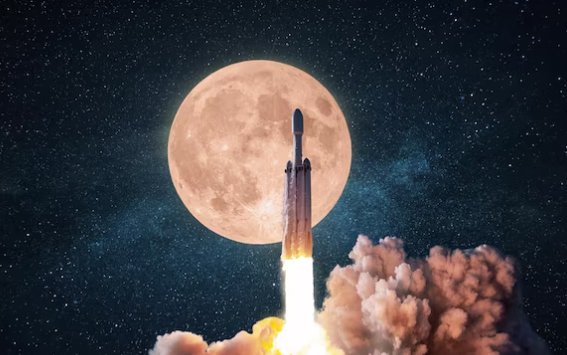
The delay didn’t come as a shock. If anything, it felt like a halt already anticipated by many watching attentively. Ever ambitious, the Artemis program is currently changing its direction—perhaps a little later, but still with the Moon in mind.
Artemis Program Delay Overview
| Item | Description |
|---|---|
| Program Name | NASA Artemis Program |
| Missions Affected | Artemis II (crewed lunar flyby), Artemis III (crewed lunar landing) |
| Original Timeline | Artemis II (Late 2025), Artemis III (2025/2026) |
| New Launch Estimates | Artemis II (No earlier than Feb 8, 2026), Artemis III (Mid-2027) |
| Reasons for Delay | Heat shield erosion, life support system issues, extreme weather, hardware |
| Additional Dependencies | SpaceX Starship Human Landing System (Artemis III) |
| NASA’s Official Position | “Safety is our top priority” – Bill Nelson |
| Last Major Artemis Launch | Artemis I (uncrewed, 2022) |
| External Reference | NASA Artemis Program |
Several technical challenges appeared during post-mission reviews. Engineers observed unanticipated degradation on the Orion capsule’s heat shield following Artemis I’s reentry. This wasn’t simply cosmetic wear—it revealed a deeper issue. Charred material, which should have gradually ablated, instead behaved erratically. It triggered enough red flags for NASA to halt forward pace until they thoroughly understood what went wrong.
Alongside the heat shield, there are ongoing efforts to update life support systems. More precisely, components connected to air circulation and temperature regulation need reworking to satisfy strict standards. One circuitry unit responsible for managing interior conditions has proven particularly stubborn—its reliability questioned under simulated loads. NASA’s engineers, amazingly efficient under duress, continue improving the technologies that would support humans far beyond Earth’s atmosphere.
As if technical challenges weren’t enough, Florida’s recent winter snap provided a bizarre twist. Subfreezing temperatures put the SLS rocket’s delicate plumbing at risk, so the planned “wet dress rehearsal” for Artemis II—a crucial prelaunch test—was postponed. It was a reminder that nature, too, plays a hand in space flight.
And there’s SpaceX. The company’s Starship Human Landing System is a key component of the Artemis III mission. Starship still needs to successfully demonstrate in-space propellant transfer, a challenging ballet of fluid dynamics in zero gravity, even if it has excelled in unmanned test flights. Its preparedness for a human moon landing is still only hypothetical till then.
It’s easy to grow impatient. The distance since Apollo has stretched over decades, and the Moon, once visited, now feels magical again. But Bill Nelson, NASA’s Administrator, has been clear: “Safety is our top priority.” This isn’t a race. It’s a return. And one that must succeed.
NASA’s cautious pace contrasts significantly with private-sector urgency. Yet it offers something immensely anchoring. There’s a trust created by witnessing the agency move methodically, even when billions are on the line. Decisions like these delays, which may not be popular but are unquestionably required, are the foundation of that painstakingly gained confidence.
Critics will emphasize the escalating prices. Each year of delay carries a severe financial toll. Contracts need to be extended, parts need to be remanufactured, and employees need to be kept on board. The timeline will probably be examined once more at congressional hearings, which will demand responsibility. But cost alone can’t govern the timeframe for something so intrinsically delicate. Sending humans into space—let alone to the Moon—requires a tolerance for patience when it ensures safety.
At Kennedy Space Center, workers are gradually rebuilding confidence, piece by piece. Upgraded sensors, better materials, software simulations running daily—these aren’t the glamorous sides of spaceflight, but they’re where missions are genuinely won.
Meanwhile, astronauts designated to Artemis II continue training. They’ve rehearsed emergency procedures, analyzed mission parameters, and even prepared for unanticipated situations like mid-orbit reboots. For them, the delay isn’t a setback—it’s a longer runway. And they know, better than anyone, the stakes.
Public enthusiasm for Artemis hasn’t diminished. If anything, it’s matured. Initial enthusiasm has given way to continuous curiosity. Schoolchildren still draw rockets. Students still apply for internships. Space is now about collaboration, science, and long-term vision rather than flags and finish lines.
Beyond the Moon, NASA has much larger goals. Artemis is a stepping stone for prospective Mars missions, and every correction today strengthens our readiness for the next frontier. Future off-Earth travel infrastructure is strengthened with every heat shield calibration and life support unit bug fix. This is a re-anchoring of expectations rather than the conclusion of a countdown.
Delays, though frustrating, frequently give history a better opportunity of remembering triumph instead of disaster. Apollo 1 taught us that. Challenger reminded us again. Today’s engineers and mission planners carry those lessons not as burdens but as blueprints—etched into every checklist, simulated run, and engineering diagram.
The Moon is here to stay. But our readiness to meet it, as equals, continues to evolve—with each cautious stride now making future leaps more assured.
