

They weren’t using covert compartments to smuggle illegal goods. No convoluted routes or false-bottomed suitcases. It was just regular people traveling across Singapore’s borders with what appeared to be ordinary bags.
Seventy travelers were reported for not declaring taxable or dutiable products during a recent one-week multi-agency enforcement exercise. On the surface, the figures may seem tiny. But the impact says eloquently about how Singapore continues to treat tax integrity as a non-negotiable national value.
What’s particularly noteworthy is the nature of the goods involved—everything from packed smartwatches to multiple roller curtains. Customs inspectors paid close attention to the latter, which was probably bought for resale. Six were carried by one person. Another had a cache of high-end products still in their retail wrapping. It was all unreported.
These weren’t high-stakes criminals—just average individuals who either misread the system or purposefully tested its edges. The total duty and GST avoided amounted to S$3,398. Yet the penalty assessed amounted approximately S$22,000. It’s a surprisingly powerful deterrent model—one that signals plainly that avoidance will cost you more than compliance ever can.
| Attribute | Details |
|---|---|
| Operation Dates | 13–19 January 2026 |
| Number of Travellers Caught | 70 (for duty evasion) + 2 (for undeclared large cash sums) |
| Total Luggage Checked | Over 14,000 items |
| Total Duty and GST Evaded | S$3,398 |
| Composition Fines Imposed | S$21,990 |
| Common Offences | Cigarettes, tobacco, liquor, luxury goods, undeclared commercial items |
| Maximum Penalty for Evasion | Up to 20× tax evaded or 2 years jail or both |
| Cash Declaration Threshold | S$20,000 |
| Cash Offence Penalty | Up to S$50,000 fine or 3 years jail or both |
Unreported funds totaling much more than the S$20,000 required reporting threshold were at issue in two different cases. Both a guy trying to leave with S$91,000 in checks and a lady coming with S$24,785 did not report these amounts beforehand. A warning was given to one. The other paid a heavy fine of S$9,000. Singapore’s cash disclosure rules aren’t merely bureaucratic—they seek to secure the financial ecosystem against money laundering and criminal finance.
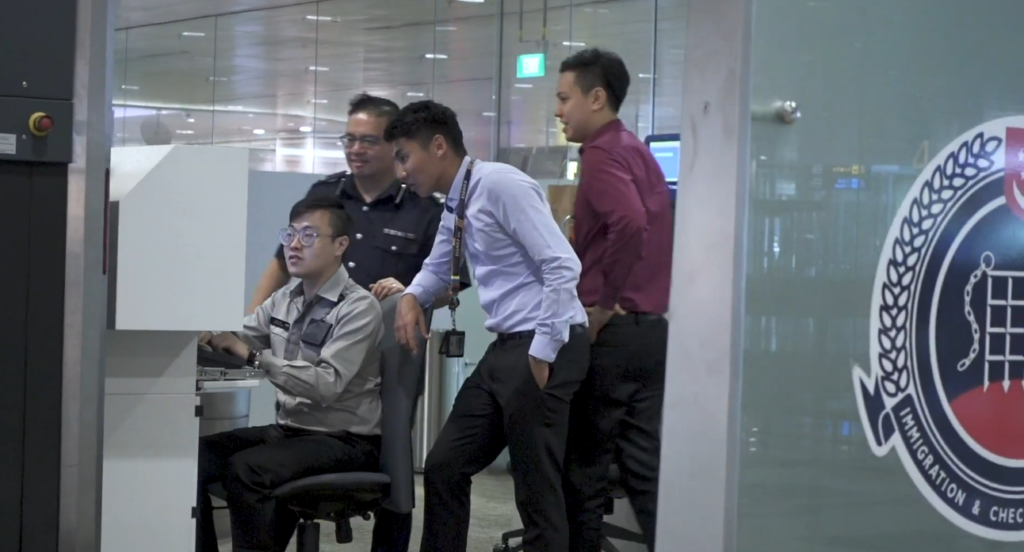
This enforcement campaign was noteworthy for its accuracy and consistency rather than its large-scale raids. Officers scrutinized over 10,000 passengers and searched over 14,000 baggage items. The message was quite clear: there are repercussions for even one unreported item.
It’s easy to imagine little oversights can slip unnoticed. A handful of additional bottles, a few branded gadgets—most would suppose such items sneak through. But this operation proves differently. By focusing on low-level breaches with high clarity, Singapore is developing a border culture anchored in openness and responsibility.
Many people become used to digital declarations and remote travel procedures during the pandemic. But as physical movement resumes, so too does the expectation that travellers will be proactive, honest, and obedient. The technology itself has grown substantially speedier and more user-friendly. Dutyable products can now be digitally declared before to arrival, eliminating errors and queuing times.
By employing innovative digital technologies, the ICA and its partners have made it shockingly affordable—in terms of both time and money—for travellers to stay within the laws. All that’s left is a change of perspective.
In recent days, I’ve met with business travelers and returning residents who now treat disclosures as part of their usual travel checklist—just like a passport or boarding pass. That’s a sign of cultural achievement. When compliance becomes habitual, enforcement becomes less reactive and more preventative.
For early-stage tourists unfamiliar with Singapore’s standards, this enforcement blitz delivers a useful message. Customs is a frontline agency, not an afterthought. The officers are watching you, even if you can’t see them. Not because they suspect malice, but because their role is to guarantee uniformity, safety, and justice.
One cannot help but applaud the extraordinarily efficient collaboration across numerous agencies. The endeavor involved not simply customs, but enforcement departments focusing on cash flows, contraband identification, and security risk profiling. It’s a strategy based on scale rather than surprise.
By integrating data technologies and training officers to spot behavioral cues—not just suspicious packages—Singapore has established a checkpoint environment that’s extraordinarily durable. It quickly adjusts. It picks up on patterns. It’s designed to catch both anomalies and patterns.
That versatility extends to policy too. The legislative structure is flexible in that it may offer lighter penalties to those who voluntarily declare. However, individuals who are detected dodging taxes face severe penalties, which include two years in prison or up to 20 times the amount of taxes evaded. And in cash cases, fines can reach S$50,000, with the prospect for jail terms up to three years.
In the end, border security is not the only lesson to be learned. It has to do with the culture that a country decides to uphold. When systems are properly defined, technologically accessible, and backed by constant enforcement, people respond. Compliance improves. Trust increases. And law—often perceived as a blunt tool—becomes a bridge between government policy and public conduct.
Over the past ten years, Singapore’s checkpoint management strategy has significantly improved, both in terms of technology and tone. No intimidation or yelling is present. Just quietly carried out, firm procedures. Its greatest strength is its understated professionalism.
And next time someone believes a smartwatch won’t matter or forgets to submit a cash bundle, they could recollect the tourist fined S$9,000 or the one caught with six blinds. These are not terrifying tales. They are warning stories, complete with receipts.
