

The discussion surrounding Malaysia’s new RON95 petrol policy starts at a border station rather than with a headline. A automobile registered in Singapore is parked beside the pump. It clicks the nozzle. And with it, a subtle but purposeful change takes place.
In April, Malaysia will enact a regulation that specifically prohibits foreign-registered automobiles from buying RON95 fuel. This move essentially imposes legal liability on both fuel station operators and vehicle owners.
Previously, enforcement efforts were targeted nearly solely at sellers. If a foreign car managed to buy RON95, it was the station—not the driver—held liable. That’s about to change.
The action, announced under Regulation 12A of the Control of Supplies Act, is being positioned as a necessary tightening of existing policy. It’s particularly significant because the fuel in question—RON95—is substantially subsidised by the Malaysian government and earmarked for domestic usage.
| Detail | Description |
|---|---|
| Implementation Date | April 1, 2026 |
| Policy Change | Foreign-registered vehicles banned from purchasing RON95 petrol |
| Affected Fuel Type | RON95 (subsidised fuel grade in Malaysia) |
| Enforcement Under | Control of Supplies Act 1961 (updated Regulation 12A) |
| Legal Accountability | Applies to both fuel station operators and foreign vehicle owners |
| Enforcement Mechanisms | ID checks, station inspections, logbooks, and surveillance tech |
| Maximum External Tank Limit | 20 litres (without special permit) |
| Government Statement | Announced by Domestic Trade Minister Armizan Mohd Ali |
| Historical Background | Ban on sale to foreign vehicles since August 2010 |
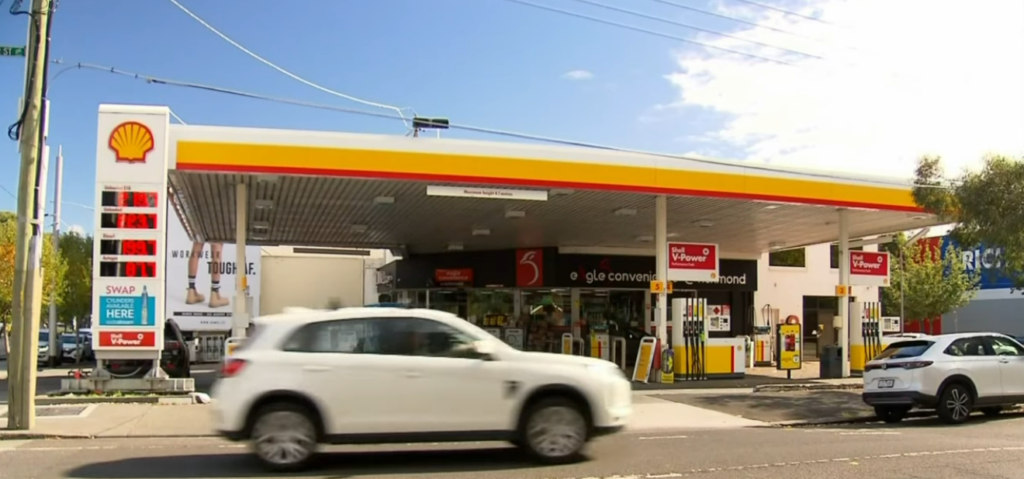
Subsidies are generally unnoticeable until they’re overused. Then, they become symbols of systemic leaking. In this situation, each tank of RON95 filled by a non-resident signifies a siphoning of public resources meant for Malaysians. At border crossings like Johor Bahru, where cross-border traffic from Singapore spikes during vacations, this has been particularly evident throughout the years.
The 2010 prohibition on selling RON95 to foreign automobiles was always a temporary. Some abuse was lessened, but it was simple to avoid. Drivers who knew which stations wouldn’t ask questions often returned regularly. Some used jerry cans. Others recruited locals to fill up on their behalf.
By targeting the customers themselves, Malaysia is effectively closing the loop. The legislation now makes buying the fuel illegal for anyone driving a car registered in another country. Both law enforcement officials and station operators, who previously bore the full legal burden, greatly benefit from this clarification.
In a recent speech to parliament, Minister Armizan Mohd Ali stressed that maintaining equity in the distribution of subsidies is more important than punishing foreigners. His carefully measured remarks indicated that further extensive changes to fuel subsidy policy are being contemplated.
Station operators will still be monitored through existing mechanisms—digital tracking, logbook reviews, and spot checks. But now, drivers are also subject to inspection. Surveillance cameras at fuel stations are being improved. Some will utilize plate recognition software. Real-time enforcement dashboards may be connected to others.
Additionally, the amount of fuel that can be transported outside is limited to 20 liters per container, barring special authorization. That feature, while tiny on its face, suggests an effort to preempt smuggling and resale.
One particularly high-profile case in 2025 was a permanent citizen from Singapore who was caught on camera pumping RON95. The video gained widespread popularity. He was fined RM9,000. That moment may have triggered the faster policy update.
From a policy perspective, this move is surprisingly effective at integrating legal accountability with actual enforcement. It conveys the idea that laws are reinforced both architecturally and metaphorically, rather than merely being written.
Yet what makes this development particularly noteworthy is how quietly impactful it may be. This isn’t about border fences or military patrols—it’s about litres and legislation. It’s about employing precise policies to conserve national resources without fuss.
Many Malaysians are in favor of the change. Among them are small business owners and everyday commuters, who’ve long felt the pain when subsidies go shifted, whether purposely or accidentally. Everyone agrees that what is intended for the people should stay in the nation’s economic system.
The policy also speaks to bigger topics of equality and sovereignty. It takes careful messaging to enforce subsidy discipline in an area where national borders are both porous and politically sensitive without causing conflict. Malaysia seems to be carefully threading that needle thus far.
The fact that this is a deliberate improvement of an existing policy rather than a hasty response is very encouraging. The government has greatly lessened the administrative ambiguity that formerly beset frontline employees by expanding enforcement.
Of course, some critics propose that subsidies should be abolished altogether and petrol prices floated to market value. But for the time being, the goal is to lessen abuse rather than destroy the safety net.
That method has a certain comforting quality. Rather than throwing the system down, Malaysia is choosing to improve it. Notably improved compliance methods ensure that station operators are no longer alone in enforcing policy. That change makes sense from a practical and moral standpoint.
In future weeks, border stations will likely feature revised signage. Others may give cautions. At the RON95 pump, others might stealthily turn away foreign cars. However, fundamentally, the goal of this move is to strengthen fairness rather than to humiliate or exclude.
Through the deliberate expansion of accountability, the government has made sure that future enforcement will be more meaningful and consistent. Ideally, the outcome will be a system that responds far more quickly, is incredibly dependable under duress, and is shockingly inexpensive to operate.
Whether this will eradicate subsidy misuse totally remains to be seen. However, it is evident that avoidance is no longer the focus of the program. It’s about accountability.
And on that front, April 1 signals a positive start.
