

The Tokyo Prime Minister’s Office is located behind a silent security gate. Its gray stone exterior is almost purposefully understated, as though it were attempting to hide the immense power that resides there. Recent mornings see aides moving quickly through its hallways, whispering updates and carrying folders, while Sanae Takaichi passes cameras with a composed, barely visible expression. One gets the impression from watching her that she is well aware of the burden she now bears.
After a resounding election victory that gave her party more than two-thirds of the lower house seats, she was reappointed as prime minister of Japan. Even in the historically stable system of Japan, such political domination is uncommon. Voters may have chosen certainty over policies in the hopes that she could calm a nation that has been silently concerned about its future for years.
Lawmakers bowed courteously inside the parliament building before settling in, but the mood was different. Takaichi was no ordinary leader. In a nation where politics has traditionally been dominated by older men in dark suits, it still seems surprising that she was Japan’s first female prime minister. Although the extent of these changes is still unknown, there is a sense that her mere presence is changing expectations.
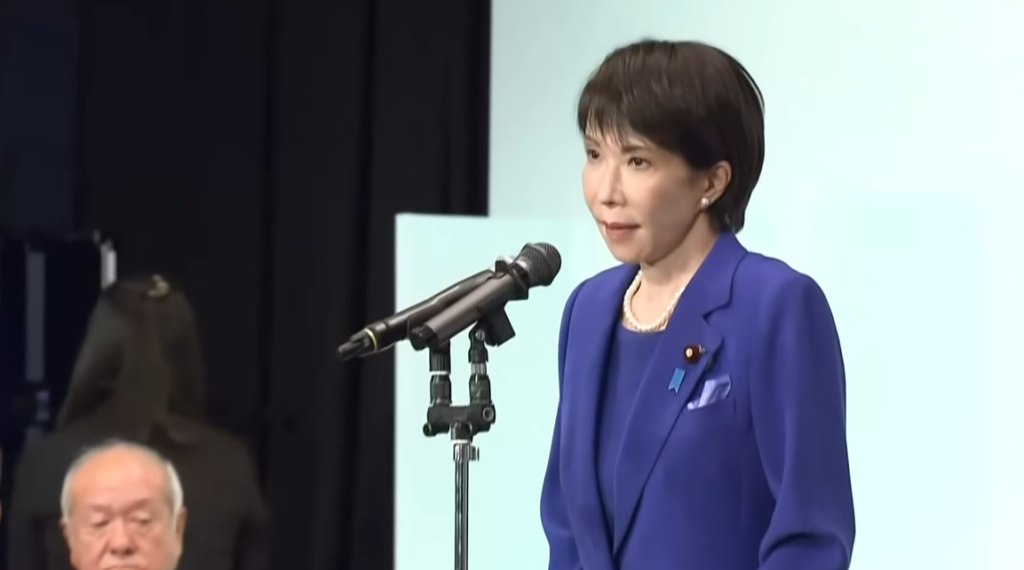
She promised strength when she came to power. economic strength. strength for the defense of the country. strength for the identity of Japan. After winning, she stood at the podium and talked about responsibility in a steady yet firm voice that seemed to have been practiced a lot. Although investors seem to think that her plans for economic stimulus could spur growth, markets also seem wary, given that Japan’s public debt already surpasses its total GDP.
| Category | Details |
|---|---|
| Name | Sanae Takaichi |
| Position | Prime Minister of Japan |
| Born | March 7, 1961 |
| Political Party | Liberal Democratic Party (LDP) |
| Became Prime Minister | October 2025 |
| Historic Role | First Female Prime Minister of Japan |
| Election Victory | Won over two-thirds majority in Lower House (2026) |
| Key Policies | Economic stimulus, defense expansion, immigration control |
| Office Location | Prime Minister’s Office (Kantei), Tokyo |
| Official Website | https://japan.kantei.go.jp |
In the Nagatacho neighborhood of Tokyo, where political offices are grouped together, civil servants rush between buildings while toting coffee cups and briefcases. Although their daily routines haven’t altered much, the choices made in those offices have the power to change Japan’s course. Takaichi has suggested lowering food taxes and raising government expenditures, which could benefit households but put additional pressure on the government’s finances.
Her approach to image management is purposeful. Former Prime Minister Shinzo Abe taught her political discipline, and she adopted his direct speech and assured demeanor. It’s difficult to ignore how much she shares his vision, especially when it comes to extending Japan’s military role.
Support and skepticism have been generated by her proposals to raise defense spending. Japan’s post-World War II pacifist constitution continues to influence the country’s identity. It would be hard to change. It would be sentimental as well. While some elderly people interviewed on television seem proud of Japan’s peaceful history, others subtly acknowledge that they feel less secure in the current geopolitical environment.
The economic problem might turn out to be even more intricate. Japan’s workforce is getting smaller and pension costs are rising as a result of the country’s population aging more quickly than nearly any other. Although Takaichi has pledged to use investment and spending to reverse stagnation, economists privately doubt that stimulus alone will be sufficient to address more serious demographic issues.
Small communities outside of central Tokyo see little change in day-to-day activities. Vegetables are arranged by store owners. Office workers wait in line for lunch. However, beneath that serene exterior, there is a sense that Japan is at a pivotal moment. When uncertainty increases, leadership becomes more important.
Another level of complexity is introduced by her relationships with world leaders. She has adopted a more assertive posture toward China while remaining closely aligned with the United States, reflecting Japan’s precarious position between strategic rivalry and economic partnership. Whether her strategy will increase regional tensions or boost Japan’s influence is still up in the air.
The personal dimension is another. Takaichi navigated a system that rarely allowed women to hold high positions, rising through decades of political struggle. It feels like history is being quietly played out as you watch her now, standing by herself in the middle of Japan’s political stage.
