

The fact that Highguard surpassed 97,000 concurrent players on Steam at launch seemed like a victorious entry. For a rookie company to reach those levels within hours of release signaled tremendous traction, particularly for a PvP title entering a market already filled with competitors.
But the momentum was short-lived. The player count plummeted by more than 80% in a day. That’s not a dip—it’s a cliff. Currently, at peak hours, barely over 7,000 players are still on Steam. Even conservative estimates put the entire active user base across all platforms at about 100,000; however, these numbers do not include consoles.
Still, numbers rarely tell the complete story. The game’s sharp rise and equally sharp fall create more concerns about expectations than failure. And Highguard becomes a particularly intriguing case in that regard.
Wildlight Entertainment, the team behind the game, is not without pedigree. Apex Legends was developed by a number of its original developers, who contributed their expertise to the game’s quick-paced mechanics and hero-style balancing. That foundation gave players hope—but also likely molded their disappointment when the encounter felt thinner than anticipated.
| Feature | Detail |
|---|---|
| Game Title | Highguard |
| Developer | Wildlight Entertainment |
| Launch Date | January 26, 2026 |
| Peak Concurrent Players (Steam) | 97,249 |
| Current CCU (Steam) | ~7,700 |
| Overall Active Users | Estimated ~100,000 across platforms |
| Review Score (Steam) | 37% Positive (“Mostly Negative”) |
| Monetization | Free-to-play with seasonal passes |
| Player Count Drop (24 hrs) | Approximately 80% decline |
| Dev Quote | “We want fans that love us, not just big numbers.” |
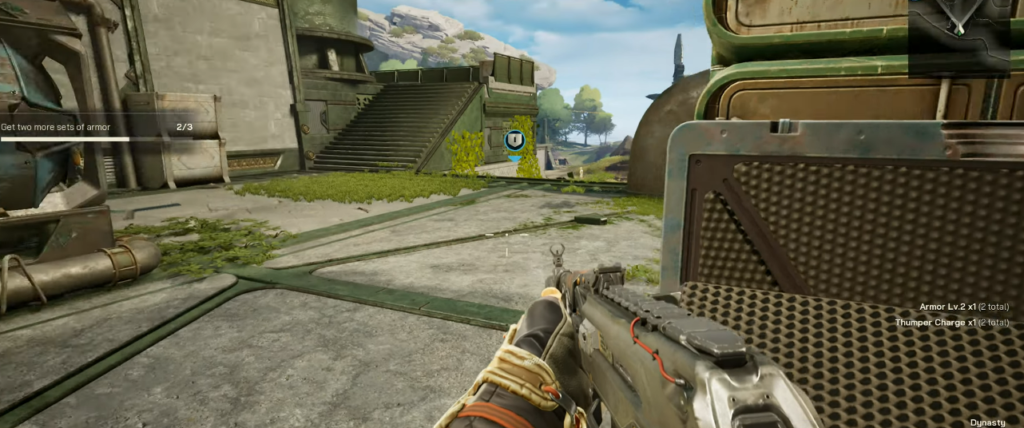
The design of Highguard combines faction-based objectives with territorial control in expansive zones that resemble Destiny’s Gambit mode and survival-raid features in a hybrid way. On paper, the idea sounds promising. In practice, early adopters found the execution insufficient.
Steam critics noted to an empty sense across the maps—environments that should have seemed alive but came off as weirdly sterile. Despite being technically sound, the fighting system lacked punch. Players were not affected by the force of their attacks. Damage registered, but satisfaction didn’t.
There is a bright side to the studio’s mindset, though. Mohammad Alavi, Highguard’s design director, addressed the controversy head-on in a livestream just two days after debut. Rather than defending inflated player counts, he reframed the topic. “We are not interested in viral statistics. We want committed athletes who stay,” he explained—an unusually honest stance in a sector obsessed with metrics.
That mindset drives the studio’s roadmap. Wildlight intends to offer new “Episodes” every eight weeks as opposed to waiting for quarterly upgrades or bloated seasonal dumps. These updates will add fresh characters, PvE modes, and more dynamic map dynamics. The game might develop naturally rather than collapse under examination if they maintain the ambitious speed.
And it requires that evolution. While the technological basis is solid—servers are dependable, matching works efficiently, and load times are quick—the visual direction feels undercooked. Weapons lack individuality. Class identities are hazy. Despite its refinement, the visual aesthetic doesn’t yet engender lore connection or fandom.
Yet for all that, the group that remains is remarkably vocal—and in some cases, optimistic. “It’s rough, but there’s something weirdly addictive about it” is a comment I came across during a late-night Twitch stream. It appears that Wildlight is trying to attract players that are prepared to put up with early jank in order to potentially gain rewards.
Crucially, Highguard also has cross-platform compatibility on PC, Xbox, and PlayStation. That infrastructure offers adaptability. Even if Steam’s figures depict a grim image, console players can quietly prop up matchmaking pools. And more significantly, it ensures no single platform defines the narrative.
The utilization of cloud infrastructure by Wildlight has been especially useful behind the scenes. By shifting a large portion of its backend to elastic server solutions, the company has reduced downtime and expanded player load without experiencing any issues. For a firm of this scale, this is an incredibly effective approach that frees up resources for gameplay improvements rather than server troubleshooting.
Though it may not make news, noticeably better server stability fosters the kind of consistency that keeps early adopters interested. Additionally, trust gradually grows when updates are released without significant issues; this benefits go well beyond eye-catching trailers or launch-day excitement.
Looking ahead, Highguard’s first significant content drop in March will be a litmus test. It will include the first organized PvE raid in the franchise, reactive weather zones, and a cloaking-based hero. It could greatly lessen the impression that the game lacks complexity and variance if done correctly.
No one’s pretending Highguard launched flawlessly. However, this game still exhibits learning, in contrast to many multiplayer games that burn brightly before disappearing. The creators aren’t abandoning their vision—they’re modifying it in real time.
And it has some value. In a sector where marketing typically outpaces engineering, a studio that listens and adapts—while still providing content—is a rarity. If they keep at it, Highguard could become an example not of failure, but of resilience.
