

When you walk into a Taco Bell or McDonald’s in California today, the ordering process is very different from what it was five years ago. The touchscreens are more responsive, the kiosks are taller, and in certain places an AI voice system can accurately take drive-through orders. This is not a coincidence. And the question of whether California’s $20 minimum wage for fast food workers is responsible for accelerating these changes — or whether the technology was always coming and the law just gave operators a convenient justification — is exactly the kind of question that good labor economics research is supposed to answer. The honest answer, two years into the experiment, is that it depends on who you ask and which data you look at.
In April 2024, California’s AB 1228 went into effect, increasing the statewide minimum wage for employees of large fast food chains from $16 to $20 per hour. Governor Gavin Newsom, signing the bill in September 2023, framed it as a straightforward win: workers would earn more as costs of living climbed, the industry would adapt, and low-wage Californians would get a better shot at financial stability. Additionally, the law created the nine-member Fast Food Council, which has the power to increase wages by up to 3.5% per year until 2029. It appeared to be a major advancement on paper.
Key Information: California Fast Food Wage Hike (AB 1228)
| Detail | Information |
|---|---|
| Law | California Assembly Bill 1228 (AB 1228) |
| Signed | September 2023 by Gov. Gavin Newsom |
| Effective Date | April 2024 |
| New Minimum Wage | $20/hour for fast food workers at national chains |
| Previous Minimum | $16/hour (general state minimum) |
| Annual Increase Cap | Up to 3.5% annually through 2029 |
| Oversight Body | California Fast Food Council (9 members) |
| Jobs Lost (BLS Data) | ~10,700 jobs (June 2023–June 2024) |
| Menu Price Increase | 8–12% (franchise restaurants); 14.5% (broader study) |
| Labor Cost Increase | ~25% for businesses |
| Key Study | UC Santa Cruz, Economics Lecturer Stephen Owen (March 2026) |
| Other Study | UC Berkeley IRLE — 8–9% wage increase, no employment drop, 3.7% price increase |
| Los Angeles Expansion | Hotel/airport workers: $30/hour by 2028 (Mayor Karen Bass) |
Reference Links: Exploring the Impacts of California’s Minimum Wage for Fast Food Workers — UC Santa Cruz Effects of the $20 California Fast-Food Minimum Wage — UC Berkeley IRLE
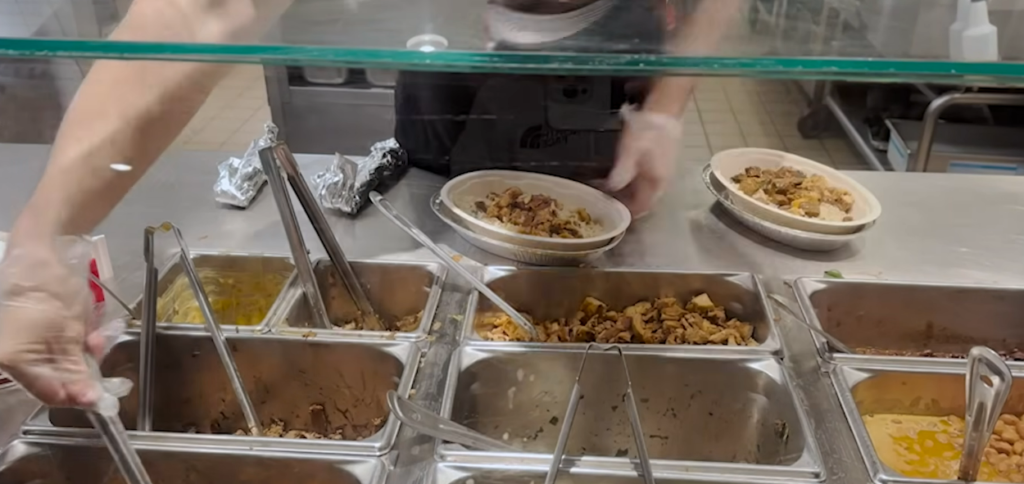
That image is complicated by a working paper from UC Santa Cruz that was released in March 2026. Stephen Owen, an economics lecturer who led the research, found a cluster of outcomes that he described without much diplomatic softening: higher menu prices for consumers, reduced working hours for employees, widespread elimination of overtime, loss of benefits, and an accelerating shift toward automation. One Burger King franchise group’s data showed a more than 21% decline in shift work for employees between October 2023 and October 2024. Eighteen McDonald’s locations in California’s Central Valley saw worker hours decline by nearly 12% over a twelve-month stretch from April 2023 to March 2025 — equivalent, the researchers calculated, to roughly 62 full-time jobs vanishing for a year. Owen’s conclusion was pointed: “I think this legislation is a classic case of ‘no good deed goes unpunished.'”
The governor’s office pushed back hard. A representative referred to the analysis as “flat wrong,” pointing out that it had not undergone peer review and was based on interviews done along a single Santa Cruz street. The study’s geographic scope is restricted, and its primary data came from managers and business owners rather than employees, so there is some validity to that criticism. However, according to data from the Bureau of Labor Statistics cited in the Berkeley Research Group’s independent analysis, the industry lost about 10,700 jobs between June 2023 and June 2024, and menu prices at fast food restaurants increased by 14.5% following the law’s implementation. While acknowledging variation throughout the state, the UC Berkeley Institute for Research on Labor and Employment came to different conclusions using different methods. They found an 8 to 9% wage increase for covered workers, no significant employment drop, and only a 3.7% increase in menu prices. Anyone who presents the research as settled in either direction is likely oversimplifying it because it is genuinely contested.
What this reveals about the underlying conflict at the core of minimum wage legislation elevates it above a local policy dispute. Helping the employees who make your drive-through order afford to live in the state where they work was the aim of AB 1228. That objective is justifiable, and the need is genuine—the cost of living in California is exorbitant, and $16 per hour in Los Angeles or the Bay Area does not get anyone very far. However, the mechanics of how a wage floor impacts employment, hours, prices, and automation are actually quite complicated, and their interactions vary based on the business model, industry, location, and level of competition. Fast food is a particularly unforgiving sector to test these questions in, because the margins are already thin, the labor cost portion of operating expenses is significant, and the technology for automating order-taking has been sitting ready for years, waiting for a financial incentive sufficient to justify the upfront investment.
When all of this is taken into consideration, it seems as though both sides of the argument are partially telling the truth. It is true that employees at covered locations are paid more per hour. However, some of them are finding that the net improvement in their yearly earnings is less than what the headline wage increase would imply, working fewer hours, and losing overtime they had depended on. Fast food was never a luxury purchase; instead, it’s what people buy when they can’t afford the alternatives, so menu prices have increased in ways that more severely impact lower-income consumers. Even though Owen’s solution—deregulation and fewer business burdens—heavily favors one side of a genuinely complex issue, his point that this is a policy with “perverse incentives” is worth considering.
Everyone will be closely observing what California does next. By 2028, Los Angeles plans to raise the minimum wage for hotel and airport employees to $30. The same floor is being pushed for by Oakland advocates. The president of the New York State Restaurant Association claims that the $30 proposal being considered by New York City has put the industry at “a tipping point with consumers.” It’s still unclear if California’s fast food experiment is a lesson learned or a work in progress. The workers whose lives this was supposed to improve are still waiting to see if the numbers add up in their favor, the data is still being collected, and the courts have not yet rendered a decision on related issues.
