

When thick smoke reached Toronto’s skyline in early May, people paused mid-commute and gazed up—not because it was strange, but because it was becoming normal. That in itself says eloquently about the speed at which Canada’s wildfire reality has evolved.
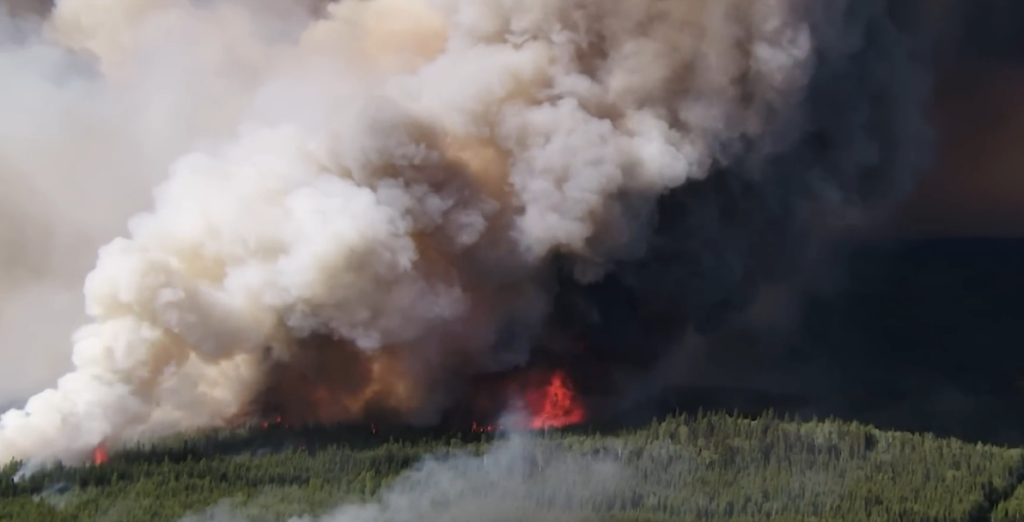
Canada’s forests are burning longer, hotter, and quicker than they used to, and the reasons are startlingly interconnected. Warming temperatures are the foundation. The country is heating up roughly twice as rapidly as the world norm, and this has had a cascade effect on snowpack, drought, and vegetation moisture. With earlier thaws and less spring rain, landscapes are drying sooner, leaving enormous expanses of forest and grassland particularly combustible before summer even begins.
By integrating satellite measurements and climatic data, researchers have tracked the extending fire season across provinces. In 2023, for example, flames were observed as early as mid-April and remained into late October. This transition adds weeks—sometimes months—of vulnerability for populations and ecosystems alike.
Lightning is playing a larger role than many believe. Canada encounters roughly 3,000 lightning-ignited fires each year. While these occurrences account for around half of all fire starts, they’re responsible for over 80% of the overall area burned. These flames often erupt in distant places, making early control particularly difficult. When rain doesn’t follow the strike—and often it doesn’t—the outcome can be days of unnoticed smouldering before abrupt, large-scale flare-ups.
| Factor | Description | Why It Matters |
|---|---|---|
| Warming Trend | Canada is heating at twice the global average | Extends fire seasons and dries out vegetation faster |
| Drought and Low Moisture | Earlier snowmelt, prolonged dryness | Leads to highly flammable forests and grasslands |
| Lightning Ignitions | Nearly 3,000 lightning-caused fires annually | Harder to detect early; cause over 80% of total area burned |
| Human Activity | Source of over half of fire ignitions | Can be reduced with better education, regulation, and preparedness |
| Fire Season Length | Fires now begin earlier and last longer | 2023 fire season ran from mid-April to late October, four times the 10-year average |
| Feedback Loop | Fires release carbon, warming the climate further | Makes future fire seasons even more intense |
| Reference | Natural Resources Canada, NASA, NC State University | Data supports the urgency of improved fire mitigation and climate response strategies |
Human reasons are equally relevant. Campfires, sparks from equipment, or dropped cigarettes continue to cause wildfires, especially in locations closer to roadways or residential development. These incidents are preventable, and in recent years, stronger education efforts and enforcement measures have proven astonishingly effective at minimizing risk in high-traffic zones.
However, it’s the interaction of human activity with wild environments that causes complex fire dynamics. As more people live closer to forests, the consequences of fire rise. Homes, infrastructure, and utilities lie in more susceptible places. Fire is no longer a rural problem; it is now affecting suburban budgets and city air.
Fire behavior has also changed. Traditionally, firefighters relied on colder nights to contain flames. But when evening temperatures climb, fires now continue burning after dark, leaving smaller windows for control. This is a relatively recent difficulty that calls for tactical changes in equipment deployment and planning.
I remember conversing with a retired fire crew leader who commented, “We used to count on the evening air to cool everything down. Now, even at midnight, the trees are crackling.”
In recent years, the U.S. Midwest has been covered in haze as smoke from Canadian wildfires has spread to cities across the border. Fine particulate matter from smoke causes considerable health hazards, especially for children, elders, and people with respiratory disorders. The smoke travels far, yet the roots of the issue are unmistakably local.
The fires themselves feed into a broader loop. Black carbon, methane, and carbon dioxide are released into the atmosphere when forests and peatlands fire. These pollutants then increase the warming that made the flames worse to begin with. It’s a climate-fire feedback cycle, and it’s proving extremely tenacious.
But solutions are within reach. Indigenous-led fire stewardship is gaining momentum as a proactive alternative to suppression-heavy techniques. Cultural burning—long performed to clear brush, assist wildlife, and rejuvenate soil—is once again being accepted as an extraordinarily dependable technique of managing fire-prone environments. These burns are strategic, regulated, and customized to particular ecosystems.
Preventative planning—fuel breaks, forest thinning, prescribed burns, and public education—is now a key component of FireSmart programs across Canada. By planting more fire-resilient tree species and regulating vegetation levels, communities are constructing a buffer between combustible areas and important assets. This transformation is not only about surviving fire, but living intelligently with it.
The role of technology has also been considerably enhanced. By merging fire behavior models with real-time weather information, agencies are now able to anticipate fire growth and direction with significantly greater accuracy. These techniques are highly efficient in helping decision-makers prioritize resources and safeguard high-risk regions before fires become unmanageable.
These initiatives are long-term investments rather than merely tactical ones in the context of climate resilience. Canada’s forest carbon reporting systems, worldwide regarded for their rigor, are now being used to forecast fire impact not just in emissions, but in future forest health and regeneration timelines.
Over the past decade, the understanding of wildfire has shifted from one of response to one of coexistence. Fires are part of the landscape, but their ferocity and destructiveness don’t have to be inevitable. Through strategic planning, respectful engagement with Indigenous knowledge keepers, and data-driven adaptation, there is a clear road forward.
We can alter our strategy even if the fires persist. And there is cause for optimism because of that change—quiet, technical, and entrenched in the community.
