

Long before people returned, but days after the fire had subsided, a heavy layer of ash hovered over the Pacific Coast Highway. Many didn’t make it out in time. Seventeen people—grandparents, children, neighbors—were caught by wind-driven flames while waiting for orders that came too late, or not at all.bFires are no longer shocking in California. However, the fire wasn’t the only catastrophe this time. It was the quiet that preceded it.
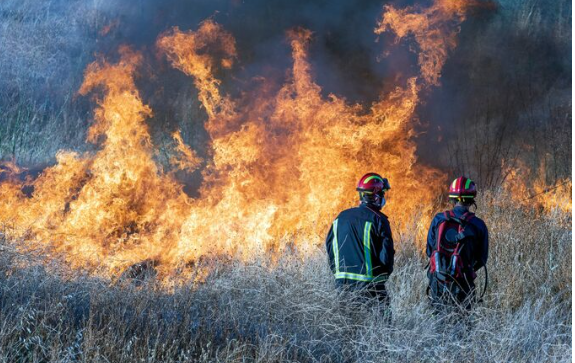
The evacuation plan—praised in briefings, printed on beautiful county mailers—collapsed under pressure. Routes meant to move hundreds stalled instantly. Alerts failed to reach entire neighborhoods. One hillside community only received warnings when a local adolescent blew his car horn and screamed over a megaphone.
| Category | Details |
|---|---|
| Incident Focus | Delayed evacuations during California wildfires |
| Key Fires | Pacific Palisades Fire, Eaton Canyon Fire |
| Fatalities | At least 17 lives lost due to delayed alerts and blocked roads |
| Federal Action | Executive order to override local/state permitting for rebuilding |
| State Response | Over 2,600 permits issued; AI tools used to speed approvals |
| Key Criticism | Delays blamed on FEMA aid and insurance issues, not permitting |
| Local Concerns | Risk of shelter shortages, fragmented communication |
| Rebuilding Progress | Over 450 homes under construction; 70% of clearances fast-tracked |
Emergency coordination has never been simple in California. Geography, jurisdiction, and funding often conflict. But as fires burn bigger and faster, each miscalculation compounded. Critics contend that the federal government has merely made matters more complicated and that permitting is now just one piece of a much bigger issue.
The latest development—an executive order signed by President Trump—directs federal agencies to bypass municipal permitting restrictions. The idea, according to the White House, is to fast-track reconstruction. Within weeks, FEMA and the Small Business Administration are slated to roll out new rules that reduce environmental reviews and state-level controls.
Governor Newsom vehemently disagrees. He says California already eliminated red tape—issuing more than 2,600 permits since the Pacific Palisades and Eaton Canyon fires. Executive directives, AI-powered review tools, and staffing grants have sped up the process dramatically. “Twice as fast as before,” Newsom stated on social media.
But speed hasn’t fixed everything. Funding lags. Insurance payouts have proven stubbornly delayed. Shelter programs are dwindling out just as winter looms over fire zones. Los Angeles County Supervisor Kathryn Barger warned that areas like Altadena might face a housing crunch within weeks. Pre-approved modular homes continue to be mired in a maze of permissions.
And yet, rebuilding has started. More than 450 residences are under construction. Mayor Karen Bass said that over 70% of fire permit clearances no longer need a comprehensive assessment. Still, she and Barger contend that the federal narrative of “state failure” ignores the underlying issue: money, not time, is the bottleneck.
I met with Jorge, a man whose home had burned to the ground, while I was visiting the Eaton Canyon site. He stood by a bent bicycle frame, recovered from the carnage. “We didn’t hear anything,” he remarked gently. “Just saw our neighbors running.”
His narrative resonated across the zone—people evacuated by instinct, not instruction. For some, those minutes made the difference between life and death.
Evacuation systems differ county to county. Opt-in text alerts are used by some. Others continue to rely on mobile apps, AM radio, and sirens. The decentralized system is unable to keep up with the rapidity of flames caused by climate change. Due to wind changes and dryness, average fire intensity and spread rates have significantly increased over the last ten years.
This fragmentation becomes fatal when fires act unpredictably, leaping boundaries and changing course in minutes. Blocks may already be compromised by the time alerts are sent out.
Mayor Bass’ administration released a reaction that was both forceful and balanced. “The federal government does not control local permitting,” it stated. “Faster FEMA funding and broader insurance relief would be particularly beneficial to survivors.”
That struck me. It wasn’t a refusal to collaborate. It was an appeal for alignment—between agencies, schedules, and priorities. because policies are not being counted by survivors. Months are being counted.
To its credit, California has implemented incredibly successful permitting reforms. Plan weaknesses are now promptly detected by AI software. Build timetables are being shortened by weeks thanks to pre-approved designs. Streamlined self-certification for certain constructions allows builders to begin without waiting for final green lights. These measures are particularly inventive and highlight how technology, when integrated effectively, can expedite recovery.
But reconstruction still depends on bank loans, insurance payments, and federal funding. These proceed slower, restricted by bureaucracy, risk assessments, and occasionally deliberate foot-dragging. Governor Newsom pointed out that the state is doing more with fewer resources—streamlining operations and cooperating across agencies.
For displaced families, though, the paperwork maze continues. One family I met in Topanga Canyon showed me a pile of forms over two inches thick—each one related to a different organization. The father expressed frustration but optimism, saying, “We’ve got everything approved except the thing we need to get approved to start.”
The executive order fails in this situation. Reconstruction is not always funded by overriding permits. It does little to stabilize survivors, but it does shift political focus and accountability. It also risks environmental implications by reducing local control during delicate reconstruction attempts.
Through intentional coordination, numerous communities have proved what’s possible. Teen volunteers helped elderly people flee after alarms failed. A small community radio station provided evacuation updates as cellphone service dropped. These were not flukes—they were acts of foresight, grounded on local trust.
Legal challenges are now anticipated. Leaders in California are getting ready to defend their jurisdictional powers. FEMA’s deadline for delivering audits and new guidelines has been accelerated. However, survivors do not require legal action or finger-pointing. They require refuge, clarity, and above all, speed.
In the context of climate adaptation, emergency systems must be both durable and extremely efficient. California’s progress is obvious, but it must be matched by timely federal investment. Insurance providers and banks also require pressure—not from press releases, but from legislative levers that safeguard fire victims from extended limbo.
Disclaimer
Nothing published on Creative Learning Guild — including news articles, legal news, lawsuit summaries, settlement guides, legal analysis, financial commentary, expert opinion, educational content, or any other material — constitutes legal advice, financial advice, investment advice, or professional counsel of any kind. All content on this website is provided strictly for informational, educational, and news reporting purposes only. Consult your legal or financial advisor before taking any step.
