When you drive through Colorado’s Grand Valley on a late summer morning, you’ll notice the unique tranquility of working agricultural land, with irrigation ditches running alongside alfalfa fields and distant mountains still carrying snow that won’t last as long as it once did. As it flows through this area on its way west, the Colorado River performs the same function that it has for many generations: it keeps life alive in a place that would otherwise be reduced to dust. This valley has been farmed by Joe Bernal’s family for almost a century. He is fully aware of it. He was unaware that a Madison Avenue hedge fund was going to move in next door until it actually happened.
Water Asset Management is the name of the company. Its headquarters are in New York City, and it has been purchasing agricultural land in the American West with a clear and uncomplicated focus: the water rights associated with that land. The company is among the biggest landowners in the area, having purchased over 3,000 acres in the Grand Valley of Western Colorado alone, according to public records. The point is not the land. In response to a question from CBS News, Andy Mueller, who oversees the Colorado River District Water District and is responsible for safeguarding Colorado’s portion of the river, was straightforward: “It’s the water.”
According to Matthew Diserio, president of Water Asset Management, the US water market is “a trillion-dollar market opportunity.” According to him, he started the business because he thought that “scarce clean water is the resource defining this century, much like plentiful, cheap dirty oil defined the last.” That framing is repeated on the company’s website. Most requests for interviews are turned down. CNN discovered that the company appears to own properties under several LLC names, including WPI Hulet Farm AZ LLC, WPI II-GV6 Farm CO LLC, and others, each of which has a mailing address that corresponds to the company’s New York headquarters. According to Mueller, the investment firm has “engaged in a number of different purchase methods to keep their transactions unknown to many of the local jurisdictions.”
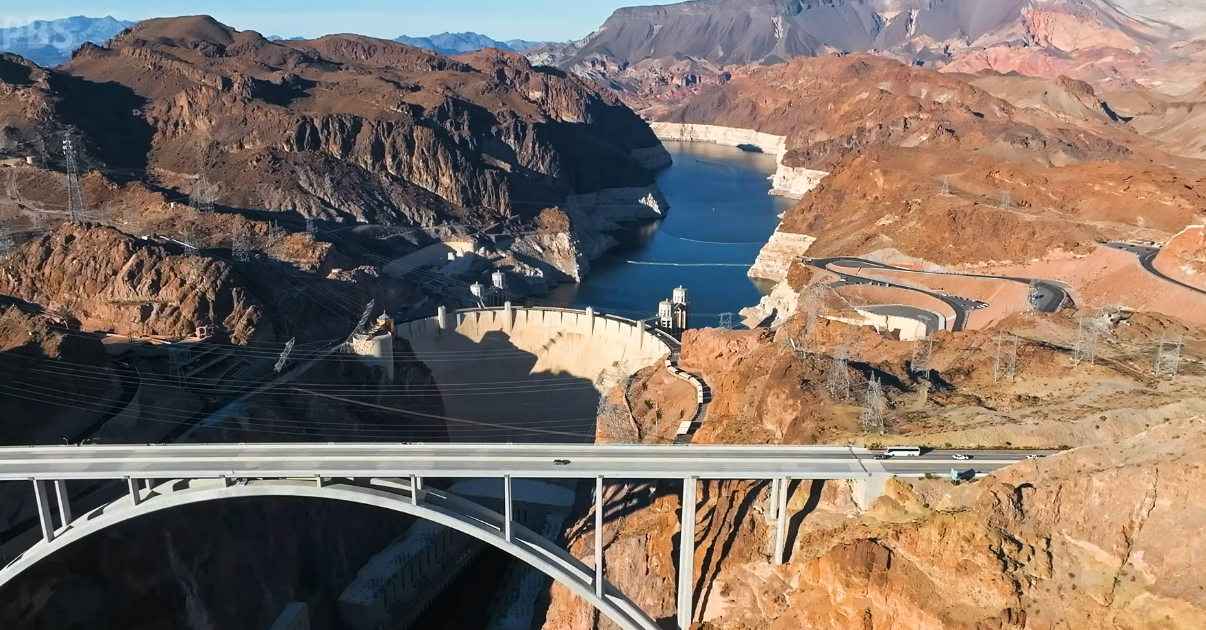
The pressure on the Colorado River is higher than it has ever been. The river has been draining more quickly than snowpack and rainfall can replenish it due to a 23-year megadrought, the worst in 1,200 years, according to researchers. River flow decreases by about 5% for each degree of warming. That math has resulted in a 20 percent decrease in overall flow over the last century. The two biggest reservoirs on the river, Lake Powell and Lake Mead, which store water for cities throughout the Southwest, are only 25% full. If the seven states that rely on the river are unable to reach a consensus on who will bear the cuts, the federal government has threatened to impose reductions on them. It is a resource that is almost entirely depleted.
Investors appear to grasp this in a way that the public discourse occasionally fails to. There are other companies entering this market besides Water Asset Management. A subsidiary of the East Coast financial giant MassMutual, Greenstone Management Partners purchased almost 500 acres of land in Cibola, a small desert town with about 300 residents close to the Arizona-California border. Nearly all of the town’s resources come from the Colorado River. The stated objective of Greenstone is “to advance water transactions that benefit both the public good and private enterprise.” A $27 million purchase of Colorado River water from Greenstone’s Cibola properties was approved by the Phoenix suburb of Queen Creek last year. This transfer would move the water 200 miles from the community where it had previously been used. A lawsuit contesting the agreement has been filed by the counties of La Paz, Mohave, and Yuma. The legal battle is still going on.
The Colorado River Water Rights Crisis: Key Facts
| Field | Details |
|---|---|
| River | Colorado River — flows through 7 US states and into Mexico |
| People Dependent on Colorado River | ~40 million |
| Farmland Dependent on Colorado River | ~5.5 million acres |
| Drought Context | 23-year megadrought — worst in 1,200 years |
| River Flow Reduction | ~5% per degree of temperature increase; ~20% total reduction over past century |
| Lake Powell & Lake Mead Status | At just 25% of combined full capacity |
| Key Investment Firm | Water Asset Management — headquartered on Madison Avenue, New York City |
| WAM Founded | 2005 |
| WAM’s Colorado Landholdings | 3,000+ acres in Western Colorado’s Grand Valley; $20M+ in Western Colorado purchases |
| WAM President’s Quote | Water is “a trillion-dollar market opportunity” |
| WAM Holdings Method | Uses multiple LLC names (WPI Hulet Farm AZ LLC, etc.) with NYC mailing address |
| Greenstone Management Partners | MassMutual subsidiary; bought ~500 acres in Cibola, Arizona |
| Cibola Deal | $27 million water transfer to Queen Creek, Arizona (Phoenix suburb ~200 miles away) |
| Federal Drought Funding | $4 billion allocated; $125 million pilot program for fallowing farmland |
| Key Critic | Andy Mueller, General Manager, Colorado River District Water District |
| Colorado Anti-Speculation Law | Efforts to strengthen it failed; pushed by former state senator Kerry Donovan |
| Stanford Water Market Proposal | Nobel laureate Paul Milgrom and PhD student Billy Ferguson — new tradeable water property rights |
| Legal Challenges | La Paz, Mohave, and Yuma counties filed lawsuit against federal Bureau of Reclamation over Cibola transfer |
| Key Reference — CBS News | New York investors snapping up Colorado River water rights — CBS News |
| Key Reference — Stanford SIEPR | For the Colorado River and beyond, a new market could save the day — Stanford SIEPR |
“These companies aren’t buying up plots of land because they want to farm here and be a part of the community,” said Holly Irwin, a local county supervisor and resident of Cibola. For the water rights, they are purchasing land here. “They come out West, purchase and pick up cheap rural agricultural land, they sit on it for a little while, and then they’re trying to sell the water,” said Mohave County supervisor Travis Lingenfelter, using language that was neither diplomatic nor untrue.
It’s possible that everything that is taking place here is completely justifiable from a legal standpoint. In the American West, water rights are equivalent to property rights, which are marketable. Greenstone’s lawyer, Grady Gammage, explained to CNN that a water right is valuable property that can be transferred, much like selling land, but only after thorough state and federal review. The current legislation does not make a distinction based on motivation between a hedge fund and a multigenerational farmer. It creates a system in which the water is eventually given to the person who is willing to pay the highest price.
As you watch everything unfold, you get the impression that Kerry Donovan’s description of the result is somewhat inevitable. Before his attempts to strengthen anti-speculation laws failed, Donovan, a rancher in Eagle County, Colorado, served in the state legislature. Together with her husband and two dogs, she manages a 400-acre cattle ranch. She has observed the investment firms passing through her area with a mix of clarity and fear. “One day they will sell that water off,” she said. “They’ll sell when water is worth the most, which is when we have the least of it.”
Paul Milgrom, a Stanford economist who was awarded the Nobel Prize in 2020 for his work creating markets for products that cannot be sold in conventional ways, has been researching the Colorado River water allocation issue and making the case that a revised market structure could alter the distribution of water before private investors complete reshaping it on their own terms. He contends that the current system, which is based on legal frameworks from the 19th century, provides almost no incentive to conserve water and every incentive to use it. A new kind of tradeable water right that prioritizes consumption over diversion might encourage conservation and provide rights holders with a financial incentive to use less. It’s a beautiful concept. It is currently genuinely unclear if it will be able to move more quickly than the investors currently involved in the market.
Bernal is observing from his Grand Valley farm next to his landlords in New York. According to him, the properties now have new irrigation systems. Everything is going well so far. However, he was careful with the words he used to express his feelings: “Good stewards of the land and stewards of the water rights will have their eyes open.”