

A landscape that has stopped receiving rain has a certain sound. The sound of the wind blowing through space feels hollowed out, devoid of its weight and dampness, not merely the crunch of dry grass beneath boots or the quiet of birds that have migrated to wetter ground. For generations, farmers and town planners considered these dry spells as cyclical intruders—unwelcome guests that would eventually be drove out by a La Niña deluge. But the rhythm has broken. The guests are staying longer, and they are eating us out of house and home.
The data is finally catching up to what anyone hanging on a fence post in the Riverina has suspected for years. Since 1971, the duration and frequency of drought occurrences have moved higher persistently, specifically targeting the southeast and southwest regions of the continent. These are the country’s lungs and larders, where the great majority of Australians reside and where the majority of our food is produced. They are not just isolated desert areas. The transition is not subtle. In the Murray-Darling Basin, the lifeblood of our agriculture, streamflows haven’t just decreased; they have fallen by 41 percent since the mid-1990s. In the southwest of Western Australia, the drop in runoff surpasses 50 percent.
We are seeing the emergence of a “thirsty” environment. It is a terrible thermodynamic truth where rising temperatures increase the air’s demand for moisture—the vapour pressure deficit—meaning the sky is physically taking water out of the soil quicker than it can be supplied. Even when it does rain, the ground is sometimes so parched and hydrophobic that the water fails to penetrate, evaporating before it can recharge the deep soil moisture that sustains crops into the spring.
Key Factual Context: Australia’s Deepening Drought
| Feature | Key Details |
| Primary Regions Affected | Southeast and Southwest Australia (major agricultural zones and population centers). |
| Key Statistical Shift | Streamflows in the Murray-Darling Basin have declined by 41% since the mid-1990s. |
| Underlying Driver | “Thirsty atmosphere” (increased evaporation) and a southward shift of rain-bearing cold fronts. |
| Recent Impact | The 2017–2019 “Tinderbox Drought” reduced winter crop production by up to 73% in some areas. |
| Forecast Warning | Models predict potential 20-year “mega-droughts” exceeding 20th-century records. |
| Primary Reference | UNSW Newsroom: Droughts lasting longer across Australia |
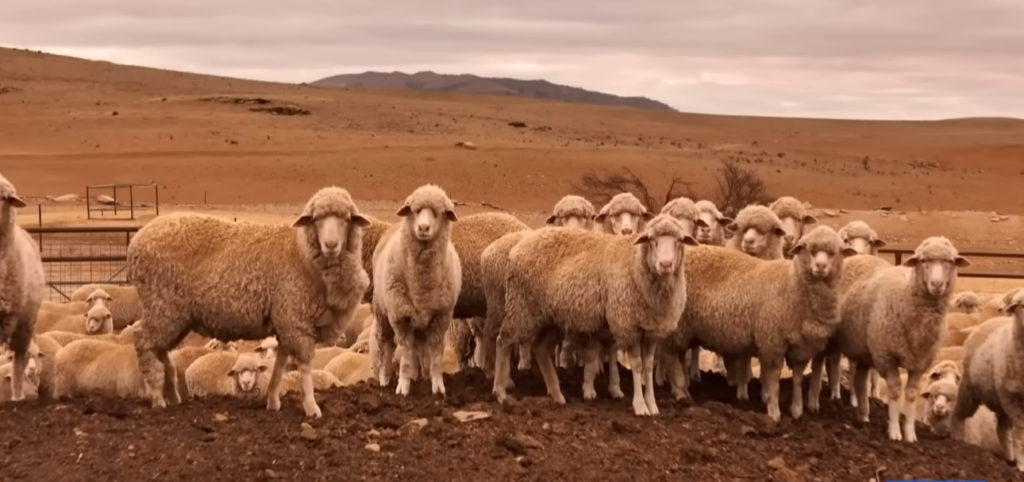
I caught myself staring at a rainfall map lately, following the violent red splotches across the Wheatbelt, and felt a silent, creeping fear that had nothing to do with statistics and everything to do with the emptiness of the land.
This structural alteration in our weather patterns was starkly demonstrated during the “Tinderbox Drought” of 2017 to 2019. It was the most intense three-year dry spell in the region since 1900, setting the preconditions for the Black Summer bushfires that followed. But the flames were just the spectacular finale; the gradual carnage happened in the paddocks, where winter crop production collapsed by over three-quarters in certain districts. The mental toll of drought is harder to graph but impossible to ignore, with suicide risks for rural males aged 30 to 49 climbing dramatically as the dry creates a pressure cooker of financial and psychological stress.
Researchers at UNSW, lead by PhD student Matt Grant, have ceased relying on intuition and began feeding the information into complex models. Their analysis indicates that the natural fluctuation of Australia’s climate—the “noise” that generally covers long-term trends—is finally being drowned out by a clear signal. The rain-bearing cold fronts that formerly dependably swept across the southern coast throughout winter and spring are being forced southward, skipping the mainland entirely, prevented by persistent ridges of high pressure that sit over the continent like a heavy, unseen lid.
The way technology is assisting us in diagnosing this pathology is both intriguing and a little frightening. Scientists like Dr. Sanaa Hobeichi are separating the effects of drought from rainfall using AI and Random Forest models. They’ve found that rainfall totals are a clumsy metric. The actual narrative resides in the “recipe” of the drought—how evaporation on hot days forecasts crop loss with alarming accuracy, and how soil moisture decides whether a river runs or transforms into a string of stagnant pools.
The ramifications of this are that we can no longer just build bigger dams and hope they fill. If the earth is dry enough, it absorbs the rain before it ever reaches the river. We are facing a future of “mega-droughts”—periods of 20 years or more—that could dwarf anything recorded in the 20th century. The sheer intricacy of these cascading hazards, where a lack of rain leads to a fodder problem, which leads to a mental health crisis, which leads to economic contraction, requires a level of adaptability we haven’t yet completely reckoned with. The previous maps are no longer relevant because we live in a drier place.
Disclaimer
Nothing published on Creative Learning Guild — including news articles, legal news, lawsuit summaries, settlement guides, legal analysis, financial commentary, expert opinion, educational content, or any other material — constitutes legal advice, financial advice, investment advice, or professional counsel of any kind. All content on this website is provided strictly for informational, educational, and news reporting purposes only. Consult your legal or financial advisor before taking any step.
