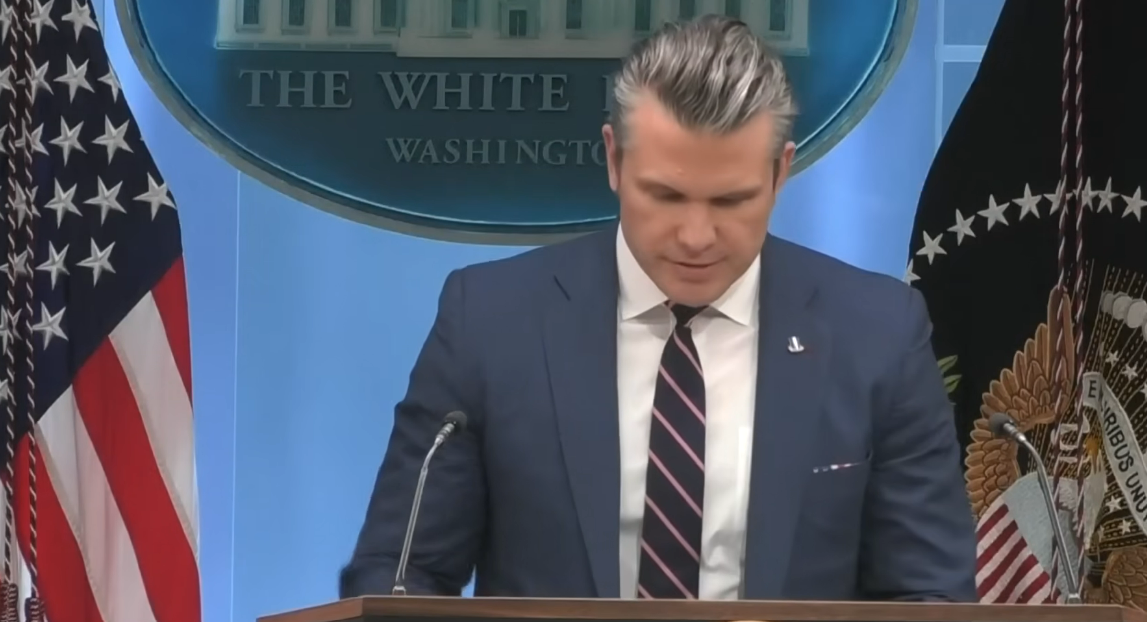
A two-week ceasefire between the United States and Iran was announced early on April 8, 2026, bringing an end to the conflict that had blocked the Strait of Hormuz, caused oil prices to soar, and consumed the Pentagon for weeks. Later that morning, reporters were to be briefed by Joint Chiefs Chairman Gen. Dan Caine and Defense Secretary Pete Hegseth. This type of briefing is commonplace in Washington. However, Pete Hegseth’s time as Defense Secretary has been anything but ordinary.
Hegseth assumed the position in January 2025 following a partisan Senate confirmation that raised serious doubts about the suitability of a former cable TV host with experience in the National Guard to lead the biggest military organization in the world. In the months that have passed, those worries have not been addressed. Instead, there has been a steady build-up of controversies, each creating a news cycle of its own and being closely followed by the next.
Military promotions are the most recent and possibly the most serious. More than a dozen Black and female senior officers in all four branches of the military had their promotions blocked or postponed by Hegseth, according to NBC News. Sources described the decisions as being driven, at least in part, by perceived political affiliation with the Biden administration, gender, or race. In response, the Pentagon referred to the reporting as “fake news” and maintained that Hegseth’s promotions are solely based on merit. Not everyone has been satisfied with that denial. The Senate Armed Services Committee’s Democratic member, Senator Kirsten Gillibrand, formally requested a closed hearing in a letter, stating that “military advancement must remain strictly meritocratic and based on performance.” Given Republican control of the Senate, it is still unclear whether that hearing will take place.
Key Information: Pete Hegseth
| Detail | Information |
|---|---|
| Full Name | Pete Hegseth |
| Title | United States Secretary of Defense (Secretary of War) |
| Confirmed By | U.S. Senate, January 2025 |
| Previous Role | Fox News host and commentator |
| Military Background | Army National Guard (mid-ranking officer, served in Iraq and Afghanistan) |
| Education | Princeton University (B.A.); Harvard Kennedy School (M.P.P.) |
| Current Crisis | U.S.–Iran military conflict; two-week ceasefire announced April 8, 2026 |
| Major Controversies | Blocked/delayed promotions of Black and female officers; firing of senior military leaders including Gen. CQ Brown; impeachment effort by House Democrat |
| Pentagon Spokesperson | Sean Parnell |
| Joint Chiefs Chair | Gen. Dan Caine |
| Key Senate Critic | Sen. Kirsten Gillibrand (D-NY), Senate Armed Services Committee |
Reference Links: Hegseth’s Boastful Claims About Iran War Contradict Reality — The Washington Post Gillibrand Calls for Details After Reports of Hegseth Withholding Promotions — NBC News
The number of officers Hegseth has fired since assuming office is startling. Early in Hegseth’s administration, Gen. CQ Brown, one of the most senior Black officers in American military history and the Chairman of the Joint Chiefs of Staff, was dismissed. Lisa Franchetti, a white woman who served as Chief of Naval Operations, was also dismissed. Notably, the dismissal of Army Chief of Staff Gen. Randy George occurred only a few days after Hegseth and Army Secretary Daniel Droz’s disagreements were made public. According to reports, the Army Secretary stated that he was not resigning, which typically indicates that the exact opposite is being discussed in Washington. It is difficult to interpret the pattern of these departures as coincidental.
In light of this, Hegseth’s profile has taken on a new dimension due to the Iranian conflict. Throughout the military campaign, he has taken center stage, appearing with President Trump in the White House briefing room to announce events, such as the spectacular rescue of downed American airmen from Iranian territory. Both Hegseth’s use of religious framing in official communications about an ongoing military conflict and Trump’s alleged comparison of one airman’s rescue to Jesus’ resurrection drew criticism. Concerns have been voiced by former officials and observers regarding the Secretary of Defense’s use of religious rhetoric in conjunction with wartime messaging. Those worries might be exaggerated. They might not be, too.
The discrepancy between what Hegseth has been saying in public and what officials with knowledge of the conflict are describing in private is more ambiguous. According to the Washington Post, his portrayal of the Iran war as an unquestionable success runs counter to officials’ assessments that the situation is more complex, with real costs and uncertain outcomes. Tehran had been “embarrassed and humiliated,” according to Hegseth.” A messier situation is described by officials observing the same conflict. Although this administration is not the only one to exhibit this kind of discrepancy between operational reality and public narrative, the willingness to express it so loudly and repeatedly is drawing attention.
Hegseth’s handling of the Iran conflict prompted a formal move by a House Democrat to propose articles of impeachment. The endeavor is unlikely to succeed in a Republican-controlled House due to its long odds. However, it contributes to the picture of a defense secretary who, in an astonishingly short period of time, has drawn criticism from both parties, alienated high-ranking military officials, and oversaw a major military conflict whose outcome is still up in the air.
Observing all of this from a cautious distance gives the impression that the Pentagon is overseeing something more than a foreign war. It involves overseeing a leadership environment that has caused instability within the organization in ways that will require some time to fully comprehend. There was always going to be controversy surrounding Hegseth. The briefing on Wednesday won’t address whether the polarization has negative effects on military preparedness, officer retention, or institutional credibility that go beyond politics.