

The Arctic used to be described as distant, pristine, marginal. That phrase today feels antiquated. The deployment of Arctic patrol icebreakers by Ottawa coincides with the Far North’s transformation from a frozen afterthought to a strategic pivot point, where hard power and climate science meet with unsettling clarity.
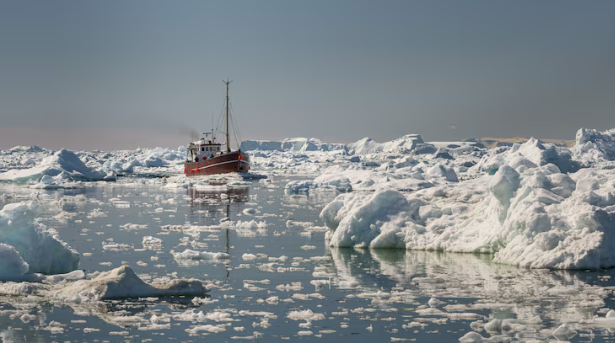
In April 2024, Canada announced its new defence policy, “Our North, Strong and Free,” a title that reads almost like a reassurance. Beneath the language lies an awareness that sovereignty in the Arctic can no longer rely on maps and memory alone. It involves hulls in the water, radar in the sky, and year-round presence in ice-choked routes that are thinning quicker than many officials imagined a decade ago.
Canada’s Arctic Patrol Deployment
| Category | Detail |
|---|---|
| Country | Canada |
| Policy Framework | “Our North, Strong and Free” strategy (2024) |
| Core Assets | Offshore and Arctic Patrol Vessels (AOPVs), Ice-capable ships |
| Strategic Drivers | Russian remilitarisation, China’s Arctic engagement, climate-driven access |
| Allied Context | NATO Arctic focus; Finland & Sweden joined NATO in 2023 |
| Infrastructure Investment | $175 million for Port of Churchill modernization |
| Key Institutions | Canadian Armed Forces, NORAD, NATO Joint Force Command Norfolk |
| Security Concerns | Hybrid threats, submarine activity, Northwest Passage sovereignty |
The patrol vessels now moving north are not symbolic gestures. They are ice-capable ships designed to operate in severe conditions, bolstering Canada’s ability to monitor the Northwest Passage and project authority across large, sparsely populated territories. Ottawa was cautious for years, favoring diplomacy and development over overt militarization. That stance is changing.
Russia’s remilitarisation of its Arctic coastline, coupled with its Bastion policy and resumed submarine patrols, has altered the equation. Since the full-scale invasion of Ukraine in 2022, Arctic security has been included more clearly into NATO’s deterrent preparations. The accession of Finland and Sweden in 2023 enlarged the Alliance’s northern footprint and effectively reoriented its strategic map.
For Canada, the move is less about conflict than trustworthiness. Sovereignty claims must be substantiated by constant operational presence. Icebreakers and patrol ships are as much about monitoring and search-and-rescue as they are about signalling. The signal is still clearly visible.
A former Canadian naval commander once told me that Arctic patrol is “a test of patience and plumbing,” reminding me that northern operations are characterized by endurance rather than spectacle. That subtle assessment feels newly important as Ottawa leans into a more forceful northern strategy.
The Arctic is no longer shielded from broader geopolitical currents. Melting sea ice has heightened anticipation about new shipping channels and access to hydrocarbons and minerals, even if commercial feasibility remains constrained. Long-standing disputes over whether those waterways are internal Canadian waters or an international strait have been rekindled by the possibility of an increasingly accessible Northwest Passage.
That legal dispute, formerly primarily academic, now carries operational ramifications. American activity on freedom of navigation has periodically troubled Canadian officials, who consider the Passage as fundamental to national identity and control. Therefore, deploying ice-capable patrol boats is about strengthening a steady Canadian presence in waters Ottawa claims as its own, not just about China or Russia.
The naval deployment is complemented by NORAD’s upgrade, which includes improved surveillance and early-warning capabilities. Arctic protection is layered: satellites, over-the-horizon radar, Rangers on the ground, and ships in the ocean. Every component is important.
The Rangers, frequently selected from Indigenous communities, exemplify a distinctly Canadian approach to Arctic security. Their understanding of topography and weather patterns is still vital. Ottawa’s approach stresses integrating Indigenous expertise into defence planning, an awareness that sovereignty in the North involves social and cultural components as well as military ones.
Infrastructure is another. The Port of Churchill, backed by $175 million in federal funds and maintained under local authority through the Arctic Gateway Group, exemplifies the balance of economic and strategic aims. It reduces the possibility of foreign meddling while bolstering military logistics and promoting the export of vital minerals. The investment shows that Arctic policy is not only reactionary but developing.
France, albeit not an Arctic coastline state, has strengthened its interest in arctic matters, citing energy security and freedom of navigation. The Arctic has once again come to be seen by NATO as a region that needs a cohesive stance rather than a peripheral focus. Joint drills such as Cold Response have risen in scale, and Joint Force Command Norfolk now coordinates allied forces across the North Atlantic and Arctic approaches.
These moves are incremental but cumulative. Cyberattacks and critical infrastructure sabotage are examples of hybrid threats that are increasingly being tested in the Arctic. Subsea cables and energy installations are no longer abstract vulnerabilities; they are assets that require security.
One senior security expert recently described the Arctic as “a theatre where ambiguity is thinning along with the ice.” I thought about that line for longer than I had anticipated.
High-intensity naval battle is not the intended use for Canada’s icebreakers. Their job is constabulary, surveillance-oriented, and supportive of larger deterrence. Yet in strategic terms, presence is power. A patrol vessel on station communicates intent in a way that policy papers cannot.
Beneath this metamorphosis lies a sense of unease. For decades, Arctic administration relied on cooperation, scientific interchange, and relatively stable standards. Multipolar competition complicates that framework. Despite being disputed, China’s self-description as a “near-Arctic state” mirrors a larger reality: extra-regional entities are now invested in polar outcomes.
Ottawa’s reaction seeks balance. It seeks to uphold sovereignty while maintaining multilateral cooperation. The Arctic Council’s recent stalemate following Russia’s invasion of Ukraine has emphasized the vulnerability of governance systems formerly taken for granted.
The climate dimension adds urgency. Timelines for strategic planning and environmental adaptation are altered by predictions that summer sea ice may vanish by 2030. Even on a seasonal basis, the availability of maritime channels alters risk assessments and traffic patterns. More ships mean more accidents, more search-and-rescue demands, and more potential for mistake.
In that respect, Arctic patrol vessels perform humanitarian functions as well. They serve as platforms for environmental monitoring and disaster response. In such a setting, the distinction between defense and civil support is hazy.
Resilient dynamism—adapting to shocks while maintaining long-term stability—is emphasized in Canada’s strategy, at least on paper. It avoids overt language of confrontation, instead portraying the deployment as necessary reinforcement of current commitments.
Whether that discipline can be maintained amid mounting tensions is an open question. The Arctic is no longer sheltered by distance or climate. It is increasingly linked into global strategic struggle, its ice disappearing precisely as rivalries sharpen.
For Ottawa, using patrol icebreakers is more about catching up with reality than it is about dramatic escalation. The North has changed. Canada is adjusting.
And in the calm swirl of ice on steel hulls, that shift becomes obvious.
