

A bus depot prior to sunrise has a distinct feel. Mechanics move silently between cars that still hum subtly from residual heat, and the air feels heavy and thick with the residue of decades of diesel exhaust. That hum is starting to fade in places like São Paulo, giving way to an odd, almost unnatural silence. A national policy of silence is currently being attempted by Brazil.
At least on paper, the plan is simple: by 2028, 30 cities will have electric bus networks in place, with about 540 vehicles initially being funded by a US$500 million partnership between the World Bank and Caixa, a public lender in Brazil. Investors appear to think that this is the start of something long-lasting, and the numbers sound impressive. However, it seems that purchasing buses isn’t the true problem when you’re standing close to one of those charging bays and observe cables that are as thick as a human arm slithering across concrete floors. The nation is being rewired.
| Item | Details |
|---|---|
| Initiative | National shift toward electric public buses, targeting networks in 30 cities by 2028 (stated ambition in program reporting) |
| Phase 1 scope | ~540 electric buses plus charging/grid upgrades and depots (World Bank) |
| Public financing anchor | US$500 million Phase 1 investment approved by the World Bank Board; implemented via Caixa Econômica Federal (World Bank) |
| Stated goals | Improve public transport quality and cut emissions; technical assistance + project preparation for cities (World Bank) |
| Complementary finance model | €80m Brazil E-Bus Credit Enhancement Fund aiming to mobilize ~€450m private lending; includes anchor investment from BTG Pactual (cities-today.com) |
| Local reference point | São Paulo has surpassed 1,000 zero-emission buses in its municipal fleet (reported total includes battery-electric + trolleybuses) (Sustainable Bus) |
| Authentic reference link | World Bank press release: https://www.worldbank.org/en/news/press-release/2025/12/22/world-bank-and-caixa-support-brazils-transition-to-electric-buses |
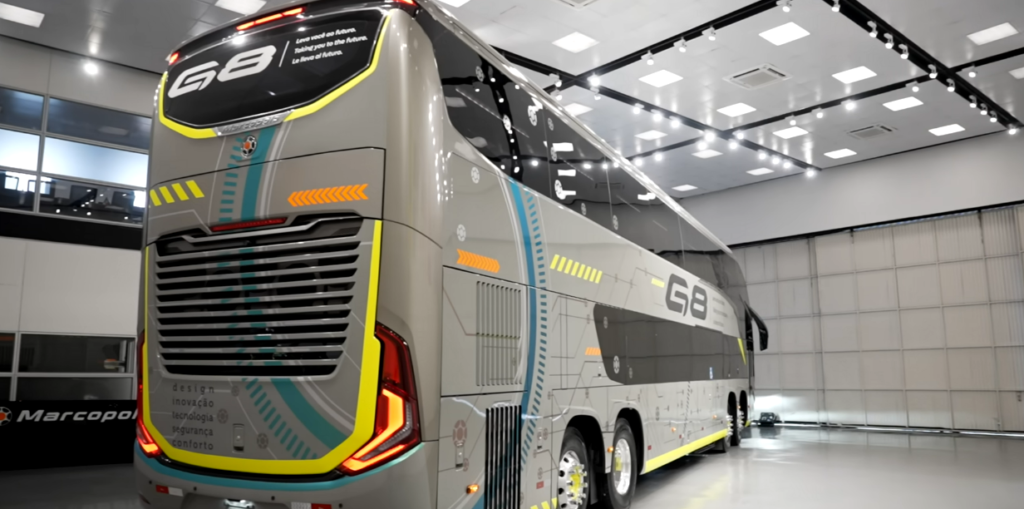
São Paulo has emerged as the silent evidence that this shift is possible. 1,000 electric buses, many of which were produced locally by companies like Eletra and Marcopolo, have already reached the city’s symbolic milestone. The lack of engine noise is almost unnerving on some streets, particularly early in the morning. Pedestrians look twice, as though something necessary is missing. Though old habits tend to persist longer than new technologies, it’s possible that this silence will soon become the norm.
Naturally, the nervous system of this whole experiment is money. Compared to diesel buses, electric buses are more expensive up front, and city governments rarely have extra money. Brazil’s credit enhancement fund, which is partially supported by private capital from companies like BTG Pactual, is crucial because of this. Its purpose is to mitigate risk and persuade cautious lenders that electrification won’t result in a financial catastrophe. Without these financial safeguards, many cities are thought to have hesitated and opted for dependable diesel engines over unproven innovation.
An additional layer of subdued tension is presented by infrastructure. Electric buses require patience and preparation because they recharge slowly rather than instantly. Recently, workers poured concrete and ran wires through trenches that cut across the yard outside one depot to install new substations. Given how time-consuming and costly the project appeared to be, it is unclear if smaller cities will have the funding or political will to see it through.
There is hope, though, and it doesn’t feel forced. Many nations are envious of Brazil’s robust domestic bus manufacturing industry. Workers assemble electric vehicles piece by piece inside factories on the outskirts of industrial cities, their movements efficient and well-practiced. This is an industrial strategy that promises jobs in software systems, maintenance facilities, and assembly lines; it’s not just environmental policy. It’s evident from observing those assembly floors that electrification is about more than just emissions. It has to do with surviving financially.
Conversely, commuters are more concerned with experience than with policy. Cleaner air, fewer vibrations, and more comfortable rides are all provided by electric buses. Passengers have already observed the difference on some routes. Windows remain open for longer. Without the continuous roar of combustion, conversations feel more comfortable. It’s difficult to ignore how fast people adapt when discomfort goes away.
However, skepticism endures in more subdued areas. In private, some transportation officials acknowledge that they are concerned about grid reliability, particularly during peak hours when factories and air conditioners vie for electricity. Whether Brazil’s power infrastructure can grow quickly enough to accommodate a national electric fleet is still up in the air. Public systems that were created decades ago tend to lag behind technological advancements.
Brazil is not the only country taking this risk. Around the world, cities are experimenting with electric transit, frequently encountering comparable logistical and financial challenges. However, Brazil’s strategy seems atypically ambitious, possibly influenced by its size and past of uneven infrastructure development. In order to catch up, the nation has always had to build large.
Beneath the technical aspects, there is also a cultural element at play. For many years, diesel buses have been a fixture of Brazilian cities, representing both mobility and annoyance. A familiar daily routine must be rewritten in order to replace them. As this is happening, it seems like Brazil is doing more than simply switching cars. Its relationship with its own cities is evolving.
Disclaimer
Nothing published on Creative Learning Guild — including news articles, legal news, lawsuit summaries, settlement guides, legal analysis, financial commentary, expert opinion, educational content, or any other material — constitutes legal advice, financial advice, investment advice, or professional counsel of any kind. All content on this website is provided strictly for informational, educational, and news reporting purposes only. Consult your legal or financial advisor before taking any step.
