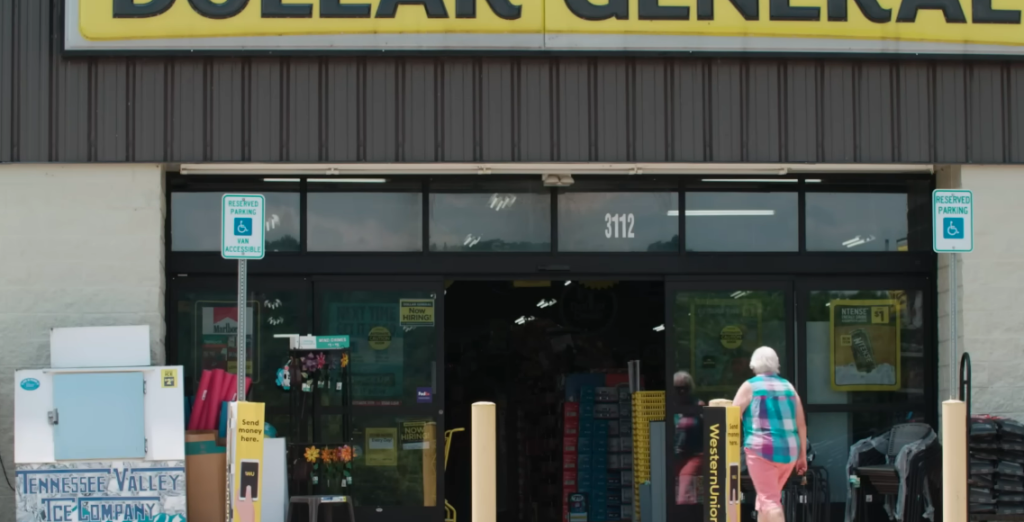
Walk into any Dollar General on a Tuesday afternoon — the kind of store anchored in a strip mall between a laundromat and a cell phone repair shop, with fluorescent lighting and narrow aisles stacked high with cleaning supplies, canned goods, and seasonal decorations — and the whole premise of the place is the price. That’s the situation. You’re not there to create atmosphere. You’re there because the tag on the shelf says $7.00, and $7.00 is what you can afford this week.
Because of this, the class action lawsuit at the heart of the Dollar General settlement deadline is significant in ways that go beyond the small sums of money being offered. The core allegation, filed in New Jersey and eventually joined by millions of eligible shoppers nationwide, is that Dollar General was charging customers prices at the register that didn’t match the prices displayed on store shelves — sometimes higher, sometimes lower, but consistently inconsistent in a way that prosecutors argue violated consumer protection laws. The company denied any wrongdoing, as companies typically do when settling class action suits. However, it consented to settle the case by paying $15 million.
Of that $15 million, $8.5 million is available for actual consumer claims, with the remaining $6.5 million earmarked for operational changes designed to fix the pricing discrepancy problem in stores going forward. At least overall, the claims fund is real money. In terms of what individual shoppers can collect, the math is more humbling. Those who can document that they filed a complaint about a specific overcharge — either with Dollar General directly or with a government consumer protection agency — can receive up to $10 per complaint, with a household cap of $20. Two complaints per household, maximum. If your actual overcharge exceeded $10, you get the higher amount. For shoppers without that paper trail, the settlement offers a $3 in-store discount on a future purchase of at least $10, no proof required, during a two-day window at any Dollar General location — dates still to be announced.
The claim deadline of April 13th is quickly approaching. Furthermore, it’s likely that the majority of those who were overcharged during the nine-year class period (October 2016 through November 2025) are unaware that this settlement exists, let alone that they must take action by Sunday. This and other class action settlements rely on a notification process that often only reaches a small percentage of eligible claimants, typically through email notices that are sufficiently similar to promotional mail to be ignored. That is a pattern, not cynicism. Almost all Americans who made purchases at Dollar General during that window and paid a price that differed from the shelf label are included in this settlement class. That’s a huge number of people, the majority of whom are unfamiliar with DGPriceSettlement.com.
Key Information Table
| Detail | Information |
|---|---|
| Company | Dollar General / Dolgencorp LLC |
| Case Name | Braun v. Dolgencorp LLC d/b/a Dollar General |
| Case Number | MID-L-00950-25 |
| Court | Superior Court of New Jersey, Law Division, Middlesex County |
| Total Settlement Value | $15 million |
| Consumer Claims Fund | $8.5 million |
| Operational Changes Fund | $6.5 million (pricing infrastructure improvements) |
| Class Period | October 10, 2016 – November 19, 2025 |
| Eligibility | All U.S. shoppers who paid more or less than shelf-labeled prices at any Dollar General store during class period |
| Cash Payout (with proof) | $10 per complaint or actual overcharge amount (whichever is higher); max $20 per household |
| In-Store Benefit (no proof needed) | $3 off first $10 of any qualifying purchase during a two-day window (dates TBD) |
| Claim Deadline | April 13, 2026 |
| Final Approval Hearing | March 19, 2026 |
| Opt-Out / Objection Deadline | March 2, 2026 (passed) |
| Settlement Website | DGPriceSettlement.com |
| Claims Administrator | Philadelphia, PA (P.O. Box 58220) |
| Plaintiffs’ Counsel | Milberg Coleman Bryson Phillips Grossman PLLC; The Dann Law Firm P.C. |
| Defense Counsel | McGuireWoods LLP |
| Dollar General’s Admission | None — company denied wrongdoing |
| Uncashed Check Disposition | Donated to a national food bank organization |
It’s difficult to ignore the particular irony of this story taking place at a discount store whose entire clientele is made up of price-conscious consumers—those who are struggling to make ends meet in rural and lower-class areas where Dollar General has rapidly grown over the previous 20 years. Currently, the company has over 20,000 locations in the US, many of which are in places that traditional grocery chains don’t service. The discrepancy between what the register charges and what the shelf states isn’t an abstract consumer protection issue for those customers. It makes all the difference in whether or not you have enough money for the remainder of the week. When a $2 toilet paper overcharge is multiplied by millions of transactions, it becomes more than just a rounding error.
Comments left by readers on websites monitoring the settlement provide their own narrative. One person reports that they have been observing the disparity in garbage bags for years—$7.00 on the tag, over $10.00 at the register—and that they have encountered the same issue at other low-cost stores. Another states unequivocally that they are “sick of being robbed by DG.”” Someone else practically points out that they are among the few consumers who can genuinely prove their claims because they have retained their shelf-price photos and receipts since a previous state-level investigation. Naturally, the majority of people kept neither. The majority simply paid, sensed something wasn’t quite right, and left since they had somewhere to go.
At least over time, the $6.5 million portion of the settlement allocated to operational enhancements may have greater significance than the payouts to consumers. In order to stop such disparities from happening again, Dollar General has promised to use that money to fix pricing systems within its stores. It will take time to determine whether those internal adjustments truly reduce the discrepancy between shelf labels and register totals, and this settlement lacks an external monitoring system that would make it simple for customers or regulators to confirm compliance. Even though structural commitments of this type, flawed as they are, tend to outlast the checks, it’s important to acknowledge this limitation.
Unexpectedly, one of the more modest aspects of this whole arrangement is what happens to uncashed settlement checks: any funds that remain unclaimed and uncashed will be donated to a national food bank organization. There is some logic to that result, even if it only applies to the remaining money that qualified customers neglected to claim, since those most impacted by systematic price overcharges at discount stores are frequently the same people who depend on food banks. Sunday, April 13 is the deadline. The settlement website is still accessible if you made purchases at Dollar General between 2016 and late 2025 and paid more than what the shelf indicated. The ten minutes are probably worthwhile.