

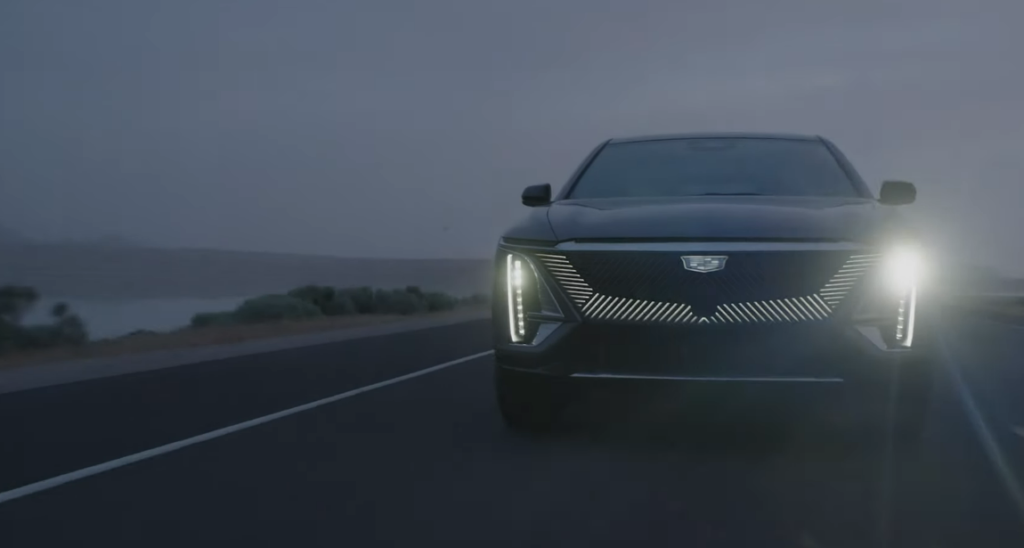
GM has been narrating a version of the Cadillac Lyriq story for many years. This is how it works: the century-old American luxury brand, which has long been linked to gas-guzzling Escalades and sedans with lots of chrome, is now producing the electric car it deserves. The Lyriq was intended to be the proof point; it was first presented as a concept in 2020 and began shipping to clients in 2022. It starts at more than $58,000 and has a 33-inch diagonal LED display with sleek lines. Cadillac is competing on its own terms with Tesla. In 2024 alone, 28,402 units of that story were sold.
A different story is presented in a federal class action lawsuit that was filed in Washington state on April 2, 2026.
Two owners, Wendy J. Cochran of Washington and Charlene Riddle of Florida, filed the complaint, claiming that the Lyriq has flaws in its electrical architecture, battery management systems, and control module communication that could suddenly render the car completely unusable. The term “bricked”—the car just stops working—has been agreed upon by the lawsuit and the larger EV community. It is unable to begin. It is not able to charge. You can’t drive it. Owners have complained about having to tow their cars to dealerships, where technicians find it difficult to identify the root cause and repairs can take weeks or even months. Regarding the lawsuit, General Motors has refrained from commenting.
Important Information: Cadillac Lyriq Electric SUV Lawsuit
| Detail | Information |
|---|---|
| Vehicle at Issue | Cadillac Lyriq (All-Electric Luxury SUV) |
| Manufacturer | General Motors (GM) |
| Platform | Ultium EV Platform |
| Vehicle Launch Year | 2022 |
| Annual Sales — 2024 | 28,402 units |
| Annual Sales — 2025 | 20,971 units |
| Starting Price (approx.) | ~$58,000–$65,000+ |
| Lawsuit Filed | April 2, 2026 |
| Court | U.S. District Court, Western District of Washington |
| Named Plaintiffs | Wendy J. Cochran (Washington); Charlene Riddle (Florida) |
| Law Firm | Pfau Cochran Vertetis Amala PLLC (among others) |
| Core Allegations | Defects in electrical architecture, battery management systems, control module communication causing vehicles to become inoperable (“bricked”) |
| Specific Failures | Cannot start, cannot charge, cannot operate; vehicles towed to dealers with repairs taking weeks or months |
| GM’s Alleged Prior Knowledge | Internal testing, engineering reports, warranty claims, consumer complaints, and regulatory filings |
| Allegation re: Disclosure | GM continued marketing Lyriq as premium reliable EV despite knowing of defects |
| GM’s Response to Lawsuit | Declined to comment |
| GM’s Prior Action | Offered buybacks to some Lyriq owners; plaintiffs allege GM delayed actual payments |
| Additional Issues on Record | Previous recall: 186 Lyriq EVs recalled over touchscreen shutdown; cracked liftgate panel reports; infotainment malfunctions |
| Relief Sought | Defect disclosure; repairs; consumer notification; restitution; class action certification |
| Legal Basis | Federal warranty law; state-level consumer protection statutes |
Researchers who examined the complaint documents identified the specific failure mechanism as software communication failures between several control units, or CUs as engineers refer to them, which can put the car in a restricted “limp mode” or completely shut it down. This is not the same as the Integrated Charging Control Unit malfunctions that have afflicted certain Hyundai and Kia electric cars; in these cases, a physical part malfunctions instead of a software handshake between modules. Both produce the same result for the driver: an expensive, immobile machine. However, the Lyriq’s issue stems from the design of its software-defined vehicle platform, which is the same Ultium system that GM has largely relied on for its EV future.
The claim that GM knew about these flaws before they became common consumer issues is what makes the lawsuit so acute. According to the complaint, the automaker continued to market the Lyriq as a high-end, dependable car despite having access to engineering reports, dealership warranty claims, internal testing data, and complaints submitted to federal regulators. This pattern—knowing about a flaw but not disclosing it—is precisely the kind of accusation that makes it costly for automakers to defend against automotive class actions and survives motions to dismiss. The “prior knowledge” description may be vigorously contested by GM’s lawyers. However, prior recall activity (186 Lyriq EVs were recalled for touchscreen shutdown issues, and cracked liftgate panels generated their own set of complaints) points to a pattern of electrical reliability issues that existed before this particular lawsuit.
This case seems to come at an awkward time for GM’s larger EV story. The Lyriq is the company’s electric flagship, and it has invested tens of billions in its Ultium platform, staking Cadillac’s luxury credibility on it. Sales of Lyriq actually decreased from 28,402 units in 2024 to 20,971 units in 2025; this decline occurred prior to the lawsuit making headlines. It’s really unclear if that decline is due to the reliability issues that are currently being litigated, the general softness of the EV market, competitive pressure, or a combination of the three. It is evident that a lawsuit claiming the company’s best-selling luxury EV can malfunction on its own is not the kind of marketing context GM was hoping for.
In addition to seeking relief under both federal warranty law and state consumer protection statutes, the plaintiffs are requesting class action certification in order to represent Lyriq owners across the country. The complaint claims that GM did offer buybacks to some impacted owners, but it allegedly postponed completing those buybacks, perhaps to reduce its immediate financial risk. It is important to note that particular detail. If accurate, it implies that the business was aware that the issue was severe enough to justify compensating owners, but took its time to avoid incurring the full expense of doing so all at once. If such behavior is recorded in discovery, it usually makes a defendant’s case much more difficult.
It’s difficult not to consider what the Lyriq stands for beyond itself as you watch this play out. The entire American auto industry has been wagering that domestic EV brands will be able to outbid Tesla for consumers, and that luxury EVs in particular will be able to compete on quality and dependability rather than just price and range. The Lyriq was meant to show that GM had the software engineering know-how to create an automobile that functions as complex software-defined vehicles must. That question isn’t directly addressed by a lawsuit claiming that a communication breakdown between control modules could make the vehicle permanently unusable. However, it makes it more noticeable than any press release.
