

At exactly 6:30 p.m. on a Thursday night, six people unwittingly entered a completely different future. 11, 13, 16, 31, 42, 48, and an extra 21 were revealed at the highly anticipated Singapore TOTO draw. After three successive rollovers, the jackpot increased to an impressive S$13.5 million. There were six winners when the cascade draw occurred, not just one. Each took home a little more than S$2.25 million.
Although the amount wasn’t unprecedented, the distribution was very intriguing. Singapore Pools’ online betting system produced three of the winning submissions. The others were acquired at outlets in Tampines, Owen Road, and Sengkang. This type of dissemination, both online and offline, is particularly indicative of how lottery culture has changed in Singapore.
| Draw Date | 29 January 2026 |
|---|---|
| Jackpot Amount | S$13,524,372 |
| No. of Winners | 6 |
| Prize Per Winner | S$2,254,062 |
| Winning Numbers | 11, 13, 16, 31, 42, 48 – Additional Number: 21 |
| Notable Context | Jackpot cascaded after 3 consecutive rollovers |
| Next Jackpot | Estimated S$1,000,000 (as of 2 February 2026) |
| Official Source | www.singaporepools.com.sg |
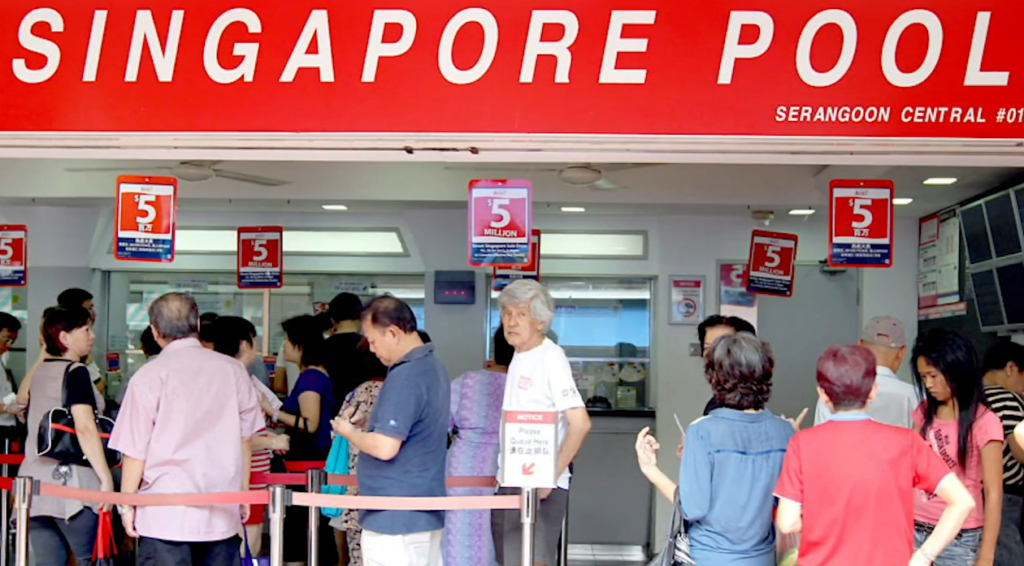
The TOTO format, a staple since 1968, has undergone significant changes throughout the years. The current 6-out-of-49 system is engineered for anticipation. Every Monday and Thursday, a fresh draw gives rise to hope, typically in long queues at convenience stores or supermarkets, where syndicates secretly organize and friends scribble on slips with focused determination. It’s strikingly comparable to watching a city pause for something shared, although temporary.
The cascading mechanism, designed as a structural protection and marketing booster, guarantees that the prize won’t snowball indefinitely. On the fourth draw without a top prize winner, the total is allocated to the next winning tier. It’s a remarkably effective method, ensuring that momentum grows without slipping into stasis. This time, the Group 1 prize pool dropped neatly into six hands, an uncommon yet rewarding outcome for a format rooted in statistical improbability.
To win the jackpot, a player must match six numbers—odds calculated at around 1 in 13.98 million. It’s a mathematical puzzle of ludicrous scale. But because the act itself is significant, rather than because the chances are in favor, ticket after ticket is nevertheless bought. For many, it’s about potential rather than expectation.
It is frequently a personal emotional response. At a shop close to Toa Payoh, I once saw a retiree circle three birthdays and the numbers from her former residence on a slip. Her demeanor was methodical and patient, as if she were simultaneously superstitious and rational.
The obscurity surrounding winners is culturally ingrained. Seldom do Singaporeans show off their unexpected wealth. There are no televised interviews or big cheques. The prizes themselves, untaxed and pure, are handled with a kind of subtle veneration. A jackpot isn’t simply money—it’s a test of judgment, often shared between close family and shielded wholly from public notice.
This type of silent windfall can be especially helpful. It encourages careful distribution, maintains stability, and lessens spectacle. According to reports, many winners utilize their winnings to support their parents, pay off mortgages, or covertly support neighborhood initiatives. Although the award frequently greatly lessens their level of stress, it doesn’t necessarily alter their way of life.
There is also a practical optimism ingrained in the game’s framework. Strategic flexibility is made possible by system entries, where participants pay more to choose more numbers. Though marginally better, the probabilities are still small. Additionally, participation is now more accessible, particularly during larger draws, thanks to the introduction of iTOTO, which allows numerous players to share partial bets.
Singapore Pools donates 54% of total sales from each draw to the prize pool. 38% of that is used to pay for the jackpot. That sum keeps rolling over when nobody wins, creating suspense. However, the cascade returns players’ focus to the collective after four rounds, reminding them that the system favors eventual release rather than perpetual accumulation.
The larger metaphor is simple to understand. TOTO’s design strikes a balance between hope and responsibility in a city where planning and moderation are national characteristics. The game entices but doesn’t deceive. Its structure promotes involvement without promising to deliver life-altering transformation. And in doing so, it generates a kind of optimism that is cautious but sincere.
In recent days, talks concerning the jackpot have revived in coffee shops and message boards. How would you spend two million dollars? The answers rarely involve sports vehicles or yachts. More frequently, they consist of insurance plans, HDB upgrades, or a niece’s tuition. Although the fantasies are small, they are proudly expressed.
The excitement subsides when the next draw is reset to its minimum of S$1 million. The lines at 7-Eleven shorten slightly. But the rhythm of the game doesn’t disappear. Somewhere, someone is still punching down numbers with a borrowed pen, hoping—calmly, quietly—that maybe, just maybe, their combination will come next.
The TOTO jackpot might appear to be a random event. When examined attentively, however, it is a ritual of hope that is conveyed with remarkable humility and is passed down through the generations. Additionally, belief—something considerably more durable than luck—is present in that rite.
