

A $135 million fund is currently waiting to be distributed among the approximately 100 million Americans who used an Android phone at some point after November 2017, somewhere in a server farm in Northern California. Earlier this week, the settlement website went live. June 23 is the date of the final approval hearing. You could get up to $100 if you meet the requirements, which are quite low. However, most payments are anticipated to be much smaller due to the large number of eligible individuals. One news site commenter provided a somewhat accurate summary of the likely reality: “I’m looking forward to getting my payment of $2.56 from this settlement.”
That dark humor touches on a genuine aspect of how these large-scale technology class actions typically operate. The headline has massive numbers. Payouts per person are frequently insufficient. The lawsuit, Taylor et al. v. Google LLC, asserts that Android devices were transmitting data to Google’s servers in the background, even when phones were idle, apps were closed, and Wi-Fi was available, consuming users’ paid cellular data without meaningful disclosure or consent. However, beneath the logistics of claim forms and payment elections is a legitimate allegation that deserves to be taken seriously. As it usually does in these situations, Google denied any wrongdoing and consented to a settlement in order to avoid protracted legal action. For the company, that pattern has evolved into a sort of signature move.
There is more to the settlement than just cash. Google consented to amend its Google Play Terms of Service to reveal that some passive data transfers do happen on Android devices, including when the device isn’t being used. Additionally, the company promised to respect the “allow background data usage” setting, which means that data transfers will actually cease when a user toggles it off. It’s important to note that this wasn’t just how the feature operated all along; rather, it had to be negotiated as a settlement term.
Key Information: Google Class Action Lawsuits (2026)
| Detail | Information |
|---|---|
| Company | Google LLC / Alphabet Inc. |
| Headquarters | Mountain View, California |
| Case Name (Android Data) | Taylor et al. v. Google LLC |
| Case Number | 5:20-cv-07956-VKD |
| Court | U.S. District Court, Northern District of California, San Jose |
| Settlement Amount (Android) | $135 million |
| Estimated Class Members | ~100 million US Android users |
| Eligibility Period | November 12, 2017 – date of final approval |
| Max Individual Payout | Up to $100 |
| Payment Methods | PayPal, Venmo, Zelle, ACH, virtual prepaid card |
| Objection/Exclusion Deadline | May 29, 2026 |
| Final Approval Hearing | June 23, 2026 |
| Google Assistant Privacy Settlement | $68 million — unauthorized recordings |
| YouTube Privacy Settlement | $30 million — children’s data collection |
| Google Play Store Settlement | $700 million — antitrust, state AGs |
Reference Links: $135M Google Android Data Transfer Settlement — Top Class Actions The $135M Google Data Settlement Site Is Live — CNET
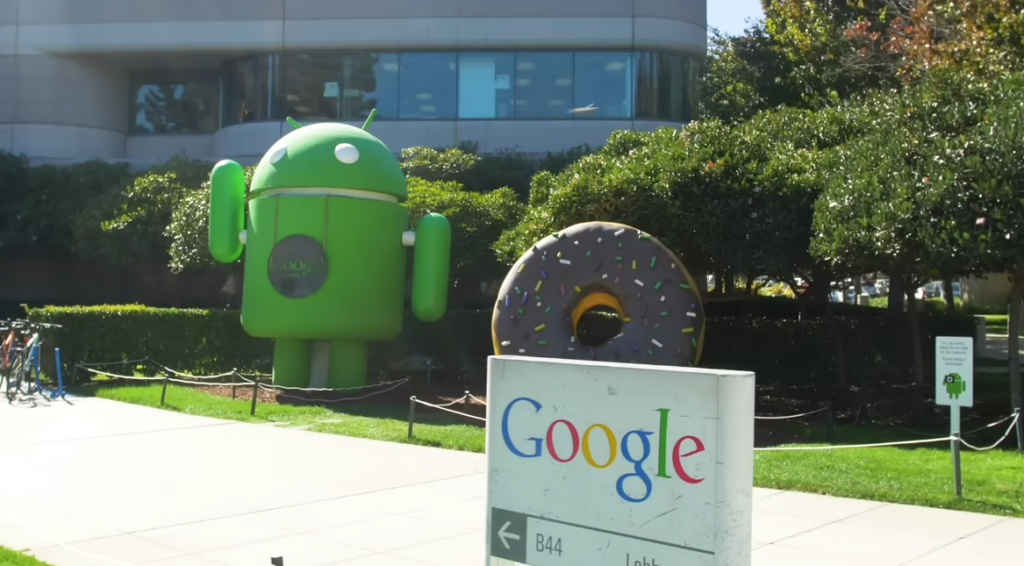
There are numerous other ongoing legal issues that Google is managing. Claims that Google Assistant, the digital equivalent of a microphone left on in your living room, was recording private conversations even when users hadn’t said “Hey Google” to activate it were settled for $68 million. Data collection from children under 13 between 2013 and 2020—a time when YouTube was legally obligated to abide by the Children’s Online Privacy Protection Act—was the subject of a $30 million YouTube settlement.
Additionally, state attorneys general brought antitrust and consumer protection claims over the Google Play Store, claiming that the company restricted consumer choices and inflated app costs by maintaining excessive control over the Android app marketplace. This resulted in the largest of the current settlements, totaling $700 million. The court has already approved that settlement.
The range of behavior covered by all of these cases is remarkable when considered collectively. information gathered without permission. recordings that are not activated. information about children that was collected against federal law. App store policies that are said to have hurt both customers and developers. Every case is unique in terms of its resolution, impacted population, and legal theory. However, taken as a whole, they paint a picture of a business that has been under constant legal scrutiny for almost ten years in a number of jurisdictions due to its relationship with user data and competitive practices.
The similarities to Microsoft’s treatment by antitrust authorities in the late 1990s, when the company’s Internet Explorer bundling practices became a pivotal legal dispute, are difficult to ignore. Eventually, Microsoft came out of that period mostly unharmed but somewhat chastened. Google operates in a different regulatory environment, with more stringent state and federal privacy laws and significant fines and behavioral restrictions already imposed by international courts, especially in Europe. The amount of ongoing litigation is not decreasing, but it is genuinely unclear whether the U.S. legal system will experience a comparable degree of enforcement pressure.
The practical steps are simple for the 100 million Android users who might be eligible for the cellular data settlement. Eligible users only need to choose their preferred payment method prior to the June 23 hearing date on the settlement website, which is currently operational and does not require a traditional claim form. Options include virtual prepaid cards, ACH transfers, PayPal, Venmo, and Zelle. Residents of California are not included because they were covered by a different earlier settlement. In theory, a person who does nothing will still be in the class, but they might not be paid if they don’t choose a method.
As this particular settlement develops, there’s a sense that the mechanics of big tech class actions have become practically standard—a cost of doing business at scale, handled by settlement administrators and legal teams, with the company taking the financial hit without admitting that anything went wrong. In the coming years, courts, regulators, and ultimately voters will continue to consider whether that model offers true accountability or is merely an expensive but controllable pressure valve.
