

The settlement of the AT&T data breach has come to define public trust and digital responsibility. It’s a human tale of vulnerability in the era of connected living, not just a business case. More than just a settlement, the $177 million class action agreement shows how even the biggest corporations are learning—often painfully—to strike a balance between security and connectivity.
Two distinct breaches that rocked AT&T’s confidence are the root cause of the incident. The business revealed on March 30, 2024, that millions of users’ private customer information had been compromised after it appeared on the dark web. On July 12, a few months later, another breach was discovered, this time involving call logs kept on a third-party cloud service run by Snowflake Inc. Both hacks exposed security flaws that were especially concerning for a business that was trusted with private information.
The ensuing lawsuits were remarkably similar in every state, pointing to the same fundamental flaw: a betrayal of consumer confidence. After the cases were consolidated under Judge Ada E. Brown in March 2025, a negotiated settlement was reached that aimed to make amends for the impacted parties without acknowledging any wrongdoing. AT&T accepted the terms, stating that it was decided to “avoid prolonged litigation” and to concentrate on bolstering its data protections.
Case and Settlement Information
| Category | Information |
|---|---|
| Company | AT&T Inc. |
| Settlement Amount | $177 Million |
| Legal Case | In Re: AT&T Inc. Customer Data Security Breach Litigation |
| Court | U.S. District Court for the Northern District of Texas |
| Judge | Hon. Ada E. Brown |
| Settlement Website | TelecomDataSettlement.com |
| Claim Deadline | December 18, 2025 |
| Maximum Individual Payment | Up to $7,500 |
| Opt-Out/Objection Deadline | November 17, 2025 |
| Final Approval Hearing | January 15, 2026 |
The settlement did a remarkable job of establishing a standard for corporate responsibility. It created two major claimant classes: the AT&T 1 Class, which was affected by the first breach, and the AT&T 2 Class, which was involved in the second. Depending on the degree of exposure and monetary loss, each group is entitled to compensation. Up to $5,000 in documented loss payments are available to the most affected people, whose Social Security numbers were compromised; others may be eligible for smaller, tiered payouts. The total claim for individuals involved in both incidents may be as much as $7,500.
This settlement is especially novel because it strikes a balance between user accessibility and legal rigor. Customers can file online or by mail without the assistance of a lawyer thanks to the incredibly clear and effective claims process. This accessibility reflects a new era of corporate transparency in which process, rather than just payment, is used to measure resolution.
The tone of AT&T’s statement after the announcement was intriguing—it wasn’t dismissive or defensive. A renewed dedication to “protecting our customers’ data and ensuring their continued trust” was highlighted. Even though the wording is carefully legal, it shows that data protection is now essential to customer loyalty. Nowadays, many people consider privacy to be just as important as call quality or network coverage.
The settlement also highlights the increasing integration of our emotional and digital lives. Many customers felt that their personal confidence had been violated, not just that information had been leaked. In a way that is difficult to measure, the disclosure of Social Security numbers, addresses, or call logs feels personal, almost invasive. However, the settlement provides a concrete level of recognition, turning a violation into partial restitution.
Broadly speaking, this case has significantly raised public awareness of digital self-defense. Thousands of people have been prompted to review their security settings, create stronger passwords, and consider the true location of their personal data. That increased awareness might be the most long-lasting effect of all.
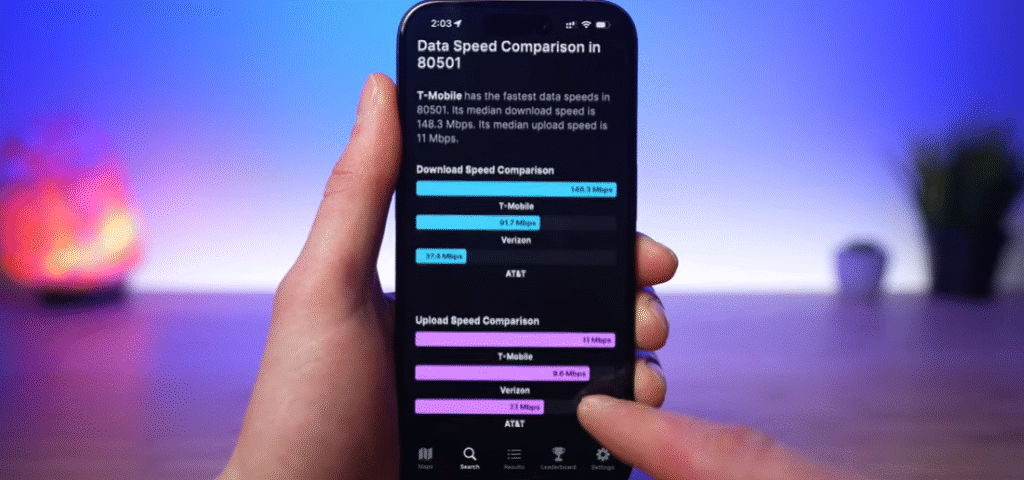
The AT&T settlement has also spurred discussions in the telecom and tech industries. According to reports, executives from other significant carriers, such as T-Mobile and Verizon, are examining their security policies in light of the case. The message is very trustworthy: customer data is a sacred trust, not just a business asset.
The hack is a “wake-up call” for corporate America, according to cybersecurity experts. The fact that businesses can no longer treat data privacy as a compliance checkbox is widely regarded as a turning point. Rather, it must become a dynamic, changing practice that is much quicker in detection, especially helpful in prevention, and incredibly resilient in protection.
Consumer advocates have also commended the settlement’s transparency. The process was intended to inform customers about their rights rather than just close a case, as evidenced by the provision of comprehensive instructions, simple verification tools, and multilingual support. In the digital age, it’s a tiny but incredibly effective step toward democratizing access to justice.
The path to AT&T’s salvation is a continuous one. According to industry analysts, it takes years rather than months to rebuild public trust following a breach of this kind. Nonetheless, the company’s new data protection initiatives are met with cautious optimism. AT&T has greatly decreased the chance of a recurrence of the incident by strengthening encryption, improving cloud monitoring, and strengthening vendor oversight.
In addition to the technical steps, big businesses are undergoing a cultural change. Cybersecurity is no longer just an IT function; more executives now see it as a moral obligation. This change has had a profound impact on how businesses invest in infrastructure, train staff, and interact with clients.
It’s interesting to note that the AT&T settlement has affected industries outside of technology. Celebrities and public figures have privately voiced concerns about the scope of these breaches, as many rely on digital communication for their work lives. The very foundation of public trust is undermined by the possibility that private calls or messages could be revealed.
Nevertheless, this result is viewed with optimism. Experts in law view the case as especially advantageous as a template for future settlements that prioritize cooperation over conflict. AT&T’s decision to choose resolution over resistance is indicative of a changing corporate culture that places a higher priority on transparency and recovery.
