

The numbers come first, silently, without fanfare. closed at 83,450 for the Sensex. settling above 25,700 for the Nifty. Although these landmarks are shown on televisions and in news reports, Dalal Street’s response is measured and almost subdued. Traders, perhaps having learnt not to celebrate too soon, look, nod, and go back to work.
Markets that have experienced cycles form that habit.
A few years ago, before these soaring levels became realistic, a broker pointed to the screen and stated that the true story was not the number but rather the buyer. Foreign institutional investors were the main topic of discussion back then. Their withdrawal upset markets, while their entry buoyed them. It was somewhat like being a visitor at someone else’s celebration in India’s bazaar.
That dynamic has been gradually but definitely shifting.
Foreign investors still sell their shares on specific days, often withdrawing billions of rupees in a single session. Now, the next step is different. The market is stabilized by domestic institutional investors, such as pension pools, insurance firms, and mutual funds, who absorb the selling. It brings about a subtle change in power that doesn’t make a big splash but instead reshapes the fundamental framework.
It feels like the equilibrium is off.
| Market Indicator | Latest Reading (Feb 2026) | Context |
|---|---|---|
| BSE Sensex | 83,450 | Benchmark index tracking 30 major companies |
| NSE Nifty 50 | 25,725 | Tracks 50 large-cap companies |
| Midcap Index | Rising modestly | Indicates broader market participation |
| Key Gaining Sectors | Banking, IT, Capital Goods | Driving recent upward movement |
| Institutional Activity | Foreign selling, domestic buying | Shows shift in market support |
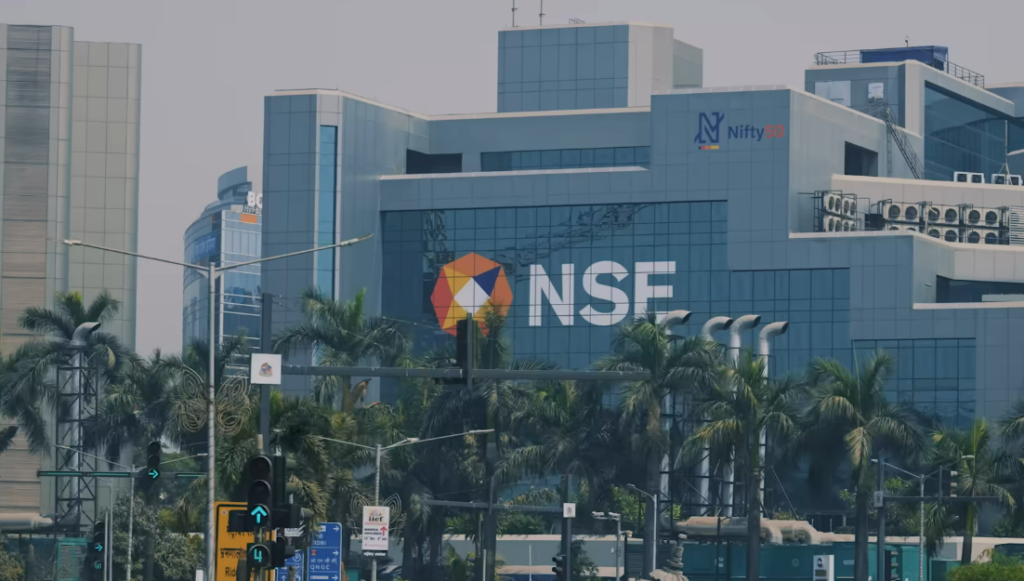
The actual advantages frequently appear small on paper. an increase by 173 points. An rise in percentage that just barely makes the cut. But over time, such small changes add together to provide the impression of longevity. Capital goods companies rise, IT companies recover, and banking equities get stronger. It is a steady ascent rather than a burst.
Growth like that requires discipline.
However, the most notable aspect is the expansion of participation. With increased confidence, the midcap and small-cap indices have started to rise with the giants rather than lagging behind them. These businesses don’t often make news, but their existence says something significant: that people believe in more than just the clear winners.
It is infectious to believe.
Discussions concerning stocks are now readily woven into ordinary issues at a café in Mumbai’s Fort neighborhood, close to the former stock exchange building. Speaking about infrastructure firms is a young professional. Pharmaceutical shares are brought up by another individual. The conversation feels more like strategy than it does like conjecture.
The way markets behave is altered by this expanding engagement.
Once, as though awaiting orders, markets responded to world events with a jolt. Activity may be slowed by a holiday in the US. A change in European policy may cause unexpected volatility. Although they still have an impact, not all movements are dominated by them anymore. India’s market is increasingly reflecting the country’s economic growth.
That autonomy is nuanced but important.
The businesses that have been the main drivers of recent increases provide hints as to where confidence lies. Once accused of hindering growth, IT companies are now regaining their footing. Projects for expansion continue to benefit infrastructure firms. Banks exhibit consistent improvement and are frequently seen as economic indicators. Every sector presents a piece of a greater narrative.
The bits and pieces pile up.
There are reminders, however, that markets are never linear. Some shares increase, while others decrease on the same day. While Infosys rises, Reliance Industries falls. Pharmaceutical firms are growing while steel industries are struggling. Rather than being an indication of weakness, these conflicts show complexity.
Markets that are complex are more difficult to ignore and forecast.
I recall sitting at a red light and listening to a cabbie casually remark his mutual fund returns.
Such incidents demonstrate how ingrained the market is in the public psyche. Experts are no longer the only ones who can invest. It has permeated discussions about aspiration, retirement, and savings, becoming a commonplace aspect of everyday financial life. Now the market is not far away; it is here.
Expectations are generated by presence.
There are pressures associated with expectations. High values draw attention. Investors start to question if growth can keep up with optimism. They take a closer look at earnings reports. Even in the absence of any obvious slowdown indicators, they keep an eye out for them.
Self-assurance has its own strain.
Much of this optimism is supported by the larger economic environment. Spending on infrastructure doesn’t stop. Consumption continues to be robust. Despite conflicting signals from throughout the world, corporate earnings remain stable. These elements support the idea that real advancements are the foundation of the market’s growth.
Anchors make a difference.
However, psychology influences markets just as much as economics does. Hope and fear coexist and have an inexplicable impact on decisions. Caution can be triggered by a single unfavorable news item. A strong financial report can boost confidence. The numerical rhythm is subordinated to the emotional one.
There is a steady rhythm.
The market’s resiliency is what seems different now. Even so, volatility does not necessarily derail the underlying trend. Investors appear more ready to trust long-term trajectories and are more willing to wait. Being patient has been ingrained in society.
Being patient is a sign of maturity.
That maturity has structural explanations. More openness. stronger legal and regulatory structures. greater accessibility to financial data. Despite the fact that instinct still plays a role, these changes have produced an atmosphere where judgments are made with greater knowledge.
There is no extinction of instinct.
In the late afternoon, when trading has concluded, there is a feeling of completion but not of finality as one passes the Bombay Stock Exchange building. The numbers for the day are set, but their significance is always changing. They will be reinterpreted at the opening tomorrow.
The stories that markets tell are never-ending.
