

I can still clearly recall my initial impression of Fairfield Methodist Primary. My attention was drawn to the mood rather than the building. There was a soft buzz, deliberate rather than hurried or disorderly. A cadence to the way the school moved through the morning that felt surprisingly anchored.
Established in 1888 by Sophia Blackmore, a missionary with a goal to educate Nonya girls in colonial Singapore, Fairfield began with just eight learners in a borrowed space. That seed developed over the years into a firmly established institution that currently serves more than 1,500 students and is steeped in quiet quality and character.
Today, Fairfield continues to wear its Christian identity with a sense of peaceful dignity. It’s never intrusive. Rather, it’s intentionally integrated—through daily reflections, values lessons, and staff that lead with humility. The society is remarkably welcoming, regardless of a child’s Christian beliefs. Many parents characterize it as an environment where empathy is taught by example rather than through teaching.
One of the school’s most distinctive features resides in its holistic approach. It seeks to develop intelligent, well-spoken, and emotionally conscious people in addition to producing high-achieving students. A noteworthy endeavor in this regard is the HeARTS programme. More than just an art curriculum, HeARTS is a character-shaping instrument that uses visual and performing arts to build emotional literacy. Students learn to exhibit compassion, to go into others’ shoes—skills that are particularly important in our increasingly polarized culture.
| Founded | 4 August 1888 by missionary Sophia Blackmore |
|---|---|
| Location | 100 Dover Road, Singapore 139648 |
| School Type | Government-aided, co-ed, Methodist affiliation |
| Current Principal | Mrs Soh Mei Foong |
| Mission | Holistic education in a Christian environment |
| Motto | “Pure and Honest” |
| Languages Offered | English, Chinese, Malay, Tamil (incl. Higher levels) |
| Distinctive Programmes | HeARTS, SPEAK (Oracy), ALP (Languages & Arts) |
| External Link | www.fmsp.moe.edu.sg |
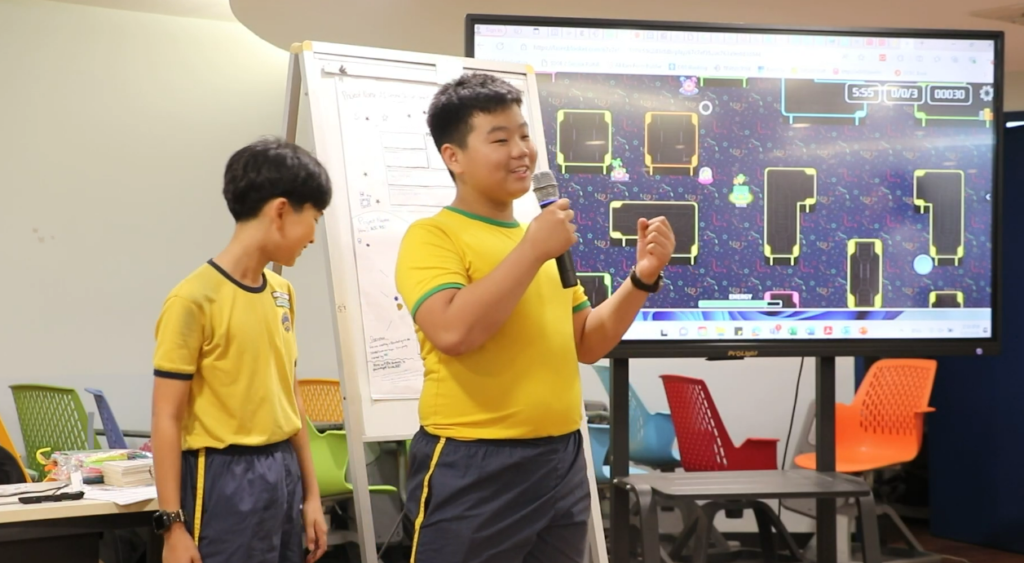
Similarly, the SPEAK curriculum encompasses more than just public speaking. It’s about building confidence and providing youngsters a voice that reflects their inner clarity. I sat in once on a session when a ten-year-old confidently demonstrated environmental science through narrative. He was making connections rather than merely restating facts. Rote memorization does not produce that level of eloquence. It stems from a culture that emphasizes process over product.
Transitioning to a co-ed system in the 1980s was not without its problems. Opening Fairfield to boys needed a cultural change because it had traditionally been a girls’ school. However, that choice greatly expanded its reach because it was motivated by a desire to be current and adaptable. The school embraced change rather than merely accepting it.
Notably enhanced over the years, the school’s programmes have grown without losing their character. Where many universities chase trends, Fairfield refines mission. Instead of overloading pupils with enrichment classes, it focuses on depth. Its community engagement initiatives and language immersion programs are examples of applied learning modules that are intended to be significant rather than ostentatious. Everything here seems to have been designed for durability rather than praise.
Fairfield has maintained a distinctive mentorship pipeline by working closely with its secondary counterpart and graduates. Some of its teachers now once sat in the same classes. This continuity provides students with living perspective in addition to learning. Teaching responsibility is one thing. Modeling it on a daily basis is another.
The mentality is quite evident: ideals are more important than appearances, even though the infrastructure may not have the newest technology or air-conditioned lecture halls. Classrooms don’t feel like showrooms; instead, they feel lived in. Teachers remain long hours not out of policy, but desire.
The competition for admission has increased in recent years. Balloting under Phase 2B and 2C has become a standard. Fairfield is becoming the school of choice for parents who want a values-based environment in addition to academic excellence. However, the school hasn’t allowed its culture to be diluted by popularity. The message stays consistent: brilliance must serve others.
I was particularly struck by a story of a student who came to the school speaking very little English. He now reads aloud during morning assembly thanks to patient scaffolding provided by the SPEAK initiative. Even when his diction falters, his confidence is evident. That shift wasn’t just academic. It was quite human.
I observed small details as I strolled into the canteen. Students emptying their trays without being prompted. Younger children being guided by older ones. Staff members exchanging quiet nods rather than directives. These actions are not preprogrammed. They are ingrained behaviors that result from a learning environment that prioritizes integrity.
Even during celebratory events, where other schools might resort to performances and rewards, Fairfield regularly incorporates moments of pause: handwritten observations from students, thank-you notes to non-teaching staff, interfaith words of kindness. That intentionality demonstrates leadership with depth, not just polish.
This tone has been reinforced in large part by the present principal, Mrs. Soh Mei Foong. Parents and staff frequently characterize her leadership as responsive and steady. Her focus on “leading with character, serving with heart” isn’t just painted on banners—it’s expressed in policies, goals, and day-to-day rhythms.
For a school that’s more than 130 years old, Fairfield remains surprisingly agile. Not in chasing trends, but in embracing smart innovation. Whether through its commitment to inclusive education, the arts, or moral education, it offers a calm yet resilient counterbalance to the feverish drive for academic honors.
When you ask alumni what they remember most, they rarely mention grades. Rather, they talk about principles that remained with them long after they left Dover Road, teachers who paid attention, and assemblies that forced them to think.
It’s simple to emphasize alumni like Kit Chan or Jamie Yeo as testaments to Fairfield’s history. But its actual measure resides in the everyday graduates—those who lead with love, speak with integrity, and carry themselves with the grace that comes from being made, not merely taught.
“Do the right thing, even when no one is looking” is a statement that stuck in my head as I left the campus that day. For Fairfield Methodist School (Primary), that’s not a tagline. It’s a compass. One that keeps pointing generations ahead in a subtle, purposeful, and incredibly effective way.
