

A silent revolution is taking place in education, one in which technology actively engages in instruction rather than merely supporting it. The classroom of the future is evolving into a delicate symphony in which emotions provide rhythm and tone and algorithms direct learning. According to education researcher Mansoor Masih of NCBA&E, this is the age of emotional intelligence in algorithms, when computers look at students’ emotions as well as their academic performance.
AI tools now use sophisticated analytics to measure engagement levels by monitoring voice tones, facial expressions, and even slight posture changes. The method works incredibly well at determining when pupils become disinterested or nervous. Sighs, smiles, and silences are now interpreted by algorithms that previously only computed scores. Even though it is still developing, this technological empathy is creating a more responsive and intuitive learning environment than in the past.
According to Masih’s 2025 study, which was published in the Inverge Journal of Social Sciences, incorporating social media and AI into adaptive learning greatly enhanced academic results and reduced student anxiety by 32%. Students who worked in these AI-assisted settings said they felt supported and seen, particularly when the algorithm’s feedback changed in real time based on their progress and mood. When combined with adaptive AI, social media platforms like Microsoft Teams and Discord encouraged teamwork and significantly enhanced student communication.
Because it alters the conventional teacher-student dynamic, this fusion of emotion and calculation is especially novel. While algorithms manage cognitive scaffolding, teachers serve as emotional anchors and are no longer the only source of feedback. Educational psychologist Dr. Andrew Martin of the University of New South Wales calls this development “a partnership of intuition and intelligence.” It is a system that fosters both intelligence and emotion by combining human empathy with digital accuracy.
Educational Innovator Profile
| Category | Details |
|---|---|
| Name | Mansoor Masih |
| Profession | Assistant Professor and Education Researcher |
| Institution | NCBA&E, Multan Campus / Government Associate College Jahania Khanewal |
| Area of Expertise | Artificial Intelligence in Education and Adaptive Learning |
| Notable Work | The Future Classroom: Integrating AI and Social Media for Adaptive Learning |
| Co-Authors | Sadia Suleman, Muhammad Hayat Khan, Dr. Zahid Sahito, Dr. Sanya Shahid |
| Research Focus | Emotional Intelligence, AI Integration, and Digital Pedagogy |
| Reference | Inverge Journal of Social Sciences |
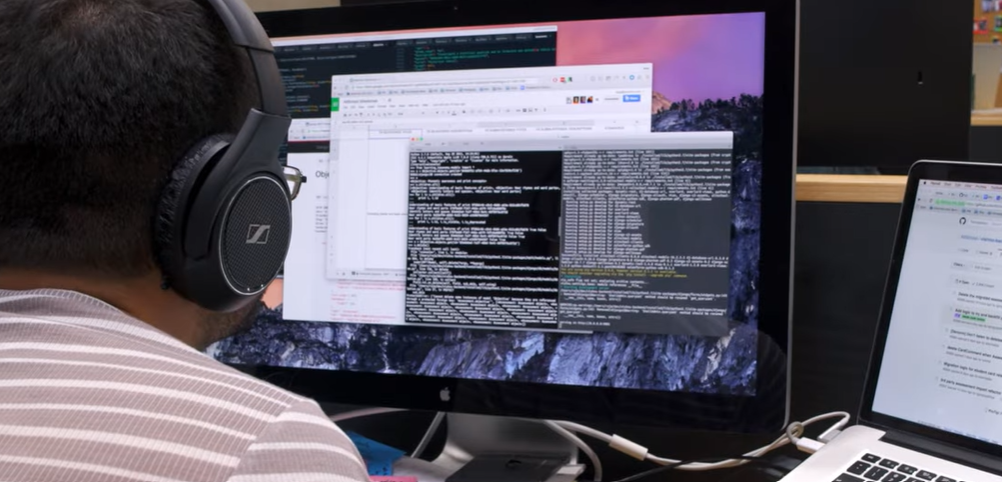
This collaboration is not without conflict, though. AI’s emotional component raises moral concerns regarding consent and privacy. Real-time data collection, including eye movement, voice modulation, and even minute physiological signals, is essential to emotion recognition systems. Although this data is especially useful for personalizing learning paths, it presents legitimate questions regarding the extent of student monitoring. As AI becomes more intelligent, the delicate balance between control and care becomes more important.
Psychologists like CASEL’s Ally Skoog-Hoffman stress that technology should strengthen rather than weaken human connection. AI is unable to provide consolation, but it can recognize frustration. It is unable to celebrate, but it can sense joy. The distinction between reading a story and living it is still remarkably similar to that difference. The teacher’s voice—empathetic, patient, and human—is what turns understanding into trust, even though emotional data may speed up intervention.
It’s interesting to note that students frequently form emotional bonds with AI tutors, according to research by Aldammien Sukarno. These digital assistants are sometimes referred to as “nonjudgmental companions,” able to offer steady and composed direction. This new human-machine interaction is immensely adaptable; it increases motivation and lessens failure-related anxiety. Even though it might seem reassuring, if human interaction is neglected, it could lead to dependence.
The personalization of learning has significantly increased over the last ten years thanks to generative AI tools like OATutor, Khanmigo, and ChatGPT. Depending on the characteristics of each learner, these systems modify the content style, tone, and pace. They are especially creative because they encourage students to think critically rather than memorization by giving them immediate feedback that feels conversational. However, as USC physician Dr. Stephen Aguilar points out, “the danger lies in overfamiliarity.” Over-reliance on AI support may cause students to lose their intellectual curiosity, which is the very quality that education is meant to foster.
Teachers now have the difficult task of striking a balance between emotional stability and technological engagement. In order to focus on mentoring and creativity, many educators use AI to manage repetitive tasks like quiz generation and grading. This change has occurred much more quickly than anticipated, changing the role of teachers from content providers to facilitators of learning experiences. Although extremely effective, the process is emotionally taxing because it calls on educators to facilitate human and machine cooperation within a single ecosystem.
Prominent individuals like Elon Musk and Bill Gates have frequently discussed the enormous potential of artificial intelligence in education. While Musk supports emotional AI systems that can detect fatigue and provide supportive pacing, Gates has referred to AI tutors as “personal mentors for every child.” Their opinions are in line with the growing hope that emotional algorithms could be used to address global learning disparities, especially for students who do not have access to individualized instruction.
Despite all of this innovation, the most significant shift might be philosophical rather than technological. The classroom of the future forces us to reconsider what learning actually entails. Knowledge is now a living dialogue between the mind and the machine rather than a one-way exchange. Algorithms are evolving into emotional mirrors that capture the thoughts, emotions, and development of students. From teaching content to teaching consciousness, this change represents a striking shift.
“Every interaction in the classroom carries an emotional footprint,” according to Dr. Nicole Barnes of the American Psychological Association. Teachers use empathy, which AI systems are still learning to imitate, to modify their tone, tempo, and methodology. However, as affective computing develops, machines are becoming more adept at identifying when a student’s curiosity increases or their confidence declines. The end effect is a classroom that can change in real time, allowing students to customize both the what and the how of their education.
Unquestionably, there is hope in these developments. By guaranteeing that students with social anxiety, language barriers, or learning disabilities receive equal attention, emotional AI holds promise for promoting inclusivity in education. Algorithms have the ability to spot hidden issues long before they become apparent, opening up intervention opportunities that traditional systems frequently overlook. Students who might otherwise fall through the cracks benefit most from this preventive approach.
