

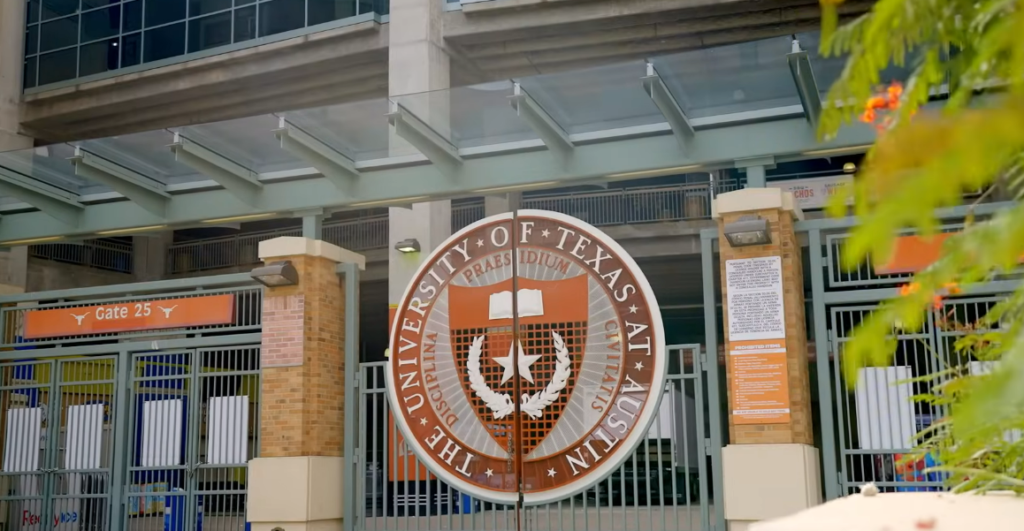
On the University of Texas at Dallas campus, a structure is going to become much more intriguing. From the outside, it won’t appear much—cleanrooms seldom do. However, something truly significant is taking place inside, in the controlled, dust-free environment necessary for semiconductor fabrication. Governor Greg Abbott declared on April 10th that a training cleanroom at UT Dallas would receive $700,000 from the Texas Semiconductor Innovation Fund. In comparison to the size of the global chip industry, the figure seems small. It is not at all like that.
It is helpful to consider what a cleanroom is in order to comprehend why this is important. It’s not a better-lit classroom. It’s a carefully designed area where workers wear full-body suits to prevent contamination, the air is filtered to remove particles invisible to the human eye, and the kind of labor-intensive, technically challenging work that actually creates the chips in your laptop and phone takes place. Students can train on the real thing rather than simulations or whiteboard diagrams if one is built on a university campus. It turns out that the difference is huge.
Key Information: UT Dallas Semiconductor Grant
| Field | Details |
|---|---|
| Institution | The University of Texas at Dallas (UT Dallas) |
| Location | Dallas, Texas, USA |
| Grant Amount | $700,000 |
| Grant Source | Texas Semiconductor Innovation Fund (TSIF) |
| Announced By | Governor Greg Abbott |
| Announcement Date | April 10, 2026 |
| Purpose | Construction of a semiconductor training cleanroom on campus |
| Broader Initiative | Part of Texas’s push to establish itself as America’s semiconductor and innovation hub |
| Related Development | Governor Abbott also attended groundbreaking of Texas A&M Semiconductor Institute in Bryan, TX |
| Context | Global AI semiconductor market projected to exceed $1.1 trillion by 2035 |
For many years, the American semiconductor industry has struggled with a labor shortage. Tens of billions of dollars were allocated to domestic chip manufacturing by the CHIPS Act, but money by itself cannot construct factories. Engineers, technicians, and operators who understand how to operate in fabs are what construct them. The education system hasn’t kept up with what the industry truly needs, and that pipeline has been dangerously thin for a long time. To its credit, Texas appears to be taking notice.
The UT Dallas announcement feels less like an isolated incident and more like a pattern because of Abbott’s visit to Bryan the day before, when he broke ground on the Texas A&M Semiconductor Institute. Similar to how it positioned itself decades ago as the state that powered America’s energy supply, there is a sense that Texas is making a concerted effort to become the state that trains the American chip workforce. Although it’s still unclear if that goal will be fully realized, the initial steps are difficult to overlook.
An ideal anchor for this kind of endeavor is UT Dallas. The university already has robust engineering and computer science programs and is located in the center of the Dallas-Fort Worth metroplex, which has quietly developed into one of the nation’s most important technology corridors. It attracts students from all over Texas and beyond, many of whom are first-generation college students searching for a career in technology. Students in a semiconductor training cleanroom gain more than just improved skills. It allows them to pursue a career path that, up until recently, required them to either relocate to a few specialized locations or settle for theoretical preparation that left them unprepared when they entered a real facility.
It’s difficult to ignore the timing. The market for AI semiconductors is expanding at a rate that makes most other industries appear sluggish. By 2035, analysts predict the market will be worth more than $1 trillion. In the meantime, businesses are frantically trying to find workers who are capable of working in the fabrication settings where AI chips are made. One of the more subtly pressing issues facing American technology today is the mismatch between labor supply and industry demand, which often receives less attention than the more conspicuous discussions surrounding the cultural ramifications of artificial intelligence.
Texas is not the only state to acknowledge this. The Albany NanoTech Complex in New York recently announced the installation of a state-of-the-art 300mm wafer coater, an equally useful investment targeted at practical semiconductor education. Understanding that the country that controls semiconductor manufacturing has a kind of geopolitical leverage that goes well beyond economics, nations like Armenia and India are actively developing their own chip industries. At the Texas A&M groundbreaking, Abbott stated unequivocally that America and Texas must be microchip independent.
Ten years ago, the word “independent” would have seemed alarmist, but now it carries a weight. Chip dependence now feels like a real vulnerability due to the disruptions of the last few years, from supply chain failures to geopolitical tensions over Taiwan. Seeing how much of a modern economy’s everyday operations rely on parts made in a few locations on the other side of the globe is almost visceral. In a way, the cleanroom being constructed at UT Dallas is a tiny solution to a huge issue. However, these kinds of places are often where practical change begins.
How quickly the pipeline expands is still unknown. A cleanroom is built. In it, students receive training. A few of them go on to work at the new TSMC facilities, Texas Instruments, or Intel. Some people launch businesses. The pressure from industry moves more quickly than universities have historically, and the compounding effect takes years to manifest in any quantifiable way. The TSIF will continue to have to manage this conflict between the speed of education and the market.
But for the time being, the announcement is genuine. Not a promise linked to a future budget cycle, nor a press release outlining intentions. On a campus where thousands of engineering students are already pursuing careers in technology, an actual cleanroom is being planned and funded. Investments that appear to be infrastructure on the outside can occasionally have the greatest impact.
Disclaimer
Nothing published on Creative Learning Guild — including news articles, legal news, lawsuit summaries, settlement guides, legal analysis, financial commentary, expert opinion, educational content, or any other material — constitutes legal advice, financial advice, investment advice, or professional counsel of any kind. All content on this website is provided strictly for informational, educational, and news reporting purposes only. Consult your legal or financial advisor before taking any step.
