

With the accuracy of a digital detective and the scrutiny of an experienced editor, artificial intelligence has subtly become academia’s most watchful protector. It is incredibly good at spotting plagiarism that even experienced teachers might miss, exposing dishonesty concealed in elegant prose.
Direct text matching, which looked for repeated phrases or sentences, was the method used for decades to detect plagiarism. The AI-powered tools of today are much more advanced. By employing natural language processing to analyze sentence rhythm, structural coherence, and contextual similarity, Turnitin, Copyscape, and Grammarly have progressed beyond simple detection. Institutions are able to find sophisticated forms of paraphrasing that were previously overlooked because the algorithms recognize when ideas are strikingly similar even when the words have been rearranged.
This is the “post-plagiarism era,” according to renowned academic ethics researcher Dr. Sarah Elaine Eaton of the University of Calgary. Her explanation is very clear: technology has altered not only how plagiarism is defined but also how it is detected. She contends that “students must learn to coexist with AI, not compete against it,” highlighting the fact that integrity now encompasses the moral application of AI tools in academic pursuits.
| Category | Information |
|---|---|
| Central Idea | AI-driven tools are transforming how universities detect plagiarism and protect academic integrity |
| Key Expert | Dr. Sarah Elaine Eaton, Associate Professor at the University of Calgary, and author of Plagiarism in Higher Education |
| Detection Tools | Turnitin, Grammarly, Copyscape, SafeAssign, GPTZero, Originality.AI |
| Analytical Techniques | Natural Language Processing (NLP), contextual pattern analysis, and authorship verification |
| Primary Research Sources | ResearchGate, University World News, AIContentfy, Central Michigan University |
| Key Challenges | False positives, data privacy, uneven institutional policies, and over-reliance on automation |
| Ethical Focus | Distinguishing between AI-assisted writing and full AI-generated submissions |
| Industry Impact | Publishers, universities, and employers are developing transparent AI usage policies |
| Emerging Trend | “Post-plagiarism era” where human–AI collaboration becomes the new normal in academia |
| Reference Source | https://www.universityworldnews.com/post/artificial-intelligence-and-academic-integrity-post-plagiarism |
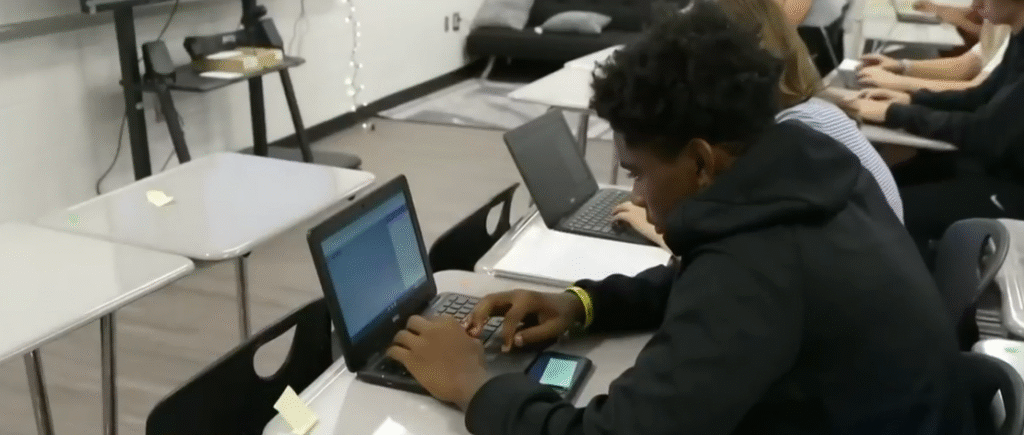
The authorship verification systems developed by AI have been especially inventive. For every student, they develop distinct writing “fingerprints” that map stylistic markers, vocabulary variety, and sentence complexity. A submission that substantially departs from this profile raises the possibility of misconduct, whether it be full AI-generated text, contract cheating, or ghostwriting. The accuracy of separating real effort from digital fabrication has significantly increased with this method.
One of the most popular AI detection tools is Turnitin’s. It analyzes word predictability using probabilistic modeling instead of comparing against pre-existing text databases. AI-generated text frequently adheres to very predictable patterns, whereas human writing is frequently haphazard, impulsive, and inconsistent. Although there is some debate, this distinction greatly speeds up and improves the accuracy of detection.
False positives are still an issue. Unfairly, some students have been flagged for using vocabulary or writing styles that are above their typical level. For this reason, specialists like Dr. Eaton support the idea that algorithmic evaluation should always be accompanied by human review. AI should support judgment, not take its place. Teachers are learning how to carefully evaluate AI reports, considering the evidence with context and empathy before making judgments.
The problem of “AI-giarism” has grown more complicated. Students who create entire assignments without acknowledgment using text generators like ChatGPT or Gemini are committing ethical transgressions on par with traditional plagiarism. Institutions like Cambridge, Harvard, and Stanford are being prompted by these cases to release clear guidelines that differentiate between legitimate AI assistance and dishonest AI authorship. These days, universities promote openness by citing AI tools in acknowledgments just like they would any other research source.
Teachers are also adjusting. Instructors are reconsidering assignments and creating tests that prioritize oral defense, practical application, and introspection. Because these tactics rely on real student engagement rather than automated production, they are especially helpful in reducing AI misuse. Essentially, AI is motivating teachers to rethink how learning is assessed rather than just revealing plagiarism.
Similar changes have occurred in the creative and entertainment sectors. Filmmakers like Christopher Nolan and artists like Grimes have openly discussed how AI changes originality. Grimes promotes “shared authorship” between humans and machines, while Nolan compares the development of AI to the development of film editing, which was first criticized but later praised. The same reckoning is taking place in academia: redefining creativity without rejecting innovation.
Research publications are also being impacted by AI’s analytical capabilities. Strict guidelines requiring authors to reveal AI involvement have been put in place by scientific publishers like Elsevier and Nature. These guidelines reaffirm that accountability is still human even though technology can help. Integrity is increasingly being built on transparency rather than prohibition.
A more subtle challenge is presented by paraphrasing tools such as QuillBot and Wordtune. Their algorithms are able to skillfully alter copied content so that even casual observers would mistake it for the original. AI detectors combat this by examining conceptual structures and determining when an argument’s core structure is unaffected by surface variation. By drastically lowering unnoticed paraphrasing, this strategy has maintained the integrity of scholarly discourse.
The argument goes beyond detection, though. It brings up important issues regarding authorship, ownership, and creativity. Does a student’s intellectual contribution suffer if they use AI to generate ideas or improve a thesis? According to Dr. Eaton, openness is the key. She points out that while using AI is not intrinsically dishonest, hiding its application is. Her position is in line with a growing school of thought that values integrity over perfection.
Additionally, AI has been especially helpful in advancing justice. Universities can prevent honest students from being disadvantaged by peers who cheat by identifying ghostwritten assignments. Additionally, it assists teachers in giving students who struggle with academic writing focused support, filling in skill gaps before misbehavior happens. In this way, AI is restorative rather than merely punitive.
In order to teach students how to use these tools responsibly, educational institutions are now incorporating AI literacy into their curricula. The change is comparable to how calculators, which were initially disputed, eventually gained acceptance as educational tools. In a similar vein, AI is on the verge of becoming a regular partner in education; it is incredibly effective but still relies on human conscience for guidance.
There are wider societal ramifications to this technological advancement. AI tools are being used by governments to verify the originality of policy documents, by employers to verify reports, and by journalists to authenticate sources. Once maintained by trust, integrity is now strengthened by technology. Seatbelts revolutionized road safety, a straightforward intervention that significantly increased collective accountability. This change is remarkably similar to that.
