

The rare serenity that permeates Finnish classrooms is almost poetic. Children appear truly at ease, teachers move purposefully but not under pressure, and lessons develop without haste. It is intentional for all schools to have such a strikingly similar sense of balance. According to Finland’s well-known education reformer Pasi Sahlberg, happiness and education go hand in hand. His method has significantly raised academic performance and emotional health, making Finnish education a model for deliberate advancement.
Finland’s emphasis on equality rather than competition is what makes its educational model so novel. All children have equal access to good teachers, food, medical care, and counseling, regardless of their background. No student will feel left behind thanks to this all-encompassing structure. It works incredibly well to promote emotional stability, which psychologists frequently point to as the cornerstone of meaningful learning. On the other hand, a lot of American schools inadvertently encourage anxiety and comparison because of testing and rankings.
Finland has established a very effective system by having faith in educators rather than micromanaging them. Teachers are regarded as respected professionals rather than overburdened bureaucrats, and they must possess master’s degrees. They use creativity in lesson planning, adjusting instruction to meet the needs of every student. Students have benefited greatly from this autonomy in terms of maintaining their motivation and curiosity. The Finnish teacher makes classrooms feel less robotic and more human by teaching from trust rather than fear, in contrast to many of their American counterparts.
Profile Information
| Name | Pasi Sahlberg |
|---|---|
| Profession | Educator, Author, and Policy Advisor |
| Known For | Architect of Finland’s modern education reforms and author of Finnish Lessons |
| Born | June 26, 1959 |
| Nationality | Finnish |
| Education | Ph.D., University of Jyväskylä |
| Career Highlights | Former Director-General of Finland’s Ministry of Education; Professor of Education Policy at UNSW Sydney |
| Publications | Finnish Lessons: What Can the World Learn from Educational Change in Finland? |
| Reference | https://pasisahlberg.com |
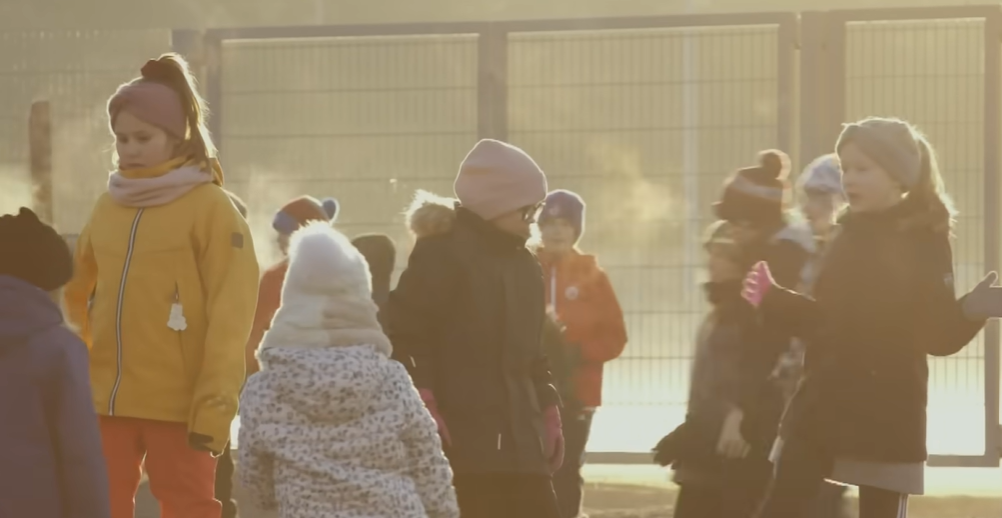
This peaceful environment is further supported by the lack of standardized testing. Students’ futures are not determined by an unending cycle of exams. Rather, teachers assess students’ progress through observation and discussion, gaining a thorough grasp of their individual learning paths. This system prioritizes understanding over memorization. Finnish education has greatly lessened the stress that so many American students experience by emphasizing the process rather than the grade.
The way that Finnish schools use and value time is arguably their most distinctive characteristic. The decision to start formal education at age seven stems from the idea that childhood shouldn’t be hurried. School days have generous recesses, start later, and end earlier. Regular breaks are important components of learning, not disruptions. Tim Walker, an American educator who taught in Helsinki, found this method to be incredibly successful in maintaining focus and happiness. Later, he implemented comparable techniques at Copper Island Academy in Michigan, where students take regular “brain breaks” that are modeled after Finnish customs.
Happiness is woven into the cadence of everyday education in Finland. The same level of importance is given to a child’s emotional well-being as their academic achievement. Teachers frequently teach the same class for several years, forming relationships that foster continuity and confidence. Students are able to feel seen and supported thanks to this straightforward yet incredibly effective system. In addition to teaching, the teacher takes on the role of mentor, fostering both intellectual and personal development.
A larger societal desire for balance is reflected in America’s fascination with Finland’s educational model. Many students have burned out before they have even started adulthood due to the never-ending competition for better test scores and college admissions. In contrast, both students and teachers feel that Finnish education is sustainable. Its foundation is the notion that education should enhance rather than take away from life. This kind of thinking might be especially helpful in tackling the growing issues of student disengagement and mental health in the United States.
The lesson is not limited to classrooms. Finland’s social values of fairness, trust, and communal well-being are reflected in its educational system. All levels of education are free, meals are served, and mental health services are easily accessible. These actions are investments in long-term happiness rather than indulgences. The American model, which is greatly impacted by economic inequality, frequently finds it difficult to provide this kind of inclusivity. Success now hinges as much on zip code as it does on effort, creating an unfair playing field.
However, Finland’s model does not aim for perfection. Even Sahlberg admits that there are issues, such as the achievement gap among immigrant students and the declining PISA test scores. But what’s remarkable is Finland’s reaction, which is one of contemplation rather than fear. Open communication is maintained between educators and policymakers as they patiently and empathetically review approaches. This spirit of adaptability, which is firmly anchored in humility, has made the Finnish system remarkably resilient in the face of change.
The American preoccupation with ranking contrasts sharply with the lack of competition in Finnish classrooms. “Real winners do not compete,” as the Finnish author Samuli Paronen famously stated. Students now work together rather than compare in a cooperative learning environment that has been shaped by that philosophy. This setting fosters community, empathy, and emotional intelligence—skills that are becoming more and more important for success in both the personal and professional spheres.
Finland even takes a refreshingly different stance on failure. Errors are seen as learning opportunities rather than failures. In order to foster resilience rather than fear, teachers help students to think, adapt, and try again. Finnish schools foster confidence that goes beyond academics by normalizing imperfection. Pupils learn early on that education is a process rather than a final assessment.
Teachers in America are starting to pay attention. These ideas can be beautifully adapted to a different cultural context, as shown by Michigan’s Finnish-inspired Copper Island Academy. Parents looking for balance for their kids have found great resonance in its emphasis on experiential learning, outdoor education, and civic engagement. In the United States, what started out as an experiment has turned into a remarkably effective model for joyful learning.
Although it may seem idealistic, research keeps proving that happiness can actually improve performance. Positive emotional states improve creativity, memory retention, and problem-solving skills, according to numerous studies. Finland’s educational system has made remarkable use of this psychology. It has produced a generation of capable, caring citizens who view education as an empowering experience rather than a draining duty by fostering happiness.
Disclaimer
Nothing published on Creative Learning Guild — including news articles, legal news, lawsuit summaries, settlement guides, legal analysis, financial commentary, expert opinion, educational content, or any other material — constitutes legal advice, financial advice, investment advice, or professional counsel of any kind. All content on this website is provided strictly for informational, educational, and news reporting purposes only. Consult your legal or financial advisor before taking any step.
