

In practically every American city, you can find laminated safety procedures, periodic tables, and labeled diagrams all over the walls of a high school biology class. The walls appear completely different when you enter the art room down the hall. There are student paintings, partially completed ceramics, and pinned-up sketches that are in different stages of development. Typically, the distance between the two rooms is around thirty feet. They might as well be located in separate structures.
The physical division between the arts wing and the science corridor is intentional. It reveals a deeper aspect of the way American schools have been set up for many years and how they have subtly taught pupils how to organize themselves. You may or may not be a STEM person. You are either analytical or creative. Students are affected for years after they graduate from school, and the categories solidify early.
Ashley Labodda, a Ph.D. candidate in philosophy at the University of Rochester with a degree in biochemistry, has witnessed this unfold in real time from both sides for years. As a teaching assistant for ethics and chemistry classes, she has witnessed biology majors enter introductory philosophy classes believing they will fail before they have written a single sentence. She has witnessed journalism students approach a logic course, which is offered as a substitute for a math requirement, with the express purpose of identifying the least mathematical option. The defeatism is not sporadic. According to her observations, it is persistent, pervasive, and subtly harmful.
| Topic | STEAM Education and the STEM-Arts Divide |
|---|---|
| Concept | STEAM — Science, Technology, Engineering, Arts, and Mathematics |
| Key Framework Source | The Institute for Arts Integration and STEAM |
| Foundational Academic Reference | C.P. Snow, The Two Cultures and the Scientific Revolution (1959) |
| Key Academic Author | Ashley Labodda, Ph.D. student in Philosophy, University of Rochester |
| Published In | Blog of the American Philosophical Association (APA), May 2025 |
| Research Paper | “Arts Integration in STEM Education: A Path to STEAM” — Nyiramukama Diana Kashaka, Kampala International University, Uganda (October 2024) |
| University of Warwick Study | H. Ashton (2023) — examined STEM vs. Arts dichotomy in England’s education policy |
| Core Argument | STEM and humanities share overlapping general skills; the divide is largely constructed and harmful |
| Student Impact Observed | Defeatism — students assuming failure before attempting cross-discipline work |
| Recommended Approach | Interdisciplinary learning, project-based STEAM curricula, collaboration between STEM and art educators |
| Geographic Focus | United States, United Kingdom, Global |
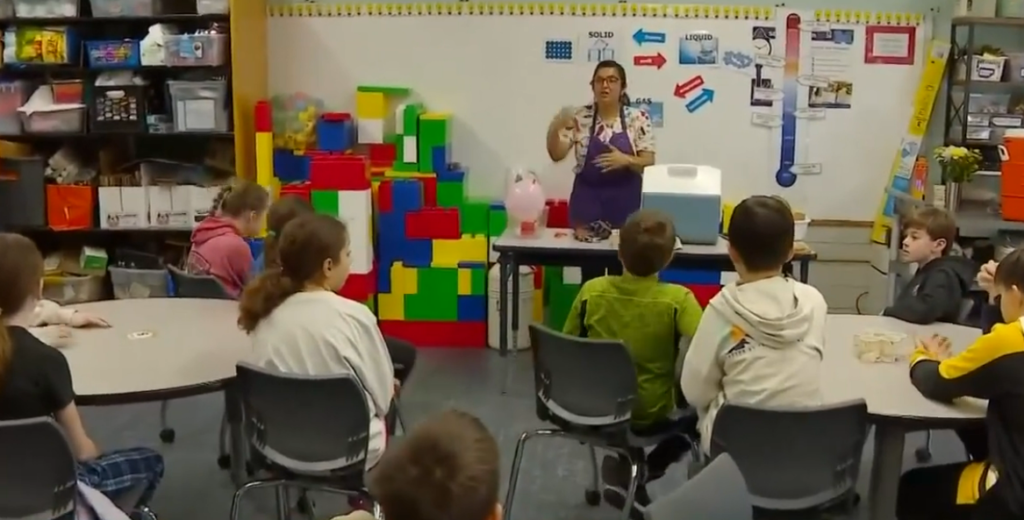
Teachers have long been aware of what Labodda describes, but they have struggled to institutionally address it. The documented history of the STEM-humanities divide dates at least to 1959, when British scientist and novelist C.P. Snow published The Two Cultures and the Scientific Revolution, cautioning that the humanities and sciences were becoming so dissimilar that they could no longer meaningfully communicate with one another. This seemed risky to Snow. The argument is still very much relevant sixty-six years later, and the school day schedule has changed remarkably little in response to it.
As a workable solution to this issue, the STEAM movement—the intentional addition of Arts to the STEM acronym—has been gaining traction for years. According to the Institute for Arts Integration and STEAM, it uses science, technology, engineering, the arts, and mathematics as interconnected access points for directing student inquiry rather than being a straightforward combination of subjects. The difference is important. A biology lesson followed by a drawing exercise is not what STEAM is all about. In this type of project-based, interdisciplinary learning, students must simultaneously comprehend engineering principles and aesthetic choices when designing a structure; data visualization necessitates both mathematical literacy and true design thinking; and the question under investigation cannot be resolved by a single discipline.
Nyiramukama Diana Kashaka of Kampala International University conducted research in October 2024 that looked at the historical connection between STEM and arts education and consistently found evidence that integrating artistic processes into scientific learning enhances student motivation, engagement, and creative thinking. Anyone who has witnessed a student come to life in a project that required them to use more of their brain simultaneously will not be surprised by the findings. The institutional machinery’s slow reaction to that evidence is a little more startling.
As the STEAM discourse spreads throughout university departments and school districts, there’s a sense that the true challenge was cultural rather than pedagogical. Standardized testing, tracking systems, college admissions pressures, and career counseling that reduces the diversity of human potential to a single employability metric all contribute to the deeply ingrained belief in American education that a serious student chooses a lane and stays in it. Labodda compares general skills, such as critical thinking, problem-solving, and the capacity to formulate and evaluate an argument, to a tool belt, with specific skills serving as the tools. She contends that when students are asked to use their tools in unfamiliar situations, across the divide rather than safely within one side of it, that belt becomes stronger.
It’s still unclear if schools that sincerely commit to STEAM integration are creating something long-lasting or if the term will be absorbed into current structures with little to no underlying change. With regard to education reform, that has previously occurred. However, when a student who described herself as “completely STEM-brained” finds that writing a rigorous argument and testing a hypothesis require more of the same thinking than she anticipated, something truly changes in the classrooms where it is actually working. It turns out that the gap is smaller than claimed. It was always the case.
Disclaimer
Nothing published on Creative Learning Guild — including news articles, legal news, lawsuit summaries, settlement guides, legal analysis, financial commentary, expert opinion, educational content, or any other material — constitutes legal advice, financial advice, investment advice, or professional counsel of any kind. All content on this website is provided strictly for informational, educational, and news reporting purposes only. Consult your legal or financial advisor before taking any step.
