

Most iPhone users have experienced the moment when a notification alerting them that their iCloud storage is almost full appears, usually on a Tuesday morning when they’re feeling impatient. The choices it offers, such as managing what is backed up or upgrading your plan, are presented as sensible options. A federal court in California is currently being asked to determine whether that particular moment was actually a choice at all or if it was the inevitable result of a market that Apple had covertly set up to guarantee that the data could only go to one location.
Felix Gamboa v. Apple Inc., an antitrust case filed in March 2024, has withstood every challenge from Apple’s attorneys. Apple’s renewed motion to dismiss was denied on June 16, 2025, by U.S. District Judge Eumi K. Lee, who concluded that the plaintiffs had a legitimate claim that Apple’s limitations on rival cloud storage providers are “coercive” and have given the company an illegal monopoly in iOS cloud storage. Apple owns 96.1% of cloud storage revenue on Apple devices, according to the startling figure the court cited. In the traditional sense, that is not a dominant market position. That is more akin to the lack of a market.
The main accusation is precise and important to comprehend. Theoretically, users of iPhones and iPads can decide to store their files on OneDrive, their documents on Dropbox, and their photos on Google Photos. Not all of that is blocked by Apple. However, some file types can only be backed up to iCloud, particularly app data and device settings, which are what make an iPhone feel like your iPhone rather than a generic device. For those, there is no workaround. Regardless of your preferences or what you may have already paid for elsewhere, Apple’s cloud is the only choice if you want a complete backup of your iOS device. The lawsuit contends that this restriction has no technological basis because all backup types are handled by the same storage infrastructure, and that its true goal is to keep customers paying for iCloud plans they might otherwise discontinue.
Samsung, Apple’s rival, offers a helpful comparison. All file types can be fully backed up to third-party cloud providers using Samsung devices. This fact is mentioned in the complaint, and it serves as a sort of implicit question: why can’t Apple’s customers have the same choice if it’s technically feasible for one significant smartphone manufacturer to offer true cloud flexibility? Apple hasn’t responded to that in a way that has satisfied the public, at least not one that has convinced a federal judge thus far.
Apple iCloud Lawsuit: A Federal Judge Refused to Dismiss It, and 40 Million UK Users Want Their Money Back
| Category | Details |
|---|---|
| Company | Apple Inc. |
| Headquarters | One Apple Park Way, Cupertino, California, USA |
| Service at Issue | iCloud — Apple’s cloud storage and backup platform |
| US Antitrust Case | Felix Gamboa v. Apple Inc. |
| US Case Number | 5:24-cv-01270 |
| US Court | U.S. District Court, Northern District of California |
| US Judge | Hon. Eumi K. Lee |
| US Case Filed | March 1, 2024 |
| Motion to Dismiss Ruling | Denied in full — June 16, 2025 |
| Core US Allegation | Illegal tying of iCloud to iOS devices; restricting backup of app data and device settings to iCloud only |
| Apple’s iCloud Market Share (iOS) | 96.1% of cloud storage revenue on Apple devices |
| Free Storage Limit | 5GB (unchanged since iCloud launched in 2011) |
| iCloud Paid Plans | Start at $0.99/month for 50GB |
| Separate Settlement | $14.8 million — third-party server storage claims (Apple used Google Cloud without adequate disclosure) |
| UK Case | Which? v Apple — brought by UK consumer advocacy group Which? |
| UK Estimated Damages | Average ~£70 per eligible UK consumer |
| UK Total Estimated Value | Up to £3 billion |
| UK Eligibility | UK iOS device users who used iCloud on or after October 1, 2015 |
| UK Administrator | Epiq |
| Separate Siri Settlement | $95 million (early 2026 — distinct case) |
| Law Firm (US Antitrust) | Hagens Berman Sobol Shapiro LLP |
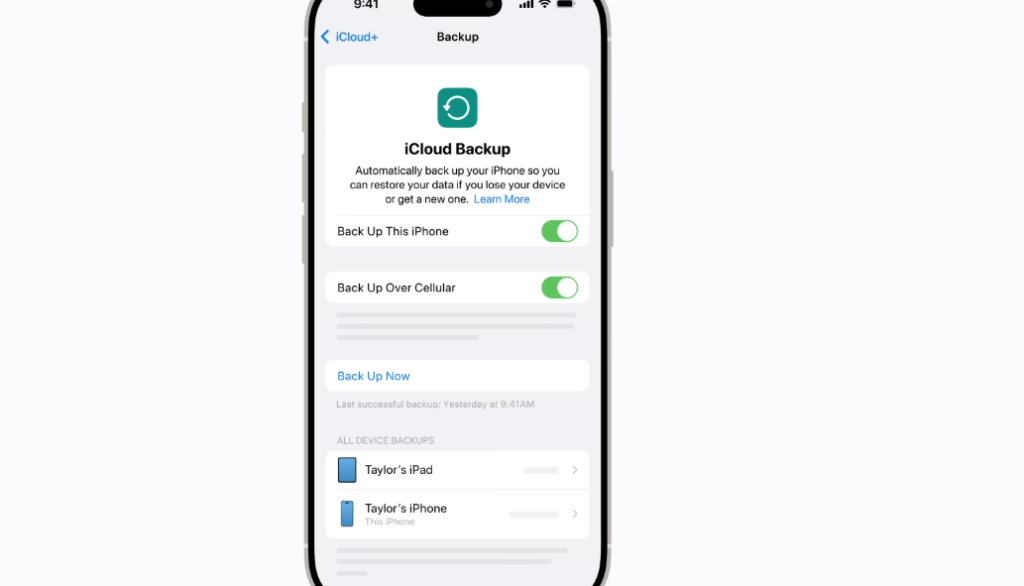
In the meantime, a different but concurrent legal challenge is developing in the UK. The largest independent consumer advocacy group in the nation, Which?, filed a collective action lawsuit against Apple, alleging that the company charged exorbitant iCloud subscription fees by taking advantage of its dominant position among iOS users. Anyone in the UK who used an iOS device and paid for iCloud services at any time starting in October 2015 is covered by the lawsuit. If it is successful, the estimated damages amount to about £70 per eligible consumer, which could result in a total exposure of about £3 billion. Affected customers who wish to receive updates and be informed of any successful outcome can register for the case, which is managed by Epiq. The eligible class may include an estimated 40 million users in the UK. That represents a sizable section of the British populace, and the size of the case illustrates how deeply iCloud has become ingrained in Apple customers’ everyday digital lives.
Additionally, there is a recently resolved aspect of this litigation that is noteworthy but easy to overlook. In a different class action, Apple was accused of keeping some iCloud data on servers owned by third parties, such as Google Cloud infrastructure, without providing users with sufficient notice that their data was stored on Apple’s own hardware. Without acknowledging any wrongdoing, Apple reached a $14.8 million settlement in that case. The settlement is small in comparison to Apple’s size, but the underlying accusation is particularly ironic: the lawsuit claimed that some of the data was secretly stored on the cloud infrastructure of its largest rival, despite Apple spending years developing its brand around privacy and first-party control of user data.
When you look at Apple’s iCloud position from a distance, it’s difficult to ignore how multi-layered it is. With high-quality and smooth integration, such as the AirPods that pair instantly, the iMessage that turns blue for other Apple users, and the Handoff feature that allows you to start something on your iPhone and finish it on your Mac, the company has built a reputation for keeping customers inside its ecosystem. iCloud is a perfect fit for that scenario. However, some of what appears to be ecosystem convenience is actually the result of restrictions that serve Apple’s revenue interests rather than user needs, according to the antitrust argument being made in federal court.
How and when the US and UK cases will be resolved are still unknown. There is currently no scheduled trial date for the American antitrust lawsuit, which is in active discovery. In the UK, collective action is still in its infancy. Over the years, Apple has demonstrated that it is ready to fight these cases vigorously and for an extended period of time by responding to the App Store lawsuit and other competition challenges. A $616 million settlement was reached in the e-book antitrust case. A $100 million settlement was reached in the App Store developer case. It took years for both. Neither required Apple to radically alter the way its ecosystem functions. It will take several more years to determine whether the iCloud lawsuit ends differently and whether a court eventually mandates a structural change to Apple’s handling of backup restrictions.
It’s already evident that the 5GB free storage cap Apple set when iCloud debuted in 2011 has never been raised, even though contemporary iPhone cameras create files that are far larger than anything a 2011 device could produce and even though Apple devices have gradually become more capable of filling that storage in a matter of months. This litigation revolves around that limit, which has remained constant for fifteen years despite changes in its surroundings, like a subdued declaration of intent. The type of intent it represents is currently being decided by courts.
Disclaimer
Nothing published on Creative Learning Guild — including news articles, legal news, lawsuit summaries, settlement guides, legal analysis, financial commentary, expert opinion, educational content, or any other material — constitutes legal advice, financial advice, investment advice, or professional counsel of any kind. All content on this website is provided strictly for informational, educational, and news reporting purposes only. Consult your legal or financial advisor before taking any step.
