

Four astronauts are traveling through a type of silence that no human has encountered since 1972 somewhere over the Moon’s far side on Monday afternoon. Not a radio. No laser connection. Mission Control in Houston was silent. Only the Orion capsule, the shadowy lunar surface passing beneath it, and whatever each of them is contemplating during that private moment. The Artemis II crew, which includes mission specialists Christina Koch and Jeremy Hansen, pilot Victor Glover, and Commander Reid Wiseman, will be inaccessible to anyone on Earth for about forty minutes. Physics will take care of the rest.
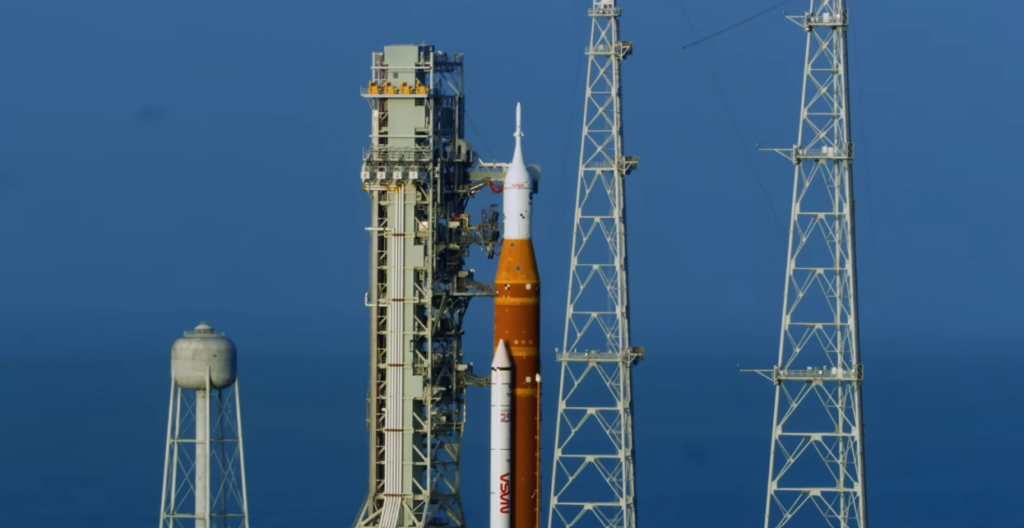
On April 1st, the Artemis II mission took off from Kennedy Space Center using the same Pad 39-B that launched Apollo crews toward the Moon over fifty years prior. The rocket cleared the Florida coast in a burst of white smoke that, according to most witnesses from the Cape, was truly breathtaking—the kind of launch that momentarily suspends disbelief about how challenging and costly all of this is. The mission is not a landing, but rather a test flight. On April 10, the four astronauts will return home by splashing down in the Pacific off San Diego after circling the Moon in a figure-eight trajectory that was first used by Apollo 13 during its emergency return. Not a touchdown. There are no footsteps on the ground. However, that framing downplays the reality of the situation. Since December 1972, this is the first time that people have left low Earth orbit. Harrison Schmitt and Eugene Cernan, who were returning to their lunar module on Apollo 17, were the last people to see the Moon up close.
The Orion crew’s lunar flyby on Monday will surpass Apollo 13’s record distance from Earth of 248,655 statute miles, which was attained during that mission’s terrifying return following its oxygen tank explosion. Artemis II will reach a distance of 252,760 miles. It’s a figure worth considering. No human has ever traveled so far from home. Mission control anticipates that communications will be lost approximately five hours after the spacecraft passes behind the Moon, and the record will be broken at approximately 1:56 PM Eastern. Judd Frieling, the flight director for Artemis, stated that “physics takes over and physics will absolutely get us back to the front side of the moon” with the calm that seems to be a job requirement in Houston.
| Mission Name | Artemis II |
|---|---|
| Launch Date | April 1, 2026 |
| Launch Site | Kennedy Space Center, Launch Pad 39-B, Cape Canaveral, Florida |
| Mission Duration | Approximately 10 days |
| Spacecraft | Orion (Orion Multi-Purpose Crew Vehicle) |
| Commander | Reid Wiseman (NASA) |
| Pilot | Victor Glover (NASA) |
| Mission Specialist | Christina Koch (NASA) |
| Mission Specialist | Jeremy Hansen (Canadian Space Agency) |
| Closest Moon Approach | 4,070 miles above the surface (April 6, 2026) |
| Maximum Distance from Earth | 252,760 miles — new human spaceflight record (surpassing Apollo 13’s 248,655 miles) |
| Communications Blackout | ~40 minutes while passing behind the Moon |
| Planned Splashdown | Pacific Ocean, off San Diego — April 10, 2026 |
| Mission Type | Crewed test flight; no lunar landing |
| Reference Links | NASA — Artemis II Mission Page / NASA — Artemis II Flight Day Updates |
The flyby’s scientific goals are more significant than one might anticipate from a mission that is essentially a test flight. Thirty surface features were chosen by NASA’s lunar science team for the crew to study and take pictures of. They worked in pairs, reporting their observations in real time to scientists in Mission Control’s back rooms. The list includes the Hertzsprung Basin to its northwest, an older, more eroded structure that provides a helpful contrast, and the Orientale Basin, a nearly 600-mile-wide impact crater that straddles the Moon’s near and far sides and was formed 3.8 billion years ago. It is now fully illuminated and visible from Orion’s approach. Reporters were informed by Kelsey Young, the lead for lunar science, that the crew’s human eyes will be able to identify surface color variations that satellite imagery just cannot. “This is something that human eyes are just incredibly good at teasing out nuances about,” she replied. In addition, the crew will take pictures of Mercury, Venus, Mars, and Saturn, look for the earthshine phenomenon, which is a faint glow on the lunar surface caused by sunlight reflected off Earth, and witness a solar eclipse from a location that has never been occupied by a human.
There have been some less glamorous issues with the mission. The crew has experienced two issues with the Orion toilet, NASA’s Universal Waste Management System, which the organization optimistically refers to as the first deep-space restroom. Because waste could not be vented overnight due to a frozen line, flight controllers had to tell the crew to use “contingency urine devices.” With a commendable deadpan, Artemis flight director Rick Henfling confirmed that the crew is now “proceeding with the mission and the use of the toilet nominally.” The cost of launching the spacecraft was probably more than $4 billion. There was still a problem with the toilet.
Observing this mission in action through the crew’s posted photos and the daily briefings from Johnson Space Center gives the impression that the participants are aware that they are a part of something that will be chronicled in history books. Speaking prior to the mission, Victor Glover urged everyone to make the most of the 40-minute blackout by saying, “Let’s pray, hope, send your good thoughts and feelings that we get back in contact with the crew.” For Easter, Christina Koch stashed dehydrated scrambled eggs throughout the cabin. The gold astronaut pin, which replaces the silver one given during training, was given to Jeremy Hansen by his crewmates during his first spaceflight. It was humbling, he said. For him, making that tradition a reality required a large number of people.
The Artemis program has experienced budgetary constraints, delays, and political difficulties, all of which have persisted. In addition to preparing for a possible lunar landing as early as 2028, NASA is dealing with proposed cuts to its science budget, which has alarmed researchers who rely on the agency’s larger work. It is genuinely unclear if Artemis’s full potential will be funded and carried out. However, on April 6, 2026, the tracking antenna at Goonhilly Earth Station in Cornwall is anxiously waiting to pick up their signal once more as four individuals are passing behind the far side of the Moon and witnessing things no human eye has ever seen.
Disclaimer
Nothing published on Creative Learning Guild — including news articles, legal news, lawsuit summaries, settlement guides, legal analysis, financial commentary, expert opinion, educational content, or any other material — constitutes legal advice, financial advice, investment advice, or professional counsel of any kind. All content on this website is provided strictly for informational, educational, and news reporting purposes only. Consult your legal or financial advisor before taking any step.
