

Nearly every bride who has declared that she will wear pearls on her wedding day will probably say that someone told her not to, somewhere between the venue reservation and the veil fitting. A grandmother. A future mother-in-law. A well-meaning aunt with an opinion and a glass of champagne. The warning is typically given in the same tone—quiet, certain, and slightly apologetic—as bad weather forecasts. “Pearls mean tears, you know.”
Because the superstition is so old, most people are unaware of its true origins. The short answer is that pearls were worn at funerals in ancient Rome as symbols of grief. Over time, the association between the pale, glowing stones and sorrow evolved into one of those folk beliefs that persisted for several centuries beyond its original context. The notion that pearls were associated with loss rather than celebration had become so commonplace by the Victorian era, when death and mourning had been transformed into something akin to an art form in British culture, that it had persisted into living memory. These days, it appears in family discussions, Reddit threads, and bridal forums with a persistence that seems a little excessive for a belief that most people will acknowledge, when pressed, they don’t genuinely believe.
| Key Information | Details |
|---|---|
| Superstition Origin | Likely began in ancient Rome, where pearls were associated with funerals and grief; spread through Europe during the medieval and Victorian eras |
| Core Belief | Pearls symbolize tears — wearing them as a bride could invite sadness, crying throughout the marriage, or marital misfortune |
| Counter-Belief | In many other traditions, pearls were worn to prevent tears, substituting sorrow with beauty and absorbing grief on the bride’s behalf |
| Ancient Greece | Pearls believed to have formed from Aphrodite’s tears of joy — symbol of love, purity, and marital harmony |
| Ancient China | Pearls associated with wisdom, prosperity, and protection from fire |
| India | Pearls traditionally gifted at weddings to bless the couple with fertility |
| Victorian England | Pearls associated with mourning and loss; superstition gained traction |
| Famous Pearl-Wearing Brides | Queen Elizabeth II (1947), Jackie Kennedy, Grace Kelly, Princess Diana |
| Modern Trend | “Pearlcore” jewelry trend is driving a major revival; Emma Stone among celebrities bringing pearl engagement rings back |
| Practical Workaround | Some superstitious brides have a partner “purchase” the pearls for a token price, or borrow pearls from a loved one, to neutralize the omen |
| Expert Consensus (The Knot) | Wearing pearls is a matter of personal preference; the superstition has no factual basis |
| Reference Links | The Knot — Pearls on Your Wedding Day: Beautiful or Bad Luck? / Country House Weddings — Why Some Say Pearls Are Bad Luck on Your Wedding Day |
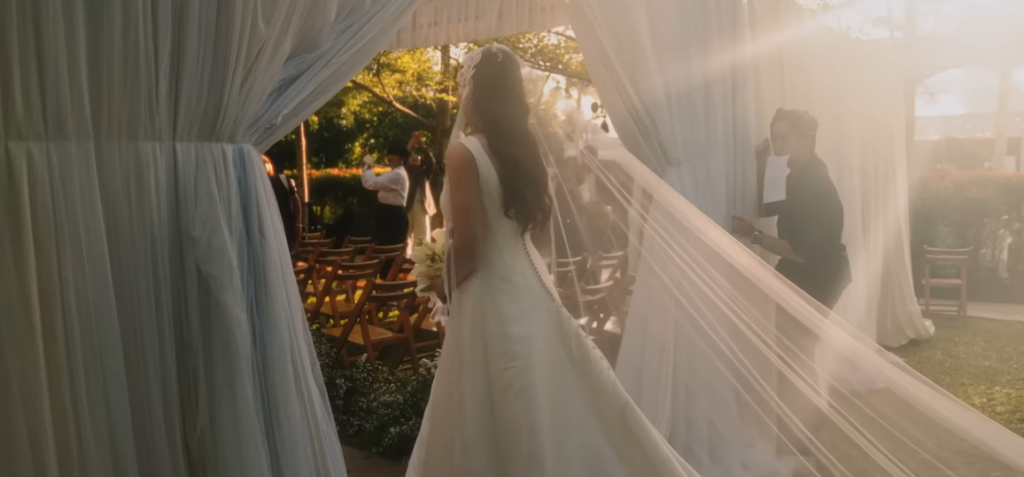
It’s interesting to note that pearls had the opposite meaning for the majority of human history. The ancient Greeks thought that they originated from Aphrodite’s tears, which were joyful rather than sorrowful, shed when the goddess of love rose from the sea. In that tradition, wearing pearls on your wedding day was an appeal to love. Pearls were thought to be wise and protective in ancient Chinese culture. They were given as wedding presents in India in order to grant fertility to the couple. They were revered in Persia as gifts from the gods, representing perfection and purity. The historical consensus on pearls is far more complex and favorable than the superstition implies, and the Roman funeral connection is true, but it’s just one piece of evidence among many.
Additionally, a counterargument is incorporated right into the heartfelt story. Pearls don’t predict tears; instead, they absorb them, according to one version of the superstition, which is perhaps more intriguing but less common than the warning. By giving sorrow a place to go, a bride who wears pearls ensures that her marriage is unmarked by real tears. This interpretation has a certain internal logic and treats superstition as a solution rather than a warning, even though it’s also an exceptionally good illustration of how folklore can disagree with itself over centuries.
The list of well-known brides who wore pearls without seeming to have any problems is noteworthy. When Queen Elizabeth II married Prince Philip in 1947, she wore them. On her wedding day, Jackie Kennedy wore a single-strand pearl necklace; later, the double-strand became so closely linked to her public persona that the two are practically synonymous in popular memory. Pearls were worn by Grace Kelly. Pearls were worn by Princess Diana. Of course, there were issues in some of these women’s marriages, but attributing these issues to the jewelry would require a willingness to take the superstition far more seriously than its evidence base warrants.
From a journalistic perspective, it seems that the pearl superstition has endured because wedding culture is particularly receptive to minor worries rather than because people firmly believe it. When a bride is faced with one of the most important choices of her life, wearing an outfit she has been considering for months, and carrying out a day that has been meticulously planned for a year or more, she is ready to see omens. For a moment, the decision of whether or not to wear a certain piece of jewelry takes on significance that it wouldn’t on any other day. It’s not illogical. It’s a human.
In actuality, pearls have been a popular option for bridal jewelry for many generations. This is corroborated by a brief perusal of wedding photos from the previous century. Pearl earrings, necklaces, and even pearl engagement rings continue to be in high demand from brides seeking something more subdued than a diamond, according to jewelers. The pearlcore trend that swept through fashion in 2025 and 2026 has brought them back to the forefront of discussions about bridal style. The superstition is unfounded, and wearing pearls is merely a matter of taste, according to experts at The Knot and other wedding resources.
The most popular workaround for superstitious people who are still uncomfortable is to have your partner purchase the pearls from you for a small sum of money, such as a dollar, a token, or whatever feels appropriate. This would technically make you a seller rather than a self-purchasing wearer, satisfying the letter of whatever old law governs such things. By most superstitious standards, borrowed pearls from a family member are also safe. It’s an excellent illustration of how folk wisdom frequently has flaws of its own.
In the end, the pearl superstition is more of a custom of worrying about the wrong things than a warning, which is almost poignant in its deception when you consider what truly determines whether a marriage succeeds.
Disclaimer
Nothing published on Creative Learning Guild — including news articles, legal news, lawsuit summaries, settlement guides, legal analysis, financial commentary, expert opinion, educational content, or any other material — constitutes legal advice, financial advice, investment advice, or professional counsel of any kind. All content on this website is provided strictly for informational, educational, and news reporting purposes only. Consult your legal or financial advisor before taking any step.
