

On March 26, 2026, the VAYU 1 sneaked into the English Channel with a full load of Russian oil. Its transponder broadcast its location as clearly as any other commercial ship. Its path was not subtle at all. The white cliffs of Dover were within six nautical miles of it; a person on land with binoculars could have seen it pass. The tanker flying the Cameroonian flag spent at least five and a half hours in British territorial waters and nearly twenty-nine hours in the UK’s Exclusive Economic Zone before being sanctioned by the UK government in May 2025 for its involvement in transporting Russian crude in violation of Western restrictions. It was not boarded by the Royal Navy.
This occurred the day after Prime Minister Keir Starmer declared that sanctioned shadow fleet ships passing through UK waters could be boarded by UK forces. When questioned about the VAYU 1, the Ministry of Defense gave a cautious response: “Any enforcement action is considered on a case-by-case basis, in accordance with international law and domestic legislation.”” The Ministry of Defense further stated that it would “not provide a running commentary” because doing so might “compromise our ability to successfully take action against sanctioned ships.” It is a position that can be defended. Additionally, it appears to be identical to inaction from the outside.
| Key Information | Details |
|---|---|
| VAYU 1 Incident | Cameroon-flagged, Russia-sanctioned tanker sailed through English Channel on March 26, 2026 — one day after UK announced it had authorized military boarding of sanctioned ships in UK waters |
| VAYU 1 Origin | Departed Murmansk, Russia on March 10, 2026; entered UK territorial waters at 12:39 GMT on March 26 |
| VAYU 1 UK Waters Duration | At least 5 hours 30 minutes in territorial waters; 29 hours in UK’s Exclusive Economic Zone (EEZ) |
| Altura Tanker Attack | Turkish-operated tanker Altura — carrying ~1 million barrels of Russian Urals crude from Novorossiysk — struck by marine drone in Black Sea, approximately 18 nautical miles from the Bosphorus Strait, March 27, 2026 |
| Altura Crew | All 27 crew members safe; damage to engine room and bridge |
| Altura Ownership | Registered owner: China-based Sea Grace Shipping Ltd; Manager: Turkey-based Pergamon Denizcilik; flagged Sierra Leone |
| Cuba Tankers | Two vessels — Sea Horse (Hong Kong-flagged, ~190,000 barrels of Russian gasoil) and Anatoly Kolodkin (sanctioned Russian-flagged, ~730,000 barrels of crude) — tracked heading toward Havana |
| US Position | Treasury Department’s OFAC added Cuba to blocked nations list for Russian oil transactions; Cuba prohibited from taking delivery |
| UK Boarding Policy | Prime Minister Keir Starmer authorized UK forces to board sanctioned ships in UK waters on March 25, 2026 — but no action taken against VAYU 1 |
| Context | Russia’s shadow fleet — tankers with opaque ownership structures, AIS spoofing, and no Western insurance — used to circumvent Western sanctions on Russian oil exports |
| Reference Links | BBC — Sanctioned Oil Tanker Enters UK Waters Day After Government Crackdown Threat / CNBC — U.S. Says Cuba Is Prohibited from Taking Russian Oil as Two Tankers Head to Island |
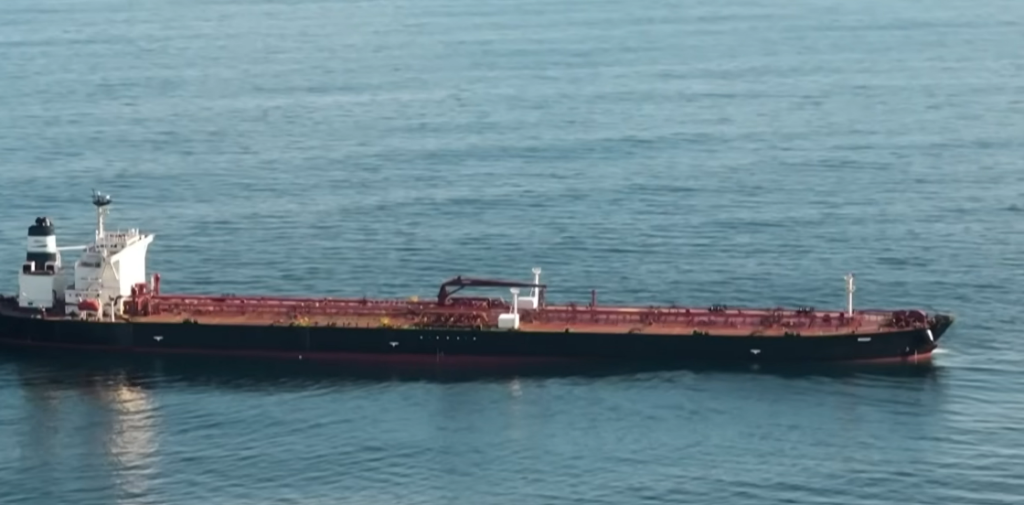
Since the invasion of Ukraine, one of the more significant stories in the geopolitics of energy is Russia’s shadow fleet, a loose network of old tankers with unclear ownership chains, flags of convenience, and no Western insurance. The sole purpose of these ships is to transport Russian oil to consumers who desire it while avoiding the sanctions that Western governments have invested a significant amount of political capital in establishing. The ships switch flags. They engage in a technique known as AIS spoofing, which involves turning off their automatic identification systems in the middle of the trip. In international waters with little oversight, they move oil from ship to ship at sea. In certain respects, they are the tangible representation of how inadequate the Western sanctions regime has been in reality.
Another tanker made headlines in a completely different way the same week the VAYU 1 was passing Dover without any problems. In the early hours of March 27, a marine drone struck the Altura, a Turkish-operated ship transporting about a million barrels of Russian Urals crude from the Black Sea port of Novorossiysk, about eighteen nautical miles from Istanbul’s Bosphorus Strait. All 27 crew members were safe, according to Abdulkadir Uraloglu, Turkey’s transport minister, who also confirmed the attack. They sent out the coast guard. The Altura’s bridge and engine room were damaged. The manager was Turkish, and the registered owner was a Chinese company. It was flying the flag of Sierra Leone. Turkish officials said that the attack, which was most likely Ukrainian in origin but Kyiv and Moscow did not immediately comment, was probably intended to disable the engine room rather than trigger a devastating explosion.
The Altura attack was the most recent in a string of drone attacks on Russian cargo-carrying Black Sea tankers that have been getting more frequent over the past 12 months. Ukraine has been deliberately attacking the infrastructure that sustains Russian oil earnings, believing—correctly—that those earnings contribute to the war effort. The ships that are targeted frequently have third-country flags, are run by companies in neutral or supportive countries, and are transporting goods to markets in Asia or the Mediterranean. The strikes increase the cost of shipping insurance, make it more difficult to operate shadow fleet ships, and draw attention to the ships and their owners from a geopolitical standpoint. Additionally, they placed 27 regular crew members in engine rooms where drones could explode. This aspect of the story typically receives only one paragraph in the media.
Two additional Russian oil tankers were traveling toward Cuba at a distance of about 4,000 miles. About 190,000 barrels of Russian gasoline were being transported toward Havana by the Sea Horse, a ship flying the Hong Kong flag. According to reports, the sanctioned Anatoly Kolodkin was transporting 730,000 barrels of crude while flying a Russian flag. Blackouts are widespread, Venezuela’s supply was essentially cut off when the US moved against Maduro in January, and Washington has been tightening its blockade, making Cuba’s current fuel crisis the worst the nation has experienced since the fall of the Soviet Union. Russia has strongly denounced the US oil embargo and promised to support it.
In response, the US Treasury’s Office of Foreign Assets Control stated that the tankers’ cargo could not be offloaded and added Cuba to the list of nations prohibited from transactions involving the sale or delivery of Russian crude or petroleum products. As the VAYU 1 episode demonstrated, there isn’t always a clear answer to the question of whether the US is willing to act on that prohibition. It’s difficult to ignore the fact that the shadow fleet has always operated in the space between declared policy and actual enforcement. The story lies more in that gap than in any one tanker or drone attack.
Disclaimer
Nothing published on Creative Learning Guild — including news articles, legal news, lawsuit summaries, settlement guides, legal analysis, financial commentary, expert opinion, educational content, or any other material — constitutes legal advice, financial advice, investment advice, or professional counsel of any kind. All content on this website is provided strictly for informational, educational, and news reporting purposes only. Consult your legal or financial advisor before taking any step.
