

A rat-sized, round-eared creature is staring down the effects of global warming somewhere on a boulder-strewn slope in Colorado’s Indian Peaks Wilderness. When hikers pass by, it lets out a sharp, angry squeak that researchers claim they are hearing less and less. For thousands of years, the American pika has inhabited these high-altitude rock piles. However, the mountain is literally running out of space for it.
The simplicity of the pika’s problem is almost cruel. The animal retreats upslope to stay cool as temperatures rise at lower elevations, which makes sense until you keep in mind that mountains taper toward their peaks. The available habitat gets smaller as the pika ascends higher. This phenomenon has been dubbed the “high-altitude squeeze” by scientists. It’s a neat way of saying something rather depressing. The animal is being forced into a corner that is getting smaller and has no way out.
The pika’s nearly complete incapacity to withstand heat makes it especially vulnerable. It doesn’t pant like a dog does. It doesn’t perspire. Even a few hours of exposure to temperatures higher than 78°F can kill it. In order to survive on a hot summer afternoon in the Rockies, the pika hides in cool rock fissures. This seems like a sensible tactic until you consider that it requires those same daylight hours to gather and store food for the winter. Winters are leaner when there is less time for foraging. Starvation results from leaner winters. There are very few off-ramps and a gradual compounding of pressures.
| Key Information | Details |
|---|---|
| Species | American Pika (Ochotona princeps) |
| Size | Roughly the size of a rat; weighs around 5 ounces |
| Habitat | High-altitude talus fields (rocky slopes) in western North America |
| Critical Temperature Limit | Can die within hours at temperatures above 78°F (25.5°C) |
| Range | Rocky Mountains, Sierra Nevada, Great Basin — Montana south to Colorado |
| Key Research Site | Niwot Ridge, ~10 miles south of Rocky Mountain National Park, Colorado |
| Juvenile Decline | Roughly 50% drop in juvenile pika proportion since the 1980s |
| Extinction Prediction | Possible disappearance from Rocky Mountain National Park by 2100 |
| Broader Impact | Himalayan pikas, marmots, alpine birds, and butterflies all facing similar pressures |
| Reference Links | National Wildlife Federation — The Pika Predicament / CU Boulder — New Pika Research Finds Troubling Signs |
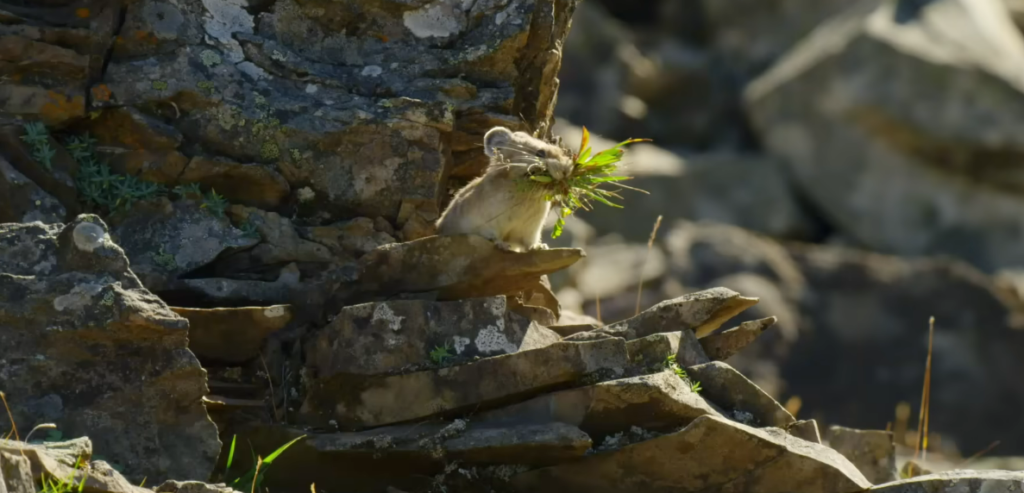
For over 35 years, Chris Ray, a research associate at CU Boulder’s Institute of Arctic and Alpine Research, has been investigating these creatures in Colorado and Montana. Her team recently compared current pika populations with data gathered in the 1980s using surveys conducted at Niwot Ridge, a high-elevation research site north of Nederland. They had trapped about half as many young pikas. fewer young animals. Adults are getting older. a population that is not self-replacing from an ecological perspective. To put it simply, Ray remembered a male pika she called Mr. Mustard, who was already an adult when she first caught him in the 1990s and lived for an additional nine years. “I don’t see that anymore,” she remarked.
That observation has a subtle devastating quality, not because it’s dramatic but rather because it isn’t. No abrupt collapse. No one catastrophic incident. A researcher with a notebook and thirty-five years of patience noticed that the hillside was becoming slightly more empty every ten years.
An additional layer is added by the winter snowpack issue. Since pikas do not hibernate, they must rely on deep snow to act as an insulating blanket to keep their subterranean talus habitat at a temperature that is tolerable—about freezing—instead of the deadly cold of an exposed alpine winter. That insulation vanishes as snowfall becomes less consistent and snowlines rise. The pika is exposed to freezing temperatures in the winter and heat in the summer. Every season is a squeeze.
It’s not just pikas, either. As minimum temperatures rise throughout the Himalayas, populations are disappearing from lower elevations; in the Langtang region of Nepal, scientists have found a temperature increase of about 4°C in just 25 years. Marmots, butterflies, and mountain birds are all caught in variations of the same trap: habitat that is waiting for them at the top is shrinking due to warming, which pushes species upslope. Simply put, the pika is the most obvious, the most researched, and, in certain respects, the most readable indicator of what is occurring throughout entire mountain ecosystems.
Certain populations may adjust by moving their foraging to cooler dawn and dusk hours and locating areas of shade in lower forest zones. The degree of behavioral flexibility these animals possess is still up for scientific debate. However, the rate of temperature change seems to be surpassing any biologically possible adaptation for populations in the Great Basin and Sierra Nevada. According to a 2015 study, pikas may completely vanish from Rocky Mountain National Park by the year 2100. Ray’s more recent data doesn’t refute that. It gives it weight, if anything.
What the pika truly contributes to the alpine environment it lives in is easily overlooked in all the data. As they spread seeds, turn soil, and shape plant communities throughout the tundra, these animals truly are ecosystem workers. Their demise is more than a wildlife statistic. Something structural is unraveled. In addition, Ray pointed out that in late summer, when reservoirs are already emptying, permafrost and seasonal ice found in the high-altitude talus fields where pikas reside supply water downstream. She stated that a water tower serves as the pika’s habitat. If you lose the pika, you’re losing something that the rest of the ecosystem, including downstream human communities, silently depends on.
It’s easy to ignore a pika’s squeak on a mountain trail. After grinning at it and, if they’re lucky, snapping a picture, hikers continue. But it’s worth stopping to think about the possibility that one of the most obvious early warnings a mountain can provide is what sounds like a small, irritated animal objecting to your presence.
Disclaimer
Nothing published on Creative Learning Guild — including news articles, legal news, lawsuit summaries, settlement guides, legal analysis, financial commentary, expert opinion, educational content, or any other material — constitutes legal advice, financial advice, investment advice, or professional counsel of any kind. All content on this website is provided strictly for informational, educational, and news reporting purposes only. Consult your legal or financial advisor before taking any step.
