

Long after the flames had subsided, the smell of wet concrete and burned plastic lingered in the air. The remnants of the Kabul rehabilitation center appeared less like a hospital in the early morning light and more like a collapsed shell, with shoes lying where people had last stood, blankets strewn across blackened floors, and beds twisted into metal frames. Even after everything else has been reduced to ash, it’s difficult to ignore how commonplace some of those items appear.
According to most accounts, the strike claimed dozens of lives. Far more is suggested by some officials. However, in locations like this, where counting the dead becomes a secondary task that is frequently postponed due to fire, debris, and confusion, the numbers quickly become hazy. Long into the night, a local reporter reported witnessing bodies being carried out on stretchers—a type of silent, monotonous labor that doesn’t make headlines but sticks in people’s memories.
| Category | Details |
|---|---|
| Event | Air strike on drug rehabilitation centre |
| Location | Kabul, Afghanistan |
| Date | March 2026 |
| Casualties | Dozens confirmed; claims of hundreds (unverified) |
| Facility | State-run drug rehabilitation centre (former US base) |
| Parties Involved | Taliban government (Afghanistan), Pakistan |
| Pakistan’s Position | Denies targeting civilian site; claims precision strikes |
| Context | Escalating cross-border tensions and militant accusations |
| Reference Link 1 | BBC News – Kabul Rehab Centre Strike |
| Reference Link 2 | Reuters – Afghanistan-Pakistan Air Strike Escalation |
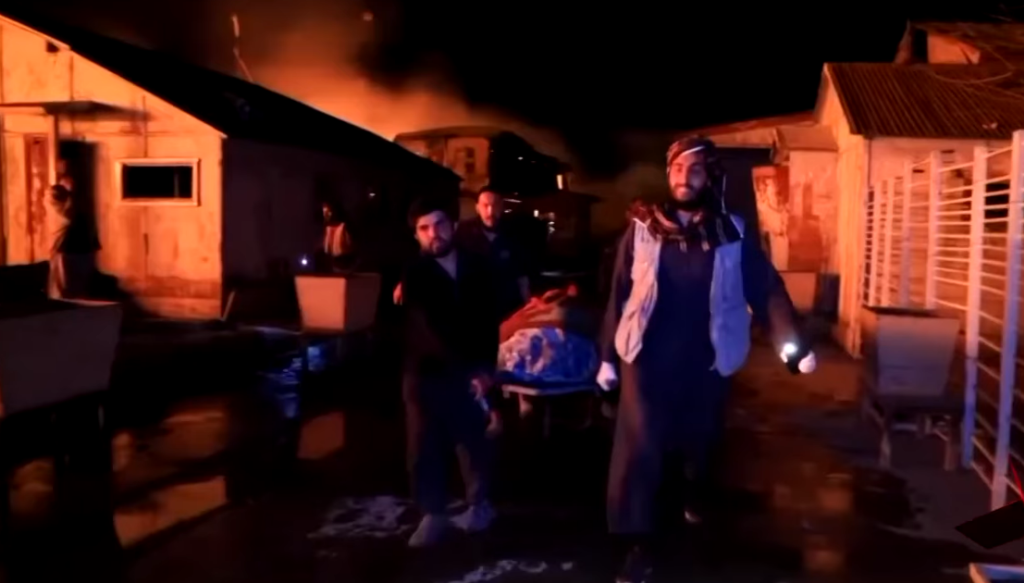
The Afghan government blamed Pakistan for the attack without hesitation. Islamabad reacted equally swiftly, claiming that only militant infrastructure had been targeted and refuting any attack on a civilian facility. Both sides may be presenting versions of the facts that have been influenced by their own circumstances. It’s also possible that neither version accurately depicts what transpired during those brief moments when the explosions occurred.
Locals remember hearing the explosions shortly after dusk, followed by the distant, low sound of planes. Windows shook. The lights flickered. Families in nearby neighborhoods went outside and gazed up at a sky that revealed nothing. People in Kabul seem to have developed an innate ability to distinguish between ordinary noise and something more significant.
The nature of the building itself makes this particular strike more difficult to comprehend. A rehabilitation facility that houses thousands of people battling addiction, many of whom were recently taken in from the streets. Once a US military base, the building had been converted into something more akin to a last resort. It’s a place of treatment and containment rather than a place of comfort. It’s challenging to reconcile that goal with the extent of the devastation when watching footage of the aftermath.
Pakistan’s stance, which emphasizes accuracy and the lack of civilian targets, is indicative of a larger trend in contemporary conflict: governments demanding control while technology promises accuracy. But that language seems far away when you’re standing in the rubble. The goal and the result are never the same. And people are caught in that gap.
Accusations, denials, and sporadic clashes along a long, porous border have all contributed to the growing tension between Afghanistan and Pakistan over the past few months. Each side asserts that the other poses a threat. Each denies accountability. Whether this strike is the result of an error in judgment, a lack of intelligence, or something more intentional is still unknown.
An ambulance driver describes arriving at the scene while the building was still on fire. He mentioned people who were trapped inside and shouting. Then there was quiet. He later came back to gather the bodies that were still unreached. These bits and pieces of testimony leave unanswered questions that are seldom addressed by official statements.
As this develops, it seems like the boundaries between military and civilian areas are getting fuzzier. Facilities are used for different purposes. The histories of places are stacked on top of one another. A hospital is built on a former base. It’s unclear if a hospital is targeted intentionally or accidentally.
The well-known language of diplomacy has resurfaced as voices from around the world have started to call for moderation and de-escalation. However, those calls frequently come after the damage has been done, reverberating over previously altered areas. Even though the specifics are different, the cycle seems to be repeating.
What will happen next is still unknown. Maybe retaliation. or a brief pause that is more influenced by fatigue than consensus. The site itself—charred walls, strewn possessions, and the silent labor of clearing what’s left—remains visible for the time being.
Disclaimer
Nothing published on Creative Learning Guild — including news articles, legal news, lawsuit summaries, settlement guides, legal analysis, financial commentary, expert opinion, educational content, or any other material — constitutes legal advice, financial advice, investment advice, or professional counsel of any kind. All content on this website is provided strictly for informational, educational, and news reporting purposes only. Consult your legal or financial advisor before taking any step.
