

Residents of the southern suburbs of Johannesburg were lining up next to a municipal water tanker on a recent morning, holding recycled paint drums and plastic buckets. By nine in the morning, the pavement and the patience of those who were waiting were being baked by the sun. It was difficult to disagree with a woman near the front who muttered that this felt “worse than load shedding.” Outages of electricity cause disruptions. However, the inconvenience becomes personal when taps sputter dry for days.
The drought crisis in South Africa is no longer a seasonal adversity. It is spreading from remote provinces into large cities and intensifying beyond emergency levels. At one point, the 2018 “Day Zero” scare in Cape Town seemed like a striking outlier. From Gauteng to the Eastern Cape, the anxiety is now more widespread, less dramatic, but more enduring.
| Category | Details |
|---|---|
| Country | South Africa |
| Average Annual Rainfall | ~464–497 mm (well below global average of 860 mm) |
| Key Government Body | Department of Water and Sanitation (DWS) |
| Major Affected Regions | Johannesburg (Gauteng), Eastern Cape, Nelson Mandela Bay |
| Water Loss | Over 40% lost through leaks and infrastructure failure |
| Rural Access Gap | ~30–42% lack reliable clean water access |
| Climate Trend | Rising temperatures, more frequent and prolonged droughts |
| Regional Context | Southern Africa drought affecting millions |
| Official Water Information | https://www.dws.gov.za |
| Regional Drought Overview | https://www.worldbank.org |
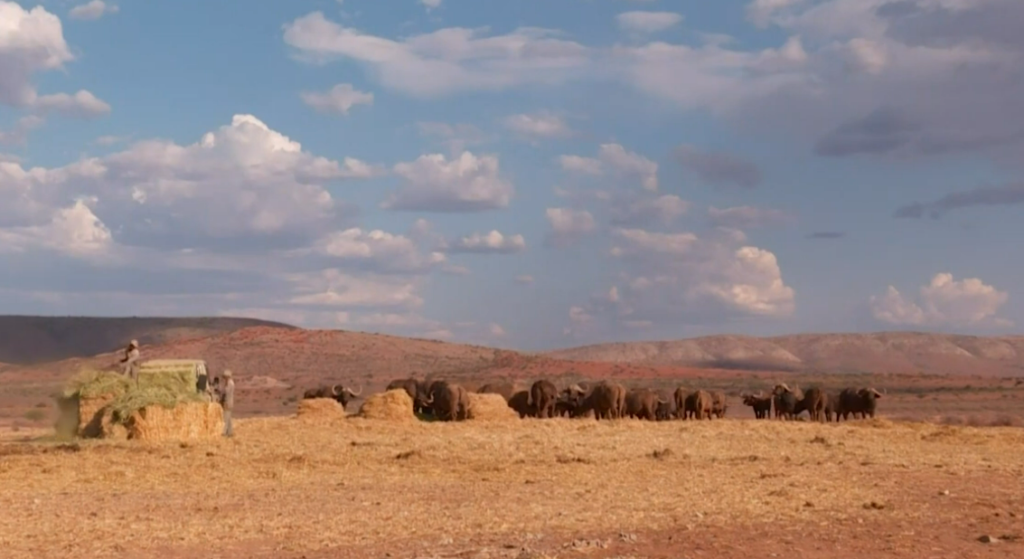
A portion of the story is revealed by the numbers. About half of the world’s average rainfall falls in South Africa, and a large portion of that rainfall is absorbed by high evaporation rates. According to climate models, unpredictable rainfall patterns and rising temperatures will worsen. However, the fact that over 40% of piped water is lost due to leaks before it reaches homes is not entirely explained by statistics. That sounds more like decay than climate.
Every week, Johannesburg’s reservoirs drop lower, treatment plants malfunction, and old pipelines burst under extreme pressure. It seems as though the system is being kept together by improvisation as maintenance workers use temporary clamps to patch broken pipes. It’s still unclear if local governments have the political will or technical ability to update infrastructure quickly enough.
This reality has long been present in rural communities. Families in parts of the Eastern Cape and Limpopo depend on rivers or unprotected wells, and they carry wheelbarrows full of containers over long distances. Approximately one-third of rural households do not have consistent access to clean water. These disparities are exacerbated by the drought, making scarcity a daily struggle.
The crisis is not limited to households. Prolonged dry spells are crumbling agriculture. In the Northern Cape, farmers describe how maize fields curl into fragile yellow sheets and herds are becoming thinner. Crop yields are declining and livestock losses are increasing. That combination feels explosive for a nation already struggling with food insecurity and unemployment.
The issue is complicated by energy. Large volumes of water are used for cooling by coal-fired power plants, which are still essential to the national grid. Stressed water systems are used by Eskom’s plants, resulting in a silent competition between household supply and electricity production. Water management and energy planning may have been handled as distinct silos for too long.
There is a policy. The National Water Act of South Africa, which was created to guarantee fair distribution, was once praised as progressive. Legislation without maintenance budgets, however, is not very consoling. According to reports, untreated sewage is seeping into rivers and wastewater treatment facilities are in critical condition. The stench of a contaminated stream near a township’s edge indicates that carelessness has been compromised.
Additionally, there is a political component that seems inevitable. Experts have cited poor departmental coordination, poor management, and stalled projects like the widely reported “War on Leaks.” It sounds almost ironic now. There are still leaks. Accountability is still elusive.
Additionally, the larger Southern African region is drying up. According to World Bank estimates, water scarcity causes hundreds of thousands of jobs to be lost every year throughout Sub-Saharan Africa. Drought does more than just dry out the soil in South Africa, where rain-fed agriculture sustains large communities; it also depletes livelihoods. Extreme dry spells cause a sharp decline in rural employment, which disproportionately affects women and laborers without land.
It’s difficult to ignore how unequal the burden is. In order to protect themselves from municipal failures, wealthier neighborhoods install rainwater harvesting systems and boreholes. Informal settlements are unable to. Similar to previous blackouts of electricity, the water crisis exposes preexisting fault lines.
Solutions are not completely unattainable, though. It is technically possible to recycle water, desalinate coastal cities, detect leaks more accurately, and manage demand more intelligently. In order to gradually reduce losses, some municipalities are experimenting with smart metering and pressure reduction. There is a sense that if urgency takes the place of rhetoric, progress is achievable.
Whether the nation can transition from reactive emergency measures to structural reform is the more fundamental question. Restrictions and tankers are stopgaps. They purchase time. However, drought is becoming more structural and less episodic, linked to climate volatility and governance gaps.
The crisis feels both immediate and cumulative, years in the making and years away from resolution, as residents wait in line with empty buckets. Water stress has previously existed in South Africa. It possesses community resilience, policy frameworks, and engineering expertise. Time is what it might be lacking.
Disclaimer
Nothing published on Creative Learning Guild — including news articles, legal news, lawsuit summaries, settlement guides, legal analysis, financial commentary, expert opinion, educational content, or any other material — constitutes legal advice, financial advice, investment advice, or professional counsel of any kind. All content on this website is provided strictly for informational, educational, and news reporting purposes only. Consult your legal or financial advisor before taking any step.
