

It’s simple to visualize the Patriot missile as a single object: a sleek interceptor that soars into the sky and hits a ballistic missile in midair. However, you soon discover that the Patriot is more than one thing when you are in the industrial ecosystem that creates it. It’s a team effort. And occasionally a subtle rivalry.
Raytheon, which is currently a part of RTX Corporation, is the main manufacturer of the Patriot system. As the prime contractor, Raytheon constructs the command centers, radar systems, and overall architecture. The system’s name, Phased Array Tracking Radar to Intercept on Target, comes from the radar, that recognizable phased array slab angled toward the sky. Patriot. The branding stuck, even though the backronym sounds almost forced.
However, the answer to the question of who manufactures Patriot missiles goes beyond that. The smaller, more sophisticated hit-to-kill projectiles, the PAC-3 and PAC-3 MSE interceptor missiles, are made by Lockheed Martin and are intended to eliminate incoming threats by direct impact. These are constructed in Camden, Arkansas, where long, low industrial buildings with expanded production lines hum behind layers of security fencing.
| Category | Details |
|---|---|
| System Name | MIM-104 Patriot Air and Missile Defense System |
| Prime Contractor | Raytheon (a business unit of RTX Corporation) |
| Interceptor Manufacturer | Lockheed Martin |
| PAC-3 MSE Production Site | Camden, Arkansas, United States |
| Radar & System Integration | Raytheon (Massachusetts & other U.S. facilities) |
| In Service Since | 1984 |
| Countries Operating | 17+ nations including U.S., Germany, Japan, Poland, Israel |
| Official RTX Website | https://www.rtx.com |
| Lockheed Martin PAC-3 Info | https://www.lockheedmartin.com |
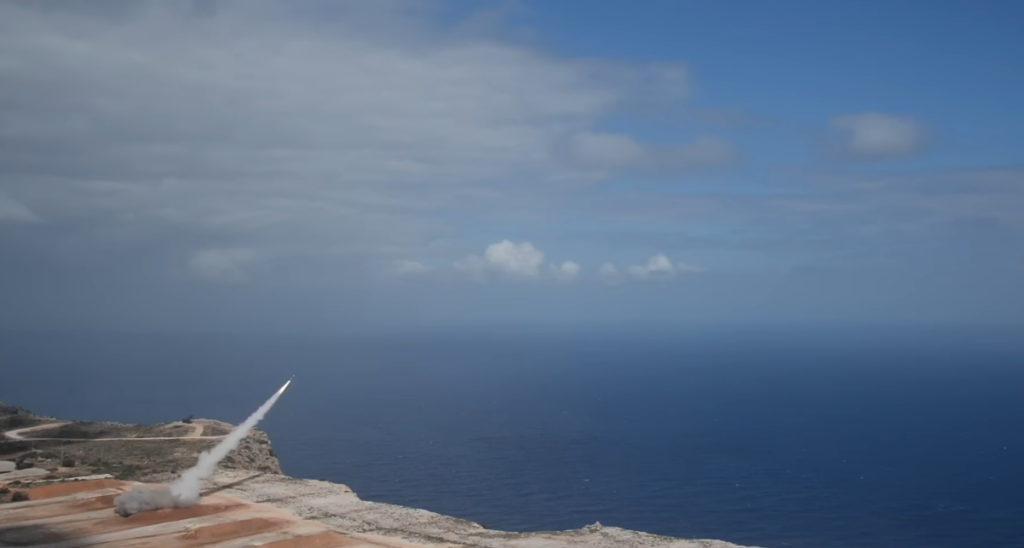
One gets the impression that Patriot has moved into a new stage when attending defense trade shows or listening to earnings calls. Demand has increased in the wake of Russia’s invasion of Ukraine and a renewed focus on missile defense throughout Europe and the Middle East. In 2024, Lockheed Martin set a record by producing more than 500 PAC-3 MSE interceptors. That figure appeared to quietly reassure investors, as though missile production rates had evolved into a new form of industrial gauge.
In the meantime, Raytheon keeps putting together and improving fire units, which are the launchers, radars, and engagement control stations that complete Patriot. To increase detection range and target discrimination, engineers in Massachusetts and other U.S. facilities improve the radar’s digital processors by incorporating gallium nitride technology. From a distance, the radar panels themselves appear nearly inconspicuous, being rectangular and flat, but they are incredibly heavy in terms of technology.
The history of the Patriot is complex. It was initially deployed as an anti-aircraft system in the early 1980s after being developed during the Cold War at Redstone Arsenal in Huntsville, Alabama. Its performance during the Gulf War in 1991 was hotly contested. Analysts later questioned claims of successful interceptions. Early expectations might have exceeded technical reality. However, as the system developed, hit-to-kill technology was added, guidance was improved, and intercept algorithms were improved.
The story had changed by the time the PAC-3 MSE interceptor went into full-rate production. The missile used kinetic energy rather than proximity warheads, hitting targets directly at over 3,000 miles per hour. One observes how clinical the intercept test footage at White Sands Missile Range looks. A dazzling flash. falling debris. After that, silence.
International collaborations give the narrative an additional dimension. Under license from the Japan Air Self-Defense Force, Mitsubishi Heavy Industries produces Patriot systems in Japan. Joint ventures aid in the management of maintenance and upgrades in Europe. Patriot is a networked industrial program that spans continents, not just American hardware exported overseas.
The economics are astounding. Domestically, a single Patriot battery can cost over $1 billion, and export versions can occasionally cost more. The price of a single PAC-3 MSE missile can reach several million dollars. Sustainability is called into question by that price tag. Can countries afford to shoot costly interceptors at less expensive rockets or drones? It’s still unclear if lower-cost countermeasures will weaken the Patriots’ strategic advantage or if cost curves will rebalance.
Demand nevertheless persists. The list of clients has gradually expanded to include Poland, Sweden, Romania, and Switzerland. Governments seem to view Patriot as political reassurance as well as hardware. Purchasing Patriot frequently denotes a nation’s alignment with the US, placing it within a larger security framework.
Production lines at Lockheed’s Camden facility have been growing, with employees assembling guidance sections and rocket motors in strictly regulated settings. In response to Pentagon contracts meant to boost yearly production, the pace has quickened. The rhythm of it is difficult to ignore: technicians performing last-minute checks, forklifts moving canisters, and sealed missile rounds being labeled and shipped.
The integration role of Raytheon is still very important. The interceptors are inert tubes in the absence of the radar, the engagement control station, and the networked command systems. The radar’s ability to precisely detect, track, and guide the missile makes the system function. It’s a dance between software and hardware, requiring smooth coordination between two significant defense contractors.
Additionally, there is a cultural component. The Patriot has evolved into a symbol that is frequently praised and occasionally criticized. It has been used in conflicts ranging from Yemen to Iraq to Ukraine, where its capabilities have been reestablished due to recent interceptions of sophisticated missiles. One gets the impression from seeing those things happen that the Patriot has developed into something more in line with what its creators had in mind.
Patriot missiles are manufactured by whom? The short answer is Lockheed Martin and Raytheon, with assistance from partners such as Mitsubishi Heavy Industries. The complete response, however, is more complex. Decades of technological adaptation, geopolitical pressure, and sporadic uncertainty have shaped this industrial alliance.
Disclaimer
Nothing published on Creative Learning Guild — including news articles, legal news, lawsuit summaries, settlement guides, legal analysis, financial commentary, expert opinion, educational content, or any other material — constitutes legal advice, financial advice, investment advice, or professional counsel of any kind. All content on this website is provided strictly for informational, educational, and news reporting purposes only. Consult your legal or financial advisor before taking any step.
